Monday, May 08, 2006

By The Sea, By The Sea, By The Beautiful Sea

Legislative Dysfunction Under The Boardwalk

First it was the State Legislature in Albany. Then it was the County Legislature in Mineola.

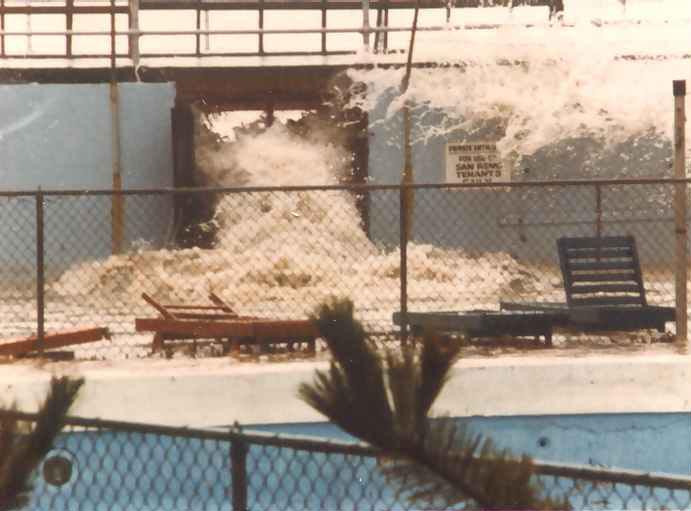
Now, the dysfunction has spread to the Long Beach City Council, which voted last week -- unanimously, no less -- not to proceed with plans to protect the seashore of the barrier island on which this city by the sea is located. [SEE, Newsday, Long Beach Erosion Plan Nixed.]

The $98 million proposal ($7 million of which would have been borne by the City of Long Beach), promulgated by the Army Corps of Engineers, would have created a protective system of sand dunes some 15 feet above sea level, much of it situated under the boardwalk in Long Beach.

While some objected to the cost of the project, and others questioned the plan's efficacy, many of those who spoke before the City Council at a May 4th hearing objected on the grounds of aesthetics. Residents seemed concerned not about saving the beach, protecting property (and quite possibly, lives), and preserving the eco-system in the event of a major storm, but rather, the possible obstruction of their view. [We wonder what residents will think of their "view" if (or more likely, when) a major storm breaches the crumbling "groins," washes away the remaining beachfront, and sweeps boardwalk and seaside homes into the Atlantic?]

The Point Lookout Civic Association, saying that "Point Lookout is suffering from dire erosion, exposing our community to the impact of storms, high-energy waves and oceanside flooding," supported the Storm Damage Reduction Project. In light of the NO vote of the Long Beach City Council, the group will proceed independently. "Not to act is to act negligently," reads a post on the civic association's webpage urging residents to support the project.

Beach erosion, and the increasing threat of damaging storms -- including hurricanes -- are the realities that barrier island communities such as Long Beach will have to come to terms with, and hopefully sooner rather than later.

"In the history of our city," Assemblyman Harvey Weisenberg (D-Long Beach) told the City Council through a prepared statement urging the plan's adoption, "this is probably the most important decision our City Council will make... There are no other safe options. We must rise above politics and do what is right for our community."

"To be foretold is to be forewarned," goes the old adage. There's another saying that comes to mind here: "An ounce of prevention is worth a pound of cure."

In the wake of the Long Beach City Council's apparent failure to act responsibly in adopting the Storm Damage Reduction Project, and in making the protection of our shoreline a priority, we can only hope what would surely be against all hope, that the day of reckoning does not come, and no one will have to say, "I told you so!"

Knowing that, at some point in time, that horrific storm will make landfall along Long Island's south shore, it does not take prophetic pause to predict that, like Albany's decline into dysfunction, and Mineola's slide toward irrelevancy, the failure of the Long Beach City Council to act responsibly and prudently well in advance of the high waters, particularly in the absence of any alternative prophylactic measures, may well be that legislative body's undoing.
- - -
Click HERE to read the Long Beach Herald story, City Unanimously Rejects Beach Project.

Friday, May 05, 2006

El Inglés Del "Rey"

El Rey del Congresista Peter Llama Para "Zoquetes" Ingleses

Sí, la lengua "oficial" de la bandera spangled estrella debe ser inglés, pero cuál el heck es incorrecto con tener nuestro himno nacional, o cualquier cosa que consideramos como americana sagrado, ¿traducido (e iguale cantado adentro) a español? Para esa materia, cuál sería el daño en tener nuestro himno, nuestro compromiso, nuestra constitución (si se asume que cualquier persona puede encontrar una copia), ¿traducido a tantas idiomas como hay países representados en los Naciones Unidas?

¿Estamos asustados que los terroristas pudieron minar nuestra voluntad para oponerse al Jihad con bordones de "destellar de los twilights por último" crooned en Farsi?

Nunca importe de que la mayoría de los americanos que nacieron en U.S. el suelo no podría recitar - deje solamente realmente para cantar -- todas las palabras a la bandera spangled estrella si sus vidas dependieron de ella. ¡Y eso está en inglés!

Olvídese delMmexicano. Qué sobre esos Borinqueños, ¿quiénes SON ciudadanos americanos? ¿Por qué no hablan inglés? Y después qué los gustos de Roseanne Barr, entre otros, han hecho a ese himno - y nuestros tímpanos - sobre los años, ¿cómo podría cualquier persona decir que la audiencia sobre las "bombas que estallan en aire" en una lengüeta extranjera es unpatriotic?

Sí, ésos ciudadanía americana que busca deben demostrar por lo menos una habilidad del octavo grado en el lenguaje común de nuestra nación. Demasiado malo no hay tal requisito de la habilidad para los "americanos verdaderos supuestos, ¡"como George Bush!

Recuerde cuando era un honor para tener tesoros nacionales - tales como novelas, compartimientos, y, sí, ¿incluso canciones en el desfile del golpe - traducido a tantas idiomas como el mercado llevaría? Y qué sobre Europa libre de radio/Libertad De radio, ¿"democracia que difunde" al mundo en las idiomas (28 en todos) que descubren pequeña semejanza a la mazarota común de América?

Porqué, un día, Quisiera poder a camino abajo de las calles de Bagdad y oigo cantar Iraqui, "... O'er la tierra del libre, y el hogar del valiente "- en árabe!

Venido pensar en él, un día quisiera caminar a través de los pasillos en la alameda del campo de Roosevelt y oír a los compradores - la mayoría extensa de quien están los ciudadanos americanos, probado y verdad - hablando en cualquier lengua que podría descifrar.

Como miembro del Congreso King tan elocuente indicado, "a través de la historia, la lengua inglesa ha sido el pegamento que nos ata juntos como americanos."

Primero apagado, hemos establecido ya que es el matzo que nos ata, Peter.

Lea las hojas anticipadas. Qué nos guarda verdad juntos, especialmente en la cara de los que intentan tan desesperadamente rasgarnos aparte, está nuestra diversidad como gente. Esa vieja E Pluribus Unum [Por Dios. ¡Eso no es inglés!] - fuera de muchos, Uno.

Pero no tome nuestra palabra para ella. Apenas pida Condoleezza Rice, la secretaria del estado. "he oído el himno nacional hecho en versiones del rap, versiones del país, versiones clásicas,el "arroz dijo domingo en cara de CBS's" la nación."" la individualización del himno nacional americano está absolutamente en curso."

Individualización. Tolerancia. Aceptación. Abrazando el que es nuevo, diferente, y, sí, extranjero. Porqué, incluso perdonando el ignorante y estrecho-importados entre nosotros, para quién el Rey de Peter ha hecho un muchacho nacional del cartel, es parte de la experiencia americana.

Vaya tan a continuación, cante ese himno en español - o en Swahili, Hindi, Francés, o Japonés, si usted desea tan. Eso, mis amigos, ¡está América a mí!
- - -
Click HERE to check out Himno nacional - La Bandera de Estrellas at, of all places, usinfo.state.gov. Complicity in our own government -- the State Department, no less!

Thursday, May 04, 2006

Re-reading Jane

What Jane Jacobs Really Saw
Today's urban planners falsely claim her legacy

By Leonard Gilroy

Legendary author and urban theorist Jane Jacobs passed away last week at the age of 89. Her classic 1961 book, "The Death and Life of Great American Cities," delivered a damning indictment of postwar city planning and urban renewal efforts, revolutionizing the way we think about and plan our cities.

A working mother with no formal education in urban planning, Jacobs became an icon in the 1960s when she mobilized citizens to fight the redevelopment and highway-construction plans of New York City planning czar Robert Moses, who wielded almost unchecked power over the city's urban development during the mid-20th century. She famously led the effort that defeated Moses' plan to build an expressway through Manhattan's Washington Square Park and West Village, which would have displaced nearly 10,000 residents and workers and destroyed thousands of historic buildings.

Given urban planners' almost universal reverence for Jacobs, it is ironic that many have largely ignored or misinterpreted the central lesson of "Death and Life"--that cities are vibrant living systems, not the product of grand, utopian schemes concocted by overzealous planners.

Modern planners have contorted Jacobs's beliefs in hopes of imposing their static, end-state vision of a city. They use a set of highly prescriptive policy tools--like urban growth boundaries, smart growth, and high-density development built around light-rail transit systems--to design the city they envision. They try to "create" livable cities from the ground up and micromanage urban form through regulation. We've seen these tools at work in Portland, Ore., for more than three decades. But the results have been dismal and dramatic. The city's "smart growth" policies effectively created a land shortage, constricting the housing supply and artificially inflating prices. By 1999, Portland had become one of the 10 least affordable housing markets in the nation, and its homeownership rate lagged behind the national average. It has also seen one of the nation's largest increases in traffic congestion and boasts a costly, heavily subsidized light-rail system that accounts for just 1% of the city's total travel. Not exactly how they planned it.
That's because these planning trends run completely counter to Jacobs's vision of cities as dynamic economic engines that thrive on private initiative, trial and error, incremental change, and human and economic diversity. Jacobs believed the most organic and healthy communities are diverse, messy and arise out of spontaneous order, not from a scheme that tries to dictate how people should live and how neighborhoods should look.

She felt it was foolish to focus on how cities look rather than how they function as economic laboratories. "The main responsibility of city planning and design should be to develop--insofar as public policy and action can do so--cities that are congenial places for [a] great range of unofficial plans, ideas and opportunities to flourish," Jacobs wrote.

Sadly, many in the Smart Growth and New Urbanism movements cite Jacobs as the inspiration for their efforts to combat so-called "urban sprawl" and make over suburbia with dense, walkable downtowns, mixed-use development, and varied building styles. While Jacobs identified these as organic elements of successful cities, planners have eagerly tried to impose them on cities in formulaic fashion, regardless of their contextual appropriateness and compatibility with the underlying economic order. In short, they've taken Jacobs's observations of what makes cities work and tried to formalize them into an authoritarian recipe for policy intervention.

As Jacobs opined in a 2001 Reason magazine interview, "the New Urbanists want to have lively centers in the places that they develop. . . . And yet, from what I've seen of their plans and the places they have built, they don't seem to have a sense of the anatomy of these hearts, these centers. They've placed them as if they were shopping centers. They don't connect."

Jacobs's ideas came from the heart. Her foray into urban theory was partly inspired by the failed urban renewal efforts of the post-World War II era that displaced tens of thousands of poor and minority residents and resulted in the isolation or destruction of previously vibrant neighborhoods in New York, Chicago, Pittsburgh and elsewhere.

Fundamentally, there is little difference behind the social engineering mentality of those who wrought the disaster of postwar urban renewal and the mindset of today's planners trying to regulate away suburbia in hopes of master-planned urban living for everyone.

More and more, these planners are calling for the centralization of land-use control under state and regional governments, usurping the American tradition of local control over development. In the view of many planners, this command-and-control bureaucracy is needed because municipal planning is too "uncoordinated" to achieve "societally beneficial" goals like open-space preservation, mass transit and urban densification.

But if they go back and reread "Death and Life," they'll find Jacobs rightly asking, "How is bigger administration, with labyrinths nobody can comprehend or navigate, an improvement over crazy-quilt township and suburban governments?"

She went on to ridicule the idea of regionalism as "escapism from intellectual helplessness" predicated on the delusion that the problems planners are unable to solve at the local level will somehow be more easily addressed on a larger-scale, concluding that "no other expertise can substitute for locality knowledge in planning."

Politicians and planners would do well to commemorate Jacobs by revisiting her work. Despite the best efforts of well-intentioned planners, you can't "create" a vibrant city or neighborhood. The best cities and neighborhoods just happen, and the best thing we can do is to step out of the way of innovators and entrepreneurs.

Mr. Gilroy is a certified planner and policy analyst at the Reason Foundation.

Wednesday, May 03, 2006

Bulldoze Or Preserve?

Issues Of Eminent Importance For Long Island's Aging Hamlets

From The New York Times:

In Baldwin, It's Revival for Some, Survival for Others

By Richard Korman

Baldwin

LOOK behind the timeworn empty storefronts to see the signs of family life on the west side of Grand Avenue near the corner of Merrick Road.

Down an alley between the shops is an open door, and just inside are mailboxes for the Baez and Gonzales families. Across the alley, behind an empty shop with a shredded awning, is a patch of lawn with a red infant swing hanging from a tree branch.

To Nerys Mendes, a 33-year-old mother from the Dominican Republic who has been living in a modest $975-a-month one-bedroom apartment off the alley for eight years, it is not "the best place in the world," but the local schools are good, one of her children works nearby, and she wants to stay.

To the Town of Hempstead and many homeowners in Baldwin, though, the northwest corner of Merrick and Grand is an eyesore and a breeding ground for crime. The town wants the corner to be redeveloped with upscale shops and a new home for the old Nunley's Carousel.

That means using the town's eminent-domain power to condemn the properties, displacing several thriving businesses and the tenants of 47 apartments, and then turning the seized land over to private developers — a practice that has caused controversy in other communities. And to some critics, it raises the question of whether the purpose is to clear Baldwin of unwelcome old buildings, or unwelcome new people.

Either issue has the potential to tie up the project, which is still in the planning stage, in protracted, politically sensitive court battles.

"Hempstead wouldn't want to get into a situation with enormous controversy, because there may be endless litigation," said Thomas W. Merrill, a law professor at Columbia University who follows land-use issues. When property owners in a depressed section of New London, Conn., fought the town's attempt to condemn their neighborhood and turn it over to private developers, the dispute, known as the Kelo case, went all the way to the United States Supreme Court on the issue of whether such a project served a legitimate public purpose.

Though the court ruled in the town's favor, the project drew so much popular criticism that the governor of Connecticut decided not to order evictions. Since then, several states have begun adopting new restrictions on their use of eminent domain.

Condemnation and eminent domain, intended originally for obtaining land for public uses like roads and parks, have been part of the urban renewal toolkit for many years. Older suburbs like Nassau County have begun using it to try to eradicate social problems by, for example, seizing hotels and apartment buildings used for drug dealing or prostitution. In those cases the seizing government has no need for the property, but simply wants to change its ownership and use.

Housing experts and property-rights advocates say New York State's eminent domain law is broad, and regularly used by towns to seize property and resell it to developers. The Hempstead town supervisor, Kate Murray, said that the Baldwin plan relied on "a very traditional basis for condemnation that existed prior to the Kelo case," that is, combating blight.

Baldwin's downtown area, where traffic roars along Merrick Road, has posed a particularly challenging problem for the town and Nassau County. As in many other villages, competition from malls and big-box retailers has drawn away shoppers and shop owners. But unincorporated Baldwin has also suffered from its location between two incorporated villages, Rockville Centre to the west and Freeport to the east.

Rockville Centre is considerably more affluent than Baldwin, and major retail chains looking for a location in the area have tended to choose Rockville Centre first. Freeport, meanwhile, though mainly lower on the income scale and more ethnically diverse than Baldwin, has seen a recent revival of its upscale district near the bayfront.

"Rockville Centre has 60 nice restaurants, and Freeport has its Nautical Mile," said Joseph Scannell, the Democratic county legislator from Baldwin.

The departure of a big bridal shop from the corner of Grand and Merrick about two years ago accelerated a business exodus in the area, Ms. Murray said. "Since then, there is a precipitous decline, and it feeds off itself and becomes less and less attractive," she said. "It's a domino effect."

The town and county tried to halt the fall of the dominoes by spending money to spruce up building facades and sidewalks, but to little avail. None of the owners of buildings on the west side of Grand Avenue showed up for meetings with town officials to hear about incentives to make improvements, Mr. Scannell said.

So the town hired a planning and consulting firm, Saccardi & Schiff, to conduct a "blight study" of the corner last year, and adopted its report on March 7, opening the way for the condemnation plan.

The carousel, the centerpiece of what town and county officials envision for the corner, was operated for decades at a site on Sunrise Highway, and is now in storage. Nunley's Carousel lives in many an idyllic memory of childhood in Baldwin.

The carousel was briefly the subject of a political tug of war last year when the singer Billy Joel suggested setting it up in Oyster Bay. Mr. Scannell threatened to defect to the Republicans and tip the balance in the Legislature when the Nassau County executive, Thomas R. Suozzi, a fellow Democrat, showed interest in the idea; it has since been shelved.

Now, Mr. Scannell said, the carousel can be used as a magnet for a revived downtown Baldwin. "We want to have our nice carousel corner," he said, adding that the project "will really help our identity."

Town officials are conducting appraisals and doing the legal groundwork to condemn an area reaching from the corner of Merrick and Grand almost all the way to Gale Avenue to the west and Prospect Street to the north. The town will then seek proposals from developers to use the land, along with the existing town parking field behind the stores, to install the carousel and build new retail stores. The process will take at least 18 months before construction can begin.

Some Baldwin homeowners say they can't wait.

"I'm thrilled that they would take this all down and create a place for Nunley's," Bill Pepino, 47, a lifelong Baldwinite, said about the corner. "I'll take my kids here, and they'll take their kids here."

Unmentioned by elected officials, though, is the social and ethnic dimensions to the project. The plan would sweep away the Hispanic immigrants and others who rent the apartments in the block and who patronize the businesses there, including two delicatessens, a hair salon ("Hola Latinas," says a sign in the window), a psychic palm reader and a bright blue nightclub called the Mambo Café. Another shop, Bonao Centro Corporation, offers "envios, llamadas y mas" (messages, calls and more).

Homeowners and business people in the rest of Baldwin are generally careful to say that they respect hard-working immigrants, whether legal or illegal, and bear them no malice. But it is not hard to detect a grating irritation with the immigrants' presence as well, and a belief that increased crime and economic decline follow on their heels.

What happens on the sidewalk and parking lot outside the shops on Grand Avenue strikes some Baldwinites as an unwelcome intrusion of city atmosphere into their suburban town. In summer, they say, some tenants of the block seek refuge from steamy apartments by sitting on beach chairs on the sidewalks outside. On a warm spring afternoon recently, nine young men were sipping beer behind one of the delis.

A week earlier, on a much cooler day, a gaunt man in a wool cap towed a couple of toddlers up the Grand Avenue sidewalk, one of them a girl in a pink jacket holding a floppy-armed doll. As they made their way, a cigarette butt came arcing from an apartment window overhead, almost hitting the girl. The man, full of outrage, shouted a vulgarity-laced threat of a broken jaw up at the window and whoever was inside.

Occasionally, more serious trouble breaks out. On Feb. 25, the Nassau police arrested a man for assault at a Grand Avenue nightclub called Papa Doc's, within the area slated for redevelopment, after a fight involving baseball bats broke out at the club at 4 a.m. The police said the man admitted to being a member of MS-13, a well-known violent gang with origins in Central America.

"I didn't realize I had bought a business in Roosevelt or South Hempstead," Joe Curet, the owner of a deli at 753 Merrick Road, just outside the redevelopment area, said sarcastically, as he described the host of police cars he saw outside Papa Doc's after the fight.

Ms. Mendes said that in the last few months, she had twice heard shots fired at night. She said the presence of the night clubs was to blame for the crime problems.

Mr. Curet, who bought the deli last year, said the disappearance of other businesses from the block had cut into his cash flow by taking away workers who would stop in for lunch or coffee. The frowsy, unkempt facades in the redevelopment area stand in contrast to the smartened-up buildings and sidewalks just across the street on Grand Avenue, where the town shared the cost of facade repairs with the owners of a bowling alley and other buildings, and on Merrick Road, where the town trimmed new sidewalks with red brick and installed Victorian-style street lamps.

The true condition of the threatened buildings is also a mixed picture. The town's blight study found that only 2 of the 38 properties were in poor condition; 27 were rated fair and 9 good. Two of the biggest remaining businesses in the block have well-maintained buildings: Baldwin Kitchen and Bath Designs and the Fullerton Funeral Home, whose driveway is freshly paved.

Howard Gainsburg, who has operated the kitchen and bath business at its present location since 1975, said he favors the redevelopment project and understands why it is needed. But he is worried about finding another site to match his current building, with several thousand square feet of space for an an assembly shop right next to a retail showroom.

"I wanted it cleaned up," he said of the immediate area. "I just didn't feel my building was one of the reasons it had to be cleaned up." When he is relocated, he said, "I would like to be made whole."

The funeral home's owners did not respond to requests for comment.

However attractive new store buildings and the carousel may be, concerns about crime are the main reason local home- and shopowners offer for favoring the project.

James Cunneen, 73, a former Marine, said that he, "a tall guy who has walked the streets of Manhattan since I was 18," nonetheless steers clear of the parking area behind the shops on his way to the Baldwin Public Library, even though that makes his walk a bit longer.

Deputy Inspector Rick Capece, who commands the Nassau police's First Precinct, said problems in the area have been related to assaults and drug activity. Though the violence has been minimal, he said, "it's not like you are taking a piece of real estate where nothing has happened."

For Ms. Mendes, the 33-year-old Dominican immigrant, the threat of being displaced from her home, along with her husband and two teenage daughters, has been looming for some time. "They said something about this three or four years ago, and we've got to see if it's serious this time," she said. "We don't know what to expect now. I'm so upset, because they aren't thinking of the people who live here."

Ms. Murray, the Hempstead supervisor, said the town would help displaced tenants and businesses find new homes, though she did not say whether those homes would be in Baldwin or elsewhere. Ms. Murray expressed optimism that the relocations would be done humanely. For the businesses in the area that cater to the tenants, the revitalization project makes little sense.

Francisco Lopez, the manager of Andy's Mini Market on Grand Avenue, said he does not see any urgent need to empty and raze the storefronts in the block.

As he spoke with a reporter, he was interrupted repeatedly by local people stopping in to buy meals and snacks. The hot buffet table in the deli draws plenty of customers, Mr. Lopez said, especially in the morning when residents head for work.

To Mr. Lopez, the redevelopment plan seems unfair.

"We bought the store, the refrigerators, we fixed the kitchen, and every night before we go, we sweep in front," he said.

Shown the photos of cracked walls and forlorn store signs featured in the Town of Hempstead's blight study, he said, "They've got the worst pictures, but they don't show the good stuff."

Copyright 2006 The New York Times Company
Tuesday, May 02, 2006

What's With The GOP And Their "Rebates"?

Congressional Republicans Offer The "Gas-Poor" $100 To Go Away

The Republicans used to chide the Democrats for "throwing money" at problems. From Food Stamps to urban renewal to welfare, it was always the Democrats who were giving away the store.

Now, the worm turns -- and we can't tell which end is the head and which is the, er, other end.

First it was the GOP in the New York State Legislature, proposing to give homeowners "rebate" checks averaging $300 (total price tag in the neighborhood of $1.7 billion), to assuage anger over the out-of-control school property tax.

Governor Pataki axed that idea, only to see the Legislature override this not even "stop-gap" measure into law. [Notwithstanding, the Gov remains steadfast in saying, "No way, I won't pay!" He's right not to pay, but only because this ersatz fix does absolutely nothing to remedy the underlying failures of the property tax system, and not because he's miffed that the Legislature didn't pass the Governor's own rebate package.]

Meanwhile, the players in Albany only add to the NYS Legislature's aura of dysfunction and disconnect.

Now, the folks in Washington want to throw some money our way -- a $100 rebate, to be exact -- this in lieu of taking action (any action) to fix what's wrong with America's energy policy. [SEE, The New York Times article, Sharp Reaction to G.O.P. Plan on Gas Rebate.]

Could it be that the Republicans are the new Democrats? Tax. Borrow. Spend. Go to war. Offer a "rebate" to appease the masses. Pass on the debt to the next generation.

Wow! A whole $100! That's what, two tanks of gas? Perhaps half a tank, by this time next week.

Let's see. The GOP elite is proposing a $100 rebate, while Exxon Mobil is reporting first-quarter profits of $8.4 billion. Hmm. Seems fair to us.

Why, between the $300 we might get from Albany, and the $100 they'd like to send us from Washington, we're only about $300 short of a steak dinner for 4 at Morton's Steakhouse. Maybe we could get those nice Commissioners at Town of Hempstead Sanitary District 1 to pick up the rest of the tab!

But seriously. A $300 rebate here. A $100 rebate there. Share the wealth. Deepen the national debt. Make believe we're getting relief -- at the pump and on our property tax. It's all Monopoly money. And besides, most of us won't be around, anyway, when our great-great grandchildren are stuck paying the bill!

Monday, May 01, 2006

It's Not So Good To Be The King. . .

Nassau County Legislator Dave Denenberg To Take On Peter King

* * * D a v e D e n e n b e r g * * *
cordially invites you to join him for an
“Afternoon with Family and Friends”

On Sunday, May 7, 2006
3:30 PM Tackapausha Park, Seaford
as he announces his intention to represent the good people from the
3rd District of New York (Nassau & Suffolk Counties) in the United States House of Representatives
- - -

Directions: Seaford Oyster Bay Expressway to Exit 1E Merrick Road. Go east on Merrick Road to Washington Avenue and take a left on Washington. Takapausha Museum/Preserve will be on your right.

RAIN OR SHINE
- - -
Click HERE to read Rick Brand's Politics & Power column in Newsday.
- - -
Time to dethrone the King? The Peter King Watch thinks so!
- - -
Wear your support of Dave Denenberg proudly! Buy Denenberg For Congress shirts, mugs and bumper stickers (made in the good old US of A), courtesy of the Peter King Watch.

"A Mighty Woman With A Torch" In Hand. . .

. . .And A Tear In Her Eye

An e-mail (reprinted below) has been making the rounds. In fact, you have most likely received it in your “in box.” [You may want to refer to the text before you continue reading this message.]

Yup. Boycott Taco Bell today. That's the spirit of America!

I wonder. By a show of hands, how many of you are Native Americans? I figured as much. That being the case, you are all here ILLEGALLY. GET OUT!

And how many of you have ancestors who arrived -- albeit still illegally -- on the Mayflower? Even then, who gave you permission to land at Plymouth Rock? GO BACK WHERE YOU CAME FROM!

Yes, the immigration debate rages on, and wherever you stand on the issues, there can be no denying that reform is necessary and long overdue.

Still, let us not forget that we are a nation of immigrants -- every last one of us the child, grandchild, or great grandchild of immigrants (many, if not most of whom landed upon our shores with questionable documentation, at best).

Think about it. Our forefathers came to America to escape persecution, economic hardship, famine, injustice, and the yoke of oppression. America beckoned the world to it's teeming shores, a haven for the "huddled masses yearning to be free."

Be they Irish, Italians, Jews, Chinese, or any of a thousand nationalities, these immigrants were the backbone of America's economy, and, in great part, the moving force behind America's rise in prominence as a leader among nations. [We have, over the years, lost that status as the envy of the world, no fault of either yesterday's immigrants, or, for that matter, today's.]

Perhaps it is noteworthy on this day, the 1st Day of May -- Law Day -- that we re-read (or, as the case may be, read for the first time) the words of Emma Lazarus, as are emblazoned upon the base of the Statue of Liberty, not to mention upon the minds of millions who remain oppressed around the globe.

Not like the brazen giant of Greek fame,
With conquering limbs astride from land to land;
Here at our sea-washed, sunset gates shall stand
A mighty woman with a torch, whose flame
Is the imprisoned lightning, and her name
Mother of Exiles. From her beacon-hand
Glows world-wide welcome; her mild eyes command
The air-bridged harbor that twin cities frame.
"Keep, ancient lands, your storied pomp!" cries she
With silent lips. "Give me your tired, your poor,
Your huddled masses yearning to breathe free,
The wretched refuse of your teeming shore.
Send these, the homeless, tempest-tost to me,
I lift my lamp beside the golden door!"

Struggling beneath the poem's surface, these tensions- between ancient and modern, immigrant and "American," voice and silence, freedom and oppression- give Emma Lazarus' work meaning and power. As James Russell Lowell wrote her, "your sonnet gives its subject a raison d'etre."

Save but the privileged few among us, we are the sons and daughters of "the tired, the poor..., the homeless, tempest-tost."

On this day, when immigrants and children of immigrants come out of the shadows to do that which, by any measure, is most American -- protest without fear of recrimination -- we should pause for a moment or two to think about what it really means to be a “real American,” to consider, with both history and posterity as guides, why we live in (and fight for) this great country, and why there was (and still is) a need in this world for the place we call America.
- - -
WASHINGTON (AFP) Immigrants' rights advocates, elated by the resounding success of Monday's "National Day of Action," which drew the backing of hundreds of thousands of protesters across the United States and infinite media coverage, are now planning a national boycott which they hope will have an even greater resonance. Organizers are planning the May 1 "Great American Boycott," urging illegal immigrants -- who cannot vote and who have only limited political power -- to flex their economic muscle. Protesters are being urged to refrain from shopping, and to stay away from school and work.

You should take a moment to let that sink in.

This is a movement orchestrated by people who entered the US illegally, and who then want to scream about their "rights." WHAT RIGHTS? YOU'RE HERE ILLEGALLY!

Let's take a look at some of the many benefits that illegal aliens have blessed our great country with: Street gangs, graffiti, drugs, skyrocketing healthcare, depreciation of property value, illiteracy. The list could go on. What they actually have to offer (cheap labor) pales to what they have given our country to deal with. I'll take expensive vegetables over expensive healthcare any day!

And now, like terrorists, they are going to attack our economy -- the one entity that makes our nation stand out from all the others: The backbone of our nation. The country they came to like locusts so they could reap the benefits is now the focus of their boycott. You've seen it on TV: Marching on our American streets waving their Mexican flags, boldly showing that they can be more racist than who they accuse of, and yet the obvious is totally oblivious to them. LOOK! IF YOU'VE GOT IT SO BAD HERE, THEN LEAVE!!!

To all the real Americans, you can do one small thing on May 1, 2006. It won't be racist, nor will it be violent. It will not be boastful, arrogant, selfish, or distasteful. It will not be any of those things that our "guests" have already displayed. What it will do is nullify a movement.

All you have to do is buy something on May 1st. Make up for what they will try to take away. It doesn't have to be a new car or house (unless you were already planning on getting one). It simply needs to be a day of trading.
Hold off grocery buying until May 1st. Take your wife out to eat that night. Get the kid's pizza, hamburgers, whatever (AND NO MEXICAN FOOD!!). Make several trips to the convenience store. Buy your meals at work. Fill up your tank. Shop for clothes, furniture, and outdoor equipment. If it needs to be bought, BUY IT ON MAY 1st!

Those are just a few suggestions. We're not asking you to spend your inheritance that day, but just to spend more than you normally would. Even if it's only a few dollars, this will help soften the blow that the Mexicans will try to inflict on our economy that day. It sounds trivial at first, but if this idea gets around, what the Mexicans set out to do will fail.

NOW COMES THE HARD PART: This email will not self-destruct if you don't send it to someone. It will not cause bad luck, nor will it make you impotent. It will not do some trick or show a cute little animation if you send it to "X" amount of people. You will not get paid for doing it. And Bill Gates doesn't give a flip about it, so he won't be sending you any spare cash. If you have read it, you might be inclined to send it to someone else. It will not happen though, if it just gets deleted. So forward it at will. IN FACT, FORWARD THIS TO EVERYONE ONE YOU KNOW! YOU WILL BE DOING YOUR COUNTRY (AND YOUR FELLOW CITIZENS) A BIG FAVOR!

What If They Set Out To Save A Piece Of The Planet. . .

. . .And No One Showed?

Earth Day Clean-up Draws More Criticism Than Crew

From The East Meadow Herald - - -

Earth Day turns into protest
Activists say state's stalling woodlands plan; put cleanup on hold

By Scott Brinton

On Earth Day 2005, dozens of volunteers plucked bagfuls of aluminum cans, plastic bottles and blown tires from the thorny bramble patches and murky fishing ponds that line the Meadowbrook Parkway woodlands.

Over the past four Earth Days, more than 500 volunteers gave their time and energy to the woodlands, a roughly 800-acre expanse of state, county and town forest stretching from south Merrick to East Meadow.

On April 22 this year, no one turned out to clean up the woodlands, whose soaring oaks and maples are fast disappearing because of vandalism. It's not that it rained on Saturday, but rather Merrick-Bellmore environmental and civic activists got angry with the New York State Department of Parks.

Bob Young, chairman of the Merrick chapter of the America the Beautiful Campaign, said the Parks Department is balking on signing an intermunicipal agreement that would:

- Prevent development in the woodlands.
- Assign specific tasks to various government agencies to protect them from vandals.
- Create a system of public nature trails through the forest.

To protest, Young and other activists refused to organize an Earth Day cleanup in the woodlands this year, as they had previously. "The dreams and hopes people had in the beginning are not being realized," said Young.

Nassau County Legislators David Denenberg, a Democrat of Merrick, and Norma Gonsalves, a Republican of East Meadow, formed the Unprotected Woodlands Taskforce in the late spring of 2002, after Young and other environmental activists brought vandalism in the forests to light in a four-month Herald series. The taskforce, which included state, county and town representatives, met monthly for nearly three years before issuing a draft management plan for the woodlands in November 2004.

That plan, which Nassau County environmental specialists developed, outlined concrete steps that a number of government agencies must take to clean up and preserve the woodlands. Two of the three involved parties -- the county and the Town of Hempstead -- have agreed to sign on to the plan -- but thus far, not the state Parks Department, according to Young, who is a task force member. "Four years is enough," the longtime Merrick resident said.

Denenberg said, "It's been frustrating that the Parks Department has been slow to work with."

State Sen. Charles Fuschillo Jr., a Republican of Merrick, has applied pressure to the Parks Department in recent weeks to finalize the agreement. A department representative would not comment on the record. According to department sources who spoke in informal conversations, the agency will likely sign on in the coming weeks. First, the sources said, the department must review what they called a complicated plan to ensure that the memorandum of understanding, or MOU, is perfectly legal.Subhed: Time running out

Environmental activists insist, though, that time is wasting. The woodlands continue to deteriorate every day that the state waits.

Richard and Lisa Schary of North Bellmore are Long Island Greenbelt Trail Conference leaders and members of the Unprotected Woodlands Taskforce. In 2002, the couple worked closely with Young to raise awareness about the woodlands' rapidly declining health.

"I'm extremely disappointed that with the limited amount of open space in Nassau, the state can't do better for us," Richard Schary said. "We've done everything they have asked, and they still won't even give us a trail."

Last Friday, the Scharys took this reporter on a tour of the woodlands behind the Brookside School on Meadowbrook Road in North Merrick, as they did four years ago. Clearly, things had changed -- for the worse.

The swath of forest is well known as a teenage party hangout. In 2002, there was one fire pit, around which local middle- and high-school students got drunk and high late at night. Now there are three such fire pits, all within 300 feet of a state Department of Transportation truck yard. According to the plan laid out for the state parkway system nearly 80 years ago, the DOT is entrusted with maintaining the woodlands.

On the Friday of the tour, the largest of the fire pits, measuring roughly 10 feet by 10 feet, still smoldered from the previous night's soiree. The Scharys said that the teenagers, who are wasted and incoherent, leave their fires to burn out. Often, an ember sets low-lying vegetation ablaze. If not for the rapid response of local fire departments, a major conflagration could easily break out. As of last Friday, it hadn't rained for a week and the humidity hovered around 10 percent -- perfect conditions for a forest fire.

Four years ago, the vegetation in this section of woods was thick. But since then, all-terrain vehicle riders and stunt bikers have torn up the ground, the Scharys said. The soil around trees and bushes erodes, exposing roots, which eventually rot out. The trees and underbrush die and collapse, leaving only logs amid the dusty, pebble-laden earth.

Garbage is everywhere. The teenagers throw their beer cans and bottles where they stand. Motorists on the nearby Meadowbrook Parkway also toss their trash out their car windows. On one spot along the Meadow Brook (the stream, that is), two trees crashed to the ground, causing a logjam of hundreds of plastic bottles.

Gonsalves, who also participated in the tour, stood on a well-worn path by the Meadow Brook and took it all in. "I want to cry. I really do. I'm really very saddened by this," she remarked.

A simple solution

Lisa Schary said the management plan would go a long way toward eradicating the vandalism. For starters, it would allow people to legally hike and mountain-bike through the woodlands on a system of marked trails. Concerned citizens would spot trouble and report it to the proper authorities, Schary said. Currently, no one's allowed in the forests without special permission, so only vandals go there.

The plan also calls for signage throughout the woodlands, which would alert people what they can and cannot do in the forest, as well as how to contact state troopers if illegal activities are observed.

Fences would be repaired and erected, along with metal posts at trailheads, to prevent ATVers from getting into the woodlands.

Finally, the plan would create a stewardship group comprising local activists, who would regularly clean up the forests. Young and the Scharys said they're ready and willing to help form such a group.

"No one's asking for money," Lisa Schary said. "We're asking for fences and signs. We want people to know there are rules and regulations."

Comments about this story? Sbrinton@liherald.com or (516) 569-4000 ext. 203.
[Links provided by The Community Alliance.]
- - -
What is the "state" of the parks in your community? The Community Alliance would like to know. E-mail us at info@thecommunityalliance.org.

Friday, April 28, 2006

"For Everything Else, There's Mastercard..."

A Quick Look At How The Numbers Play Out In Albany

2006-07 NYS Budget as proposed by Governor Pataki in January: $110.6 billion

2006-07 NYS Budget as adopted by the Legislature in April: $115.5 billion

Dollar amount of 2006-07 NYS Budget falling to Governor's veto ax: $2.9 billion

Dollar amount of 2006-07 NYS Budget restored by Legislative override: $2.9 billion*

Dollar amount of member-item "pork" vetoed by Governor Pataki: $200 million

Dollar amount of member-item "pork" restored by Legislative override: $200 million

Total NYS debt in 1990: $14.4 billion

Total NYS debt in 2004: $46.9 billion

2005 New York State Deficit**: $5.1 billion

2009 New York State Deficit (projected): $7.7 billion

Dollar amount by which the average NYer can expect to see his/her property tax reduced: $0

Likelihood of ANY meaningful legislative action this session designed to reduce the property tax burden of the average NYer: HOPELESS!

The Community Alliance asks, "What's in your wallet?"

*Governor Pataki has said that, notwithstanding the Legislature's overrides, he plans to withhold some $1.9 billion in spending on the ground that he considers same "unconstitutional." Among spending initiatives to be held in abeyance by Mr. Pataki (pending legal action, no doubt) is the Legislature's proposed property tax rebate [SEE, STARs In Their Eyes], monies for the Environmental Protection Fund, and some $1 billion dollars in medicaid reimbursements.

** A budget deficit is the amount by which the State government's expenditures exceed its revenue in a given year. The debt is the State government's total indebtedness at a moment in time. It is the accumulation of previous deficits plus outstanding interest.

Historically, New York has engaged in deficit spending, adding to the State's long-term debt. For the fiscal year that began on April 1st, predictions are for a surplus of somewhere between $2 billion and $4 billion, depending on the source (according to legislative leaders in both the Assembly and the Senate, that surplus will be closer to $5 billion. So, what's a few billion among friends?)

All New Yorkers can do now is to watch the folks in Albany fritter that surplus away!
- - -
Click HERE to read NYS Comptroller Alan Hevesi's 2005 New York State Financial Condition Report.

Thursday, April 27, 2006

Sticking It To The Man

The Gas Man, That Is

We've said it before -- boycott Exxon-Mobil. You ignored us. We said it again, louder. BOYCOTT EXXON-MOBIL! Did you pay attention? Silly question. Now, mass e-mails are making the rounds, telling millions of Americans to boycott Exxon-Mobil. Will you listen now? Of course not!

Here's that e-mail making the rounds:

Join the resistance!!!! I hear we are going to hit close to $4.00 a gallon by this summer and it might go higher!! Want gasoline prices to come down? We need to take some intelligent, united action. Phillip Hollsworth (alleged, through the rumor mill, to be everything from a mathematician to a former Haliburton engineer) offered a good idea. BOYCOTT EXXON-MOBIL.

This makes MUCH MORE SENSE than the "don't buy gas on a certain day" campaign that was going around last April or May! The oil companies just laughed at that because they knew we wouldn't continue to "hurt" ourselves by refusing to buy gas. It was more of an inconvenience to us than it was a problem for them.

Whoever thought of this idea, has come up with a plan that can really work. Please read on and join with us! By now you're probably thinking gasoline priced at about $1.50 is super cheap. Me too! It is currently $2.89 for regular unleaded in Smithtown, NY. Now that the oil companies and the OPEC nations have conditioned us to think that the cost of a gallon of gas is CHEAP at $1.50 - $1.75, we need to take aggressive action to teach them that BUYERS control the marketplace..... not sellers.

With the price of gasoline going up more each day, we consumers need to take action. The only way we are going to see the price of gas come down is if we hit someone in the pocketbook by not purchasing their gas! And, we can do that WITHOUT hurting ourselves. How? Since we all rely on our cars, we can't just stop buying gas. But we CAN have an impact on gas prices if we all act together to force a price war.

Here's the idea:
For the rest of this year, DON'T purchase ANY gasoline from the two biggest companies (which now are one), EXXON and MOBIL. If they are not selling any gas, they will be inclined to reduce their prices. If they reduce their prices, the other companies will have to follow suit.

To have an impact, we need to reach literally millions of Exxon and Mobil gas buyers. It's really simple to do!

Now, don't wimp out at this point.... keep reading and I'll explain how simple it is to reach millions of people. I am sending this note to more than 30 people. If each of us sends it to at least ten more (30 x 10 =3D 300) ... and those 300 send it to at least ten more (300 x 10 =3D 3,000)...and so on, by the time the message reaches the sixth group of people, we will have reached over THREE MILLION consumers. If those three million get excited and pass this on to ten friends each, then 30 million people will have been contacted! If it goes one level further, you guessed it..... THREE HUNDRED MILLION PEOPLE!

Again, all you have to do is send this to 10 people. That's all. (If you don't understand how we can reach 300 million and all you have to do is send this to 10 people.... Well, let's face it, you just aren't a mathematician. But I am, so trust me on this one.)

How long would all that take? If each of us sends this e-mail out to ten more people within one day of receipt, all 300 MILLION people could conceivably be contacted within the next 8 days!!!

I'll bet you didn't think you and I had that much potential, did you? Acting together we can make a difference.

If this makes sense to you, please pass this message on. I suggest that we not buy from EXXON/MOBIL UNTIL THEY LOWER THEIR PRICES TO THE $1.30 RANGE AND KEEP THEM DOWN.

THIS CAN REALLY WORK.


Ah, the stuff urban legends are made of! And this talk of boycott is nothing new, either.

So, will avoiding one company's gas stations effectively and permanently drive prices down? No. In fact, it would likely have the opposite effect, if any at all. Gas is a commodity. Commodity markets work on the law of supply and demand. When supply is higher than demand, sellers lower the price until the two factors equalize again. When demand is higher than supply, sellers raise the price to curb use and stretch supplies until, once again, the two factors equalize.

Just for the sake of argument (and we'll play the Devil's Advocate here, as we support the boycott of Exxon-Mobil), let's say we successfully organize the Exxon-Mobil boycott (we know this is fantasy, but hang with us here). Exxon-Mobil loses business and lowers prices to lure you back. The other stations will follow suit and lower prices to compete, right? Not quite.

To avoid Exxon-Mobil you go to the Speedway across the street, instead. Speedway's business increases, causing them to raise their prices to try to control demand, otherwise their supply would be quickly depleted. Their higher prices drive customers to Shell, who in turn raise their prices and drive customers to BP, and so on. Eventually, supply and demand will equalize and all stations will have the same price again.

As consumers, we can do little to control supply, but we can control demand. However, effectively doing so means reducing demand overall, not just at one station. The reduction in demand must be severe and long-lasting. If you want to save money at the pump, slow down on the expressway, plan outings to get everything in one trip, walk more, car pool, and trade in that gas-guzzling SUV for an economical compact car for starters.

Contact your State Assemblymember and State Senator, encouraging them to give New Yorkers some tax relif at the pump, and reminding them that they are up for re-election in November. You can also write your Congressman and Senators, urging them to close the tax loophole that would allow oil and gas companies to cheat the federal government out of $9.5 billion in royalty payments over the next five years.

Then why support the boycott of Exxon-Mobil? Well, because it is better than doing nothing. Call it self-help or self-empowerment, it is our small way of standing up and raising our collective voice. And it's a heck of a lot better than waiting for our elected officials to take action on our behalf (tantamount to doing nothing). The President isn't going after gougers or profiteers -- after all, no matter how "concerned" he tells us he is, Bush still runs with the pack. Congress isn't likely to step up to impose a Windfall Profit Tax on the oil companies. And our State Legislators have already defeated a measure to lower the state taxes we pay on gasoline -- roughly 63 cents per gallon, the highest in the nation.

If you need a reason -- or several -- to boycott Exxon-Mobil, other than what they're doing to us at the pump, consider some of Exxon-Mobil's other corporate misdeeds:

- human rights violations (providing facilities and equipment for torture and murder of political opponents in Indonesia, Chad & Cameroun);

- toxic discharges (into NY harbor, from a pipeline spill in California, a spill of carcinogens into Long Island groundwater, radioactive contamination of residential area in Louisiana, disregarding the dangers of carcinogenous oil additive MBTE contaminating the drinking water in several states, and toxic discharges from a waste storage facility in Kazakhstan);

- testing of its petrochemical products on laboratory animals;

- shareholder disclosure violations (failure to disclose required information on diversity, environmental breaches, executive compensation, lack of investment in alternative renewable energy and human rights violations);

- abuse of power and public trust (high-powered and heavily-financed opposition to the Kyoto Accord, denial of the impact of greenhouse gases on global warming. and trying to get scientists concerned about global warming removed from government advisory bodies);

- disregard for health and safety (negligence resulting in death of refinery workers in Australia);

- threat to endangered species (seismic testing in areas inhabited by rare whales in Asia);

- discrimination (a score of 14 out of 100 on equality and discrimination against gays and lesbians in hiring practices, refusal to provide benefits to unmarried couples, violations of the international embargo against apartheid in South Africa);

- ethics violations (price-gouging of independent retailers, reneging on price agreements with franchisees, cheating state governments out of royalties);

- complicity in the coal-for-arms trade between the US and Colombia (Exxon built the huge, devastating coal strip-mine in Tabaco, Colombia, and then spun it off to a consortium of other multinational oil companies, so that those suing the mine cannot get satisfaction from either "we're no longer involved' Exxon or the "this happened before we were involved" consortium that now owns the mine -- a classic corporatist tactic);

- reports from several countries also allege that Exxon/Esso engages in price-fixing with competitors, and has the dirtiest burning gasoline available. [Excerpted from, How To Save The World.]

And then there are those nasty greenhouse gases. A 2004 study commissioned by Friends of the Earth found "ExxonMobil is single-handedly responsible for 5% of all the greenhouse gases released into the atmosphere in modern history, earmarking it as the world's single largest contributor to global warming." [And you thought it was Dick Cheney...]

Okay. Maybe we're the bleeding-heart, tree-hugging, save the planet, beat up on corporate America, liberals. Shame on us for giving a damn about the air you breath, the water you drink, and the dollars that big oil (among other profiteers) are picking from your pockets.

Boycotts of Exxon-Mobil may well be the stuff that junk mail is made of, but hey, if we're going to target any company, why not one that has absolutely no redeeming value? Besides, boycotting Exxon-Mobil would be cool. Think of it as our way of sticking it to the man -- the gas man, that is!
- - -
Do boycotts work? Check out boycottwatch.org.
- - -
Click HERE to read, Exxon's $8B 1Q Profit Is 5th Highest Ever

Wednesday, April 26, 2006

PARCnassau Springs Into Action

A Report From PARCnassau: Advocacy And Action

Last year in July, PARCnassau issued a "report card" on the county parks. They earned a "generous" C minus. On June 18th, one year later, the county park administration issued a memo to all area and park managers to address the deficiencies enumerated therein. County employees are now removing all the dead bushes and trees lost to dehydration. To be replaced? We'll see.

Vandals attacked Cedar Creek Park again. This has become a continuing problem. With no park rangers and low police priority it will only get worse.

How are the county parks you use? Let us know and we will spread the word and perhaps these deficiencies will be addressed also (hopefully not next year).

On Thursday (April 27th), there will be a meeting on the proposed windmills off Jones Beach hosted by the Old Lindenmere Civic Association. It will be held a Kennedy High School, Bellmore at 8:00 p.m. If you wish to learn more about this issue or would like to express your opinions, please make every effort to attend.

Friends of the Bay has asked us to pass on the following:

"From Environmental Advocates of NY.

To celebrate Earth Day this year, reach out to your state representatives, and let them know they need to take action on the Super Bills:

* The Community Preservation Act gives all New York cities and towns a new tool to preserve natural and historic heritage (passed the Assembly, awaiting action in the Senate);
* The Clean Water Protection/Flood Prevention Act fixes a gaping loophole in state wetlands protection law (passed the Assembly, awaiting action in the Senate);
* The Bigger Better Bottle Bill expands New York's bottle law and generates funding for environmental protection (ready for a vote in the Assembly, awaiting action in the Senate);
* The Environmental Protection Fund Enhancement Act increases the dedicated fund for conservation and land preservation efforts (awaiting action in both the Assembly and the Senate).

These bills have a better chance of becoming law if you add your voice to the chorus of people calling for action. To participate in Low Emission Lobby Day you have two easy options:

1) Easiest: send your Senator and Assembly person the message that they need to pass all four of the Super Bills for the sake of our environment. You can customize the pre-written email however you like and make sure they know exactly what you think.

2) Easy (and more effective): Forget email. Go old school and actually TALK to your legislator's office. Ask to speak to the head cheese and tell them you want to see these bills passed this year before they leave town and run for re-election.

With your help we can pass the Super Bills and celebrate a low emissions Earth Day!

Sincerely,
Robert J. Moore
Executive Director
Environmental Advocates of New York"

Bruce Piel
Chairman
Park Advocacy & Recreation Council of Nassau (PARCnassau)
246 Twin Lane East
Wantagh, NY 11793-1963
(516) 783-8378

The Death And Life Of America's Greatest Urbanist

Jane Jacobs: 1916 - 2006


From The New York Times:

Jane Jacobs, Social Critic Who Redefined and Championed Cities, Is Dead at 89

By Douglas Martin

Jane Jacobs, the writer and thinker who brought penetrating eyes and ingenious insight to the sidewalk ballet of her own Greenwich Village street and came up with a book that challenged and changed the way people view cities, died yesterday in Toronto, where she moved in 1968. She was 89.

She died at a Toronto hospital, said a distant cousin, Lucia Jacobs, who gave no specific cause of death.

In her book "The Death and Life of Great American Cities," written in 1961, Ms. Jacobs's enormous achievement was to transcend her own withering critique of 20th-century urban planning and propose radically new principles for rebuilding cities.

At a time when both common and inspired wisdom called for bulldozing slums and opening up city space, Ms. Jacobs's prescription was ever more diversity, density and dynamism — in effect, to crowd people and activities together in a joyous urban jumble.

Her critique of the nation's cities is often grouped with the work of writers who in the 1960's shook the foundations of American society: Paul Goodman's attack on schooling; Michael Harrington's stark portrait of poverty; Ralph Nader's barrage against the auto industry; and Malcolm X's grim tour of America's racial divide, among others. And it continues to influence a third generation of students.

"Death and Life" made four basic recommendations for creating municipal diversity: 1. A street or district must serve several primary functions. 2. Blocks must be short. 3. Buildings must vary in age, condition and use. 4. Population must be dense.

Ms. Jacobs's thesis was enlarged by her deep, eclectic reading. But most compelling was her description of the everyday life she witnessed from her home above a candy store at 555 Hudson Street, near 11th Street.

In that description, she puts out her garbage, children go to school, the dry cleaner and the barber open their shops, women come out to chat, longshoremen visit the local bar, teenagers return from school and change to go out on dates, and another day is played out. Sometimes, odd things happen: a bagpiper shows up on a February night, and delighted listeners gather around. Whether neighbors or strangers, people are safer because they are almost never alone.

"People who know well such animated city streets will know how it is," Ms. Jacobs wrote. "I am afraid people who do not will always have it a little wrong in their heads, like the old prints of rhinoceroses made from travelers' descriptions of rhinoceroses."

Robert Caro, the historian, said in an interview yesterday that Ms. Jacobs was far from the first urban theorist to stress the importance of neighborhood and community. "But no one had ever said it so brilliantly before," he said. "She gave voice to something that needed a voice."

Some critics used adjectives like "triumphant" and "seminal" to describe "Death and Life." Others, not a few of whom with an ax to grind, were less kind. Lewis Mumford, the critic and social historian whom Ms. Jacobs eviscerated in the book, suggested in a review in The New Yorker that she had displayed "aesthetic philistinism with a vengeance."

The battles she ignited are still being fought, and the criticism was perhaps inevitable, given that such an ambitious work was produced by somebody who had not finished college, much less become an established professional in the field.

Indisputably, the book was as radically challenging to conventional thinking as Rachel Carson's "Silent Spring," which helped engender the environmental movement, would be the next year, and Betty Friedan's "The Feminine Mystique," which deeply affected perceptions of relations between the sexes, would be in 1963.

Like those two writers, Ms. Jacobs was able to summon a freshness of perspective. Some dismissed it as amateurism, but to many others it was a point of view that made new ideas not only thinkable but suddenly and eminently reasonable.

"When an entire field is headed in the wrong direction, when the routine application of mainstream thinking has produced disastrous results as I think was true of planning and urban policy in the 1950's, then it probably took someone from outside to point out the obvious," Alan Ehrenhalt wrote in 2001 in Planning, the magazine of the American Planning Association.
"That is what Jane Jacobs did 40 years ago," he said.

Action, Not Just Words

Ms. Jacobs did not limit her impact to words. In 1961, she and other protestors were removed from a City Planning Commission hearing on an urban renewal plan for Greenwich Village that they opposed, after they leapt from their seats and rushed the podium.

In 1968, she was arrested on riot and criminal mischief charges for disrupting a public meeting on the construction of an expressway that would have sliced across Lower Manhattan and displaced hundreds of families and businesses. The police said she had tried to tear up the stenographer's transcript tape.

The battle against that highway pitted Ms. Jacobs in an uphill fight against Robert Moses, the autocratic and immensely powerful master builder of that era. The expressway's opponents won.

Ms. Jacobs moved to Toronto in 1968 out of opposition to the Vietnam War and to shield her two draft-age sons from military duty, and quickly enlisted in Toronto's urban battles. No sooner had she arrived than she led a battle to stop a freeway there.

She became a beloved intellectual pioneer characterized by a dumpling face, an impish smile, sneakers, bangs and owlish glasses. But Roger Starr, a former New York City housing administrator and sometime opponent of Ms. Jacobs, keenly noted the steel just beneath her folksiness.

"What a dear, sweet character she isn't," he said.

After she was removed from the Planning Commission hearing in 1961, her own words underlined her feistiness. "We had been ladies and gentlemen and only got pushed around," she said.

But fighting with government, even being arrested with Susan Sontag and Allen Ginsberg in an antidraft protest, was something she said she had repeatedly been forced into by "outrageous" governmental actions.

What she hated most about those actions was that they took time away from her writing, which she said was her way of thinking. And in at least five fields of inquiry, she thought deeply and innovatively: urban design, urban history, regional economics, the morality of the economy and the nature of economic growth.

Each of her major books led naturally to the next. From writing about how people functioned within cities, she analyzed how cities function within nations, how nations function with one another, how everyone functions in a world of conflicting moral principles and, finally, how economies grow like biological organisms.

A small book in 1980 arguing for Quebec separatism created a stir in Canada, while a 1996 memoir of her great-aunt's experience as a schoolteacher in rural Alaska, which she edited, impressed reviewers with its homespun wisdom.

But it is "Death and Life," published by Random House, that rocked the planning and architectural establishment.

On one level, it represented the first liberal attack on the liberal idea of urban renewal. At the same time, the New York Times critic Brooks Atkinson saw an old-fashioned vision of community that he compared to Thornton Wilder's fictional Grover's Corners. Ms. Jacobs herself thought the book's continuing appeal was that it plumbed the depths of human nature like a good novel.

In 2003, Herbert Muschamp, the Times's chief architecture critic, wrote that Ms. Jacobs's book was "one of 20th-century architecture's most traumatic events," in part because Ms. Jacobs was dismissive about the importance of design.

In recent years, she became an inspiration to architects and planners who espouse what they call the New Urbanism, an effort to promote social interaction by incorporating such Jacobean features as ground-floor stores in suburban developments.

Patrick Pinnell, an architect associated with this school, said "Death and Life" represented almost the last expression of optimism about American cities. As early as 1974, John E. Zuccotti, then chairman of the New York City Planning Commission, called Ms. Jacobs a prophet and himself a "neo-Jacobean" when he announced a smaller-scale, more sensitive urban planning approach. Ms. Jacobs was born Jane Butzner on May 4, 1916, in Scranton, Pa. Her father was a physician and her mother a schoolteacher. She remembered being something of a troublemaker in school, engaging in pranks like exploding inflated paper bags in the lunchroom. She preferred reading books surreptitiously to listening to the teacher.

In an interview in Azure magazine in 1997, Ms. Jacobs recounted her habit of carrying on imaginary conversations with Thomas Jefferson while running errands. When she could think of nothing more to tell Jefferson, she replaced him with Benjamin Franklin.

"Like Jefferson, he was interested in lofty things, but also in nitty-gritty, down-to-earth details," she said, "such as why the alley we were walking through wasn't paved, and who would pave it if it were paved. He was interested in everything, so he was a very satisfying companion."
Years later, she realized that she had developed her talent of working through difficult ideas in simple terms by practicing them on her imaginary Franklin. She also acquired another inner companion through Alfred Duggan, an English historical novelist. He was Cerdic, a Saxon chieftain. Years later, she continued to chat with him while doing housework.

"There were only two things in the entire house that were familiar to him," she wrote; "the fire (although he didn't understand the chimney) and the sword," a Civil War souvenir. "Everything else had to be explained to him."

Not wanting to go to college, she took an unpaid position as assistant to the women's editor at The Scranton Tribune. In 1934, she moved to New York to join her sister, who was six years older and had a job in the home furnishings department of Abraham & Straus, the Brooklyn department store. The sisters lived on the top floor of a six-story walkup in Brooklyn Heights.
Subways Lead to Jobs

Each day, Ms. Jacobs got on the subway and arbitrarily chose a stop at which to get off and look for a job. Because she liked the sound of Christopher Street, she got off there and found an apartment in Greenwich Village and soon after, a job as a secretary in a candy manufacturing company.

She worked as a secretary for five years. The sisters did not have much money and sometimes lived on Pablum and bananas, Ms. Jacobs said in an interview with Metropolis Magazine in 2001.

She began writing articles then, first for a metals-trade paper. She sold a series of articles about different areas of the city, like the fur district, to Vogue, earning $40 for each at a time when she was making $12 a week as a secretary. She wrote Sunday features for The New York Herald Tribune and articles for Q Magazine on manhole covers, among other things.

While working full time, she attended Columbia University's School of General Studies for two years and took courses in geology, zoology, law, political science and economics. In 1944, Ms. Jacobs, who was then working for the Office of War Information, and her two roommates had a party in their apartment. One guest was Robert Hyde Jacobs Jr., an architect who specialized in hospital design. They met in April and married in May.

Ms. Jacobs told Azure that she would not have written any books without her husband's encouragement. It was he who decided that the family should move to Toronto in 1968 after their sons said they would go to jail rather than serve in Vietnam. Mr. Jacobs died in 1996. Ms. Jacobs is survived by her sons, James, of Toronto, and Ned, of Vancouver; her daughter, Burgin Jacobs, of New Denver, British Columbia, and one granddaughter.

Suspicions Aroused

In 1952, Ms. Jacobs got a job as an editor at Architectural Forum, where she stayed for 10 years. That gave her a perch from which to observe urban renewal projects. On a visit to Philadelphia, she noticed that the streets of a project were deserted while an older, nearby street was crowded.

"So, I got very suspicious of this whole thing," she told The Toronto Star in 1997. "I pointed that out to the designer, but it was absolutely uninteresting to him. How things worked didn't interest him.

"He wasn't concerned about its attractiveness to people. His notion was totally aesthetic, divorced from everything else."

Her doubts increased after William Kirk, the director of the Union Settlement in East Harlem, taught her new ways of seeing neighborhoods. She came to see the prevalent planning notions, which involved bulldozing low-rise housing in poor neighborhoods and replacing it with tall apartment buildings surrounded by open space, as a superstition akin to early 19th-century physicians' belief in bloodletting.

"There is a quality even meaner than outright ugliness or disorder," she wrote in "Death and Life," "and this meaner quality is the dishonest mask of pretended order, achieved by ignoring or suppressing the real order that is struggling to exist and to be served."

William H. Whyte, the editor of Fortune magazine and the author of books about urban life as well as his celebrated "Organization Man," asked Ms. Jacobs to write an article for Fortune on urban downtowns in 1958. Her essay, which was reprinted in "The Exploding Metropolis" (Doubleday, 1958), turned out to be a trial run for her book.

"Designing a dream city is easy," she concluded. "Rebuilding a living one takes imagination."

The Fortune article caught the attention of the Rockefeller Foundation, which offered her a grant in 1958 to write about cities. Two grants and three years later, she produced her manuscript for "Death and Life" on the Remington typewriter that she used until her death.
Her seemingly simple prescriptions for neighborhood diversity, short blocks, dense populations and a mix of buildings represented a major rethinking of modern planning. They were coupled with fierce condemnations of the writings of the planners Sir Patrick Geddes and Ebenezer Howard, as well as those of the architect Le Corbusier and Lewis Mumford, who championed the ideal of graceful towers rising over exquisite open spaces. Mr. Mumford held his fire for a year before replying in a New Yorker article, sardonically titled "Home Remedies for Urban Cancer."
"Like a construction gang bulldozing a site clean of all habitations, good or bad," Mr. Mumford wrote, "she bulldozes out of existence every desirable innovation in urban planning during the last century, and every competing idea, without even a pretense of critical evaluation."

Form Over Substance?

Even the architecture critic Paul Goldberger, while expressing profound admiration for Ms. Jacobs in a New York Times article in 1996, suggested that she may have overstated the importance of the physical form of cities.

"Sometimes big, ugly high-rise towers work just fine," he wrote.

Ms. Jacobs next book, "The Economy of Cities" (Random House, 1969), challenged the ideas that cities were established on a rural economic base; rather, she suggested, rural economies have been built directly through city economies. After that came "The Question of Separatism: Quebec and the Struggle for Sovereignty" (Random House, 1980). It argued that Canada and Quebec would be better off without each other, on the general grounds that smaller is better.
She delved more deeply into economics and cities with "Cities and the Wealth of Nations: Principles of Economic Life" (Random House, 1984), in which she contended that national governments undermine the economy of cities, which she saw as the natural engines of economic growth.

Her "Systems of Survival: A Dialogue on the Moral Foundations of Commerce and Politics" (Vintage, 1994) looks at the moral underpinnings of work by examining different value systems. "The Nature of Economies" (Modern Library, 2000) likens economic activity to an ecosystem. Her last book, "Dark Age Ahead" (Random House, 2004), argues that North American culture is collapsing, then suggests ways to reverse the trend.

During her last years, Canadians held conferences to honor Ms. Jacobs. For New Yorkers, she lived on in the famous photo of her with a beer and a cigarette in the White Horse Tavern in Greenwich Village, as well as memories of her plotting municipal mischief at another Village hangout. To generations of planners, architects and students of cities, Ms. Jacobs remains a seminal influence.

She perhaps perceived herself as an intellectual adventurer ready and able to follow her quixotic, often brilliant instincts into ever more fascinating terrain.

In "Systems of Survival," one of her characters worried that he was not qualified.

"Why not us?" replied the man who had invited the group together. "If more qualified people are up to the same thing, more power to them. But we don't know that, do we?"

Copyright 2006 The New York Times Company
- - -
May the words and actions of Jane Jacobs continue to inspire us to breathe new life into great American cities and their no less vital suburbs.
- - -
Click HERE for Jane Jacobs' works on the web.

Click HERE for the Jane Jacobs Home Page.

Letter of Protest Jacobs' Last Act. From the Toronto Star.

Read Outgrowing Jane Jacobs and Her New York, from The New York Times Critic's Notebook.

Tuesday, April 25, 2006

Nassau County Conference On Special Districts Set For June 8th

An Important Message From Nassau County Comptroller Howard S. Weitzman

Attention: Nassau County and Town Officials, State and County Legislators, Special District Commissioners, Civic Organizations, Business Groups, and Concerned Citizens:

SAVE THE DATE!

June 8, 2006


WHAT: Nassau County Conference on Special Districts – an unprecedented county-wide conference on Nassau’s special tax districts, to be held at Hofstra University.

WHY: There are more than 200 special tax districts serving Nassau communities, providing important services, from water to garbage pickup, parks, public parking and more. This one-day conference will examine the structure and operation of these districts and consider ways to reduce Nassau’s property tax burden while maintaining or even improving municipal services.

Sponsors (partial list): Nassau County, the Towns of Hempstead, North Hempstead and Oyster Bay, State Sen. Michael Balboni, State Assemblyman Thomas DiNapoli, Hofstra University, The Long Island Association, The Rauch Foundation, Herald Community Newspapers

Please join us and let your voice be heard.

WHEN: June 8, 2006

8:00 am-12:30 pm

WHERE: Center for Suburban Studies, Hofstra University,

Hempstead, New York

For more information or to register in advance, email to:
NCComptroller@NassauCountyNY.gov or call 516-571-2677

Monday, April 24, 2006

Competition Good, Monopolies Bad

As Seen On TV, But Not At Town Hall

The New York Times reported on Sunday about Verizon's recently approved franchise agreement, permitting the telecommunications provider to compete with Cablevision in offering cable and Internet services to some 500,000 residents in the unincorporated areas of Hempstead Town. [Read, Tug of War Played With Cable.]

The idea behind allowing Verizon to enter the cable market in the Town of Hempstead is that competition breeds better service and fair pricing -- Much like the break-up of Ma Bell years back has led to better service and lower rates among the zillions of baby Bells which, in turn, are now being gobbled up into one monolithic AT&T. [Bad example, we suppose...]

Town of Hempstead Supervisor, Kate Murray, told The Times, "It's an article of faith that if you have more competition, you get better services and prices."

Hmmm. Perhaps that's a philosophy to be followed concerning the Sanitary Districts, and the myriad special districts that operate under the auspices and banner of Hempstead Town, where monopolistic party politics stifles any competition, artificially increasing the price for what may well be inferior or mediocre service. Even where the service is deemed exceptional, the stranglehold of the Town perpetuates disparate and ever-escalating pricing, not dependent upon quality of service, but merely upon in which special district you happen to reside.

"This wasn't a judgment about Cablevision, it was a judgment about monopolies," Ms. Murray said.

Seems odd, doesn't it? The Supervisor of a Town that, for more than 100 years, has been dominated by a single party -- with a monopoly over hiring, the provision of services, and the setting of tax rates -- holding herself out as the champion of the free market.

Whether competition between Cablevision and Verizon will benefit the consumer remains to be seen. We have no doubt, however, that competition at all levels of government -- the seed of a thriving democracy -- works to improve services and keep costs at bay.

Okay. ours isn't a judgment about Kate Murray, or even about the Town of Hempstead GOP. Ours is "an article of faith" about one town with one party in absolute power for far too long!
- - -
While we have no competition at The Community Alliance, we would welcome it! Feel free to comment, Guest Blog, or e-mail us at
info@thecommunityalliance.org.