Commissioners, Referenda On Ballots
Yes, today is Election Day here on Long Island. Head to your local firehouse and cast your votes for the folks who will decide how much you will pay in fire district taxes, whether to purchase new equipment -- from fire trucks to race cars -- and when "training" requires that junket to Vegas or a week down in the Bahamas.
Oversight has never meant much in the fire districts. Like their bretheren in the Sanitary Districts, Fire Commissioners have traditionally been left to rule the roost -- and set your tax rate -- without anyone (certainly not the public) looking over their shoulders.
So, the least we can do -- and dare we ask you to do any more -- is to vote today in the fire district elections. Not that we, the people, really give a damn, even as our wallets are being picked clean. Still, every once in a while, it doesn't hurt to participate in the affairs of our own communities -- especially when those "affairs" impact on our own bottom lines -- and to make believe that we actually care.
Unsure when and where to vote in today's fire district elections? Call your local fire department. Maybe they'll tell you. Then again, maybe they won't!
Tuesday, December 12, 2006


Monday, December 11, 2006
Governing By Appointment
Pataki 11th Hour Appointments Assures That Failed Legacy Will Live On. . . In Some Instances, Well Past Spitzer's First Term
The Governor appoints, the Republican-controlled State Senate confirms, and outgoing Governor, George Pataki, continues to line the shelves with lackies, cronies, and adherents to the old guard, assuring that his policies -- which have not served taxpayers very well during the course of his 12 long years in office -- carry through well into the Spitzer administration.
Sort of like permitting Saddam Hussein to appoint ministers, commissioners, and cabinet members as he makes his way to the gallows (the figurative end for Pataki's political career nearing, dubious aspirations for a presidential run -- don't make us laugh -- notwithstanding).
Sure, the Governor is entitled to make appointments up to 11:59:59 PM on December 31st, but should he? And so many, some of whom will still hold their appointed positions after Eliot Spitzer's first term as Governor has come and gone? We don't think so.
But leave it to Mr. Pataki to pack the courts, State boards, commissions, and other governing bodies, large and small, with allies, a few of whom were booted out of elected office by the voters in November. Hey, what are friends for, after all?
Our colleagues in blogdom at Capitol Confidential point out that, to date, Pataki has made some 400 post-election appointments, many to high-powered, six-figured posts, and there's no end in sight.
The State Senate is set to reconvene shortly -- in special session -- ostensibly to rubber stamp the Pataki appointments, and perhaps, if time permits, to vote themselves pay raises.
Well, at least our legislators are consistent, if nothing else. Merit has little if anything to do with either appointments or pay hikes!
No one questions the governor's right to govern until his term has -- by the good graces of God -- come to an end. That includes making such appointments as may be necessary and prudent for good governance, both for the remainder of his term and during the transition from one chief executive to the next.
That said, to tie the hands of the next administration, in making critical and all too partisan appointments to the likes of the Public Employees Relations Board, MTA, and the Public Service Commission, flies in the face of good government -- let alone government reform -- and gives credence to what many argue has been and continues to be wrong with Albany: that the representation of some 19 million people rests in the hands of only 3 men. [In the case of the Governor's appointments, make that 2 men -- George Pataki and Senate Majority Leader Joe Bruno.]
While Governor-elect Spitzer and his transition team steam on toward Day One -- when, we are promised, Everything Changes -- clearly, some things, including a battalion's worth of Pataki appointees, will not.
New Yorker's will inaugurate a new Governor on January 1. The old one, unfortunately, will still be with us for some time to come.
The Governor appoints, the Republican-controlled State Senate confirms, and outgoing Governor, George Pataki, continues to line the shelves with lackies, cronies, and adherents to the old guard, assuring that his policies -- which have not served taxpayers very well during the course of his 12 long years in office -- carry through well into the Spitzer administration.
Sort of like permitting Saddam Hussein to appoint ministers, commissioners, and cabinet members as he makes his way to the gallows (the figurative end for Pataki's political career nearing, dubious aspirations for a presidential run -- don't make us laugh -- notwithstanding).
Sure, the Governor is entitled to make appointments up to 11:59:59 PM on December 31st, but should he? And so many, some of whom will still hold their appointed positions after Eliot Spitzer's first term as Governor has come and gone? We don't think so.
But leave it to Mr. Pataki to pack the courts, State boards, commissions, and other governing bodies, large and small, with allies, a few of whom were booted out of elected office by the voters in November. Hey, what are friends for, after all?
Our colleagues in blogdom at Capitol Confidential point out that, to date, Pataki has made some 400 post-election appointments, many to high-powered, six-figured posts, and there's no end in sight.
The State Senate is set to reconvene shortly -- in special session -- ostensibly to rubber stamp the Pataki appointments, and perhaps, if time permits, to vote themselves pay raises.
Well, at least our legislators are consistent, if nothing else. Merit has little if anything to do with either appointments or pay hikes!
No one questions the governor's right to govern until his term has -- by the good graces of God -- come to an end. That includes making such appointments as may be necessary and prudent for good governance, both for the remainder of his term and during the transition from one chief executive to the next.
That said, to tie the hands of the next administration, in making critical and all too partisan appointments to the likes of the Public Employees Relations Board, MTA, and the Public Service Commission, flies in the face of good government -- let alone government reform -- and gives credence to what many argue has been and continues to be wrong with Albany: that the representation of some 19 million people rests in the hands of only 3 men. [In the case of the Governor's appointments, make that 2 men -- George Pataki and Senate Majority Leader Joe Bruno.]
While Governor-elect Spitzer and his transition team steam on toward Day One -- when, we are promised, Everything Changes -- clearly, some things, including a battalion's worth of Pataki appointees, will not.
New Yorker's will inaugurate a new Governor on January 1. The old one, unfortunately, will still be with us for some time to come.
Friday, December 08, 2006
"Yesterday, December 7th. . ."
Today, December 8th. . .
Ah, yesterday. When wars were fought reluctantly and with a purpose. When a volunteer was just that, a volunteer.
Volunteer. Webster's defines "volunteer" as "One who enters into, or offers for, any service of his own free will, without compulsion, remuneration or valuable consideration."
Our own federal government, be it what it is, has codified the meaning of "volunteer." "An individual who performs hours of service for a public agency for civic, charitable, or humanitarian reasons, without promise, expectation or receipt of compensation for services rendered." 29 CFR 553.101
Many of you reading this -- civic leaders, community advocates, hometown activists -- are volunteers, in the purest sense of the word. You offer your services to the community and beyond, in the hope of creating a better town, a better world, without a paycheck, a pension, a property tax exemption, or, in the case of you beleagured civic association presidents, past and present, Secret Service protection.
So, what has become of the volunteer in our society, and, more particularly, here on our Long Island?
We need look no further than our own local "volunteer" fire departments -- progeny of those "special" fire districts -- to see that volunteerism ain't quite what it used to be.
Commissioners, Chiefs and Ex-Chiefs all complain, and rightfully so, that it is difficult in these harried and hurried times to recruit new members, let alone to maintain adequate staffing levels. In a day when folks work two or three jobs simply to make ends meet, where family time is reduced to nearly meaningless sound bytes, it has become necessary to offer incentives to get young men and women to volunteer for the fire service.
And so, we, as a community, offer tax breaks by way of reduced property taxes, all-expense paid junkets to warmer climes for training and to boost morale, and pension credits -- yes, a pension, for a job that is supposedly performed (or so they would have us believe) by volunteers, for the good of community, without either compensation or the expectation of reward.
True enough, our firefighters, many of whom put themselves on the front lines when disaster strikes near and far (as distinguished from those who simply "sign-in" but rarely show, just so they can accumulate service credits), are deserving of our praise, our thanks, and, yes, even a property tax break in the name of valued service to community. But a pension for what is held out to the public as an unpaid position heretofore called a "volunteer?"
In one community within earshot of this blog, the local fire district is proposing to change the District Service Award* Program by reducing the age of “entitlement” from 60 to 55, at an annual additional cost to the taxpayers of $137,905.00.
The initiative will be on the ballot when the fire district holds elections on Tuesday, December 12th.
Though a public notice posting said proposition appeared in Newsday in November, as was required by law, there has been scant publicity on this important issue impacting upon the taxpayer. Even the local press has given no more than a matter-of-fact reporting, sans analysis or comment. No public hearing (of which the public probably wouldn't be informed, anyway), nor so much as a flyer in the door.
In fact, the local fire department's own website, which claims that it is developed "to keep the residents of our community informed," makes no mention of either the Service Award proposition or, interestingly enough (though of no great surprise), the December 12th fire district elections.
One would think this odd, but for the fact that such utter and willfull failure to communicate with the public they serve (and tax) has pretty much become entrenched as standard practice and policy among fire districts, water districts, and sanitary districts. They'll gladly take your tax money -- and, in the case of fire departments, your "voluntary" contributions -- but please, don't ask to be kept informed.
Apparently, taxpayers on Long Island are alerted only on a "need to know" basis, and there does not appear to be all that much that we, the people, need to know, care to know, or know we should know. Who knew?
We know a few civic leaders -- some of you are breaking into a pained grimace about now -- who are also out there on the front lines of community, selflessly serving, taking a beating, and giving every last hour of their time and every last fiber of their being. They don't receive property tax exemptions (notwithstanding the fact that they are the ones fighting, day in and day out, to lower our property taxes), they don't get trips to Vegas or the Bahamas on the taxpayers' dime (not even carfare to and from Town Hall), and there are no pensions or "service awards" at the end of many, many years preaching the virtues -- and fighting the evils -- of community.
But that's okay. For these folks are the real heroes of community (although they rarely see themselves as such). These are the tried and true volunteers, as we understand the meaning of the word.
We have no problem offering carrots to volunteers -- be they firefighters or otherwise. But please, be mindful of the cost to community -- not only to the taxpayer, but to the very notion of voluntary service.
- - -
For those who reside within the boundaries of the local fire district (whose name dare not be mentioned) in which the proposed amendment to the Service Award Program shall appear on the ballot, the election of a Commissioner, and vote on the proposition, will be held Tuesday, December 12, 2006, between 4 PM and 9 PM, at the local firehouse. Shhhhhhhhhhh! Don’t tell anyone…
- - -
*Article 11-A of the General Municipal Law authorizes certain local governments in New York State to establish and sponsor length of service award programs (LOSAP's) for volunteer firefighters. These programs provide municipally funded pension like benefits based on an individual's length of volunteer firefighting service. The programs are established at local option and are administered at the local level.
There appears to be more than 500 programs in operation with what is estimated by the National Volunteer Fire Council to be over a quarter of a billion dollars invested in these programs by local governments in New York on behalf of volunteer firefighters.
Service award programs for volunteer firefighters were authorized by legislation that became effective on September 1, 1989. The purpose of the legislation was to facilitate the recruitment and retention of volunteer firefighters.
For more information on the Service Award Program, contact the New York State and Local Retirement System. 110 State Street, Albany, NY 12244-0001. Phone: (866) 805-0990. Fax: (518) 402-4433.
- - -
UPDATE: The proposition to lower the retirement age for "entitlement" to the "service award" as appeared on the ballot of that local fire district whose name we dare not mention here went down to defeat on December 12th.
Apparently, folks are not only reading the blog, but the message we're putting out there is beginning to sink in!
Ah, yesterday. When wars were fought reluctantly and with a purpose. When a volunteer was just that, a volunteer.
Volunteer. Webster's defines "volunteer" as "One who enters into, or offers for, any service of his own free will, without compulsion, remuneration or valuable consideration."
Our own federal government, be it what it is, has codified the meaning of "volunteer." "An individual who performs hours of service for a public agency for civic, charitable, or humanitarian reasons, without promise, expectation or receipt of compensation for services rendered." 29 CFR 553.101
Many of you reading this -- civic leaders, community advocates, hometown activists -- are volunteers, in the purest sense of the word. You offer your services to the community and beyond, in the hope of creating a better town, a better world, without a paycheck, a pension, a property tax exemption, or, in the case of you beleagured civic association presidents, past and present, Secret Service protection.
So, what has become of the volunteer in our society, and, more particularly, here on our Long Island?
We need look no further than our own local "volunteer" fire departments -- progeny of those "special" fire districts -- to see that volunteerism ain't quite what it used to be.
Commissioners, Chiefs and Ex-Chiefs all complain, and rightfully so, that it is difficult in these harried and hurried times to recruit new members, let alone to maintain adequate staffing levels. In a day when folks work two or three jobs simply to make ends meet, where family time is reduced to nearly meaningless sound bytes, it has become necessary to offer incentives to get young men and women to volunteer for the fire service.
And so, we, as a community, offer tax breaks by way of reduced property taxes, all-expense paid junkets to warmer climes for training and to boost morale, and pension credits -- yes, a pension, for a job that is supposedly performed (or so they would have us believe) by volunteers, for the good of community, without either compensation or the expectation of reward.
True enough, our firefighters, many of whom put themselves on the front lines when disaster strikes near and far (as distinguished from those who simply "sign-in" but rarely show, just so they can accumulate service credits), are deserving of our praise, our thanks, and, yes, even a property tax break in the name of valued service to community. But a pension for what is held out to the public as an unpaid position heretofore called a "volunteer?"
In one community within earshot of this blog, the local fire district is proposing to change the District Service Award* Program by reducing the age of “entitlement” from 60 to 55, at an annual additional cost to the taxpayers of $137,905.00.
The initiative will be on the ballot when the fire district holds elections on Tuesday, December 12th.
Though a public notice posting said proposition appeared in Newsday in November, as was required by law, there has been scant publicity on this important issue impacting upon the taxpayer. Even the local press has given no more than a matter-of-fact reporting, sans analysis or comment. No public hearing (of which the public probably wouldn't be informed, anyway), nor so much as a flyer in the door.
In fact, the local fire department's own website, which claims that it is developed "to keep the residents of our community informed," makes no mention of either the Service Award proposition or, interestingly enough (though of no great surprise), the December 12th fire district elections.
One would think this odd, but for the fact that such utter and willfull failure to communicate with the public they serve (and tax) has pretty much become entrenched as standard practice and policy among fire districts, water districts, and sanitary districts. They'll gladly take your tax money -- and, in the case of fire departments, your "voluntary" contributions -- but please, don't ask to be kept informed.
Apparently, taxpayers on Long Island are alerted only on a "need to know" basis, and there does not appear to be all that much that we, the people, need to know, care to know, or know we should know. Who knew?
We know a few civic leaders -- some of you are breaking into a pained grimace about now -- who are also out there on the front lines of community, selflessly serving, taking a beating, and giving every last hour of their time and every last fiber of their being. They don't receive property tax exemptions (notwithstanding the fact that they are the ones fighting, day in and day out, to lower our property taxes), they don't get trips to Vegas or the Bahamas on the taxpayers' dime (not even carfare to and from Town Hall), and there are no pensions or "service awards" at the end of many, many years preaching the virtues -- and fighting the evils -- of community.
But that's okay. For these folks are the real heroes of community (although they rarely see themselves as such). These are the tried and true volunteers, as we understand the meaning of the word.
We have no problem offering carrots to volunteers -- be they firefighters or otherwise. But please, be mindful of the cost to community -- not only to the taxpayer, but to the very notion of voluntary service.
- - -
For those who reside within the boundaries of the local fire district (whose name dare not be mentioned) in which the proposed amendment to the Service Award Program shall appear on the ballot, the election of a Commissioner, and vote on the proposition, will be held Tuesday, December 12, 2006, between 4 PM and 9 PM, at the local firehouse. Shhhhhhhhhhh! Don’t tell anyone…
- - -
*Article 11-A of the General Municipal Law authorizes certain local governments in New York State to establish and sponsor length of service award programs (LOSAP's) for volunteer firefighters. These programs provide municipally funded pension like benefits based on an individual's length of volunteer firefighting service. The programs are established at local option and are administered at the local level.
There appears to be more than 500 programs in operation with what is estimated by the National Volunteer Fire Council to be over a quarter of a billion dollars invested in these programs by local governments in New York on behalf of volunteer firefighters.
Service award programs for volunteer firefighters were authorized by legislation that became effective on September 1, 1989. The purpose of the legislation was to facilitate the recruitment and retention of volunteer firefighters.
For more information on the Service Award Program, contact the New York State and Local Retirement System. 110 State Street, Albany, NY 12244-0001. Phone: (866) 805-0990. Fax: (518) 402-4433.
- - -
UPDATE: The proposition to lower the retirement age for "entitlement" to the "service award" as appeared on the ballot of that local fire district whose name we dare not mention here went down to defeat on December 12th.
Apparently, folks are not only reading the blog, but the message we're putting out there is beginning to sink in!
Thursday, December 07, 2006
"And The Password Is. . ."
NYS Senate Releases List (sort of) Of "Member Items;" Now Go Find What Your State Senator Lifted From Your Wallet!
Where is Allen Ludden, longtime host of the game show, Password, when you need him?
The State Senate has finally released a partial listing of member item expenditures (to date) for 2006-07.
The New York Times reported that access to the Senate's list was originally passcode protected, and that some inquiries were referred to various State agencies, a few actually having the audacity to charge a fee for the release of information.
Today, you can read the document online, courtesy of Senator Joe Bruno and Acrobat Reader.
The PDF document, some 462 pages worth, lists projects, dollar amounts, and the Senator to whom the funds had been allocated through, not by Senator or Senate District (that would be too logical, and too easy for the public to scrutinize), but rather, by project name, alphabetically.
So, the list starts with "A Very Special Place" (we suppose that's as good a place to start as any), a senior care center on Staten Island receiving $24,500 through Senator John Marchi, and ends with "The Works" (what else would our State Senate end with but "The Works?"), $10,000 for a trip to Bangkok, Thailand by a dance/theater group, granted through Senator Thomas Duane.
Between A and W there were lots of goodies doled out by our State Senators, among them, $2500 to "World Police & Fire Games" for supplies and expenses (Senator Golden); $21,500 to the "West Nyack Little League" to pave a spectator area (Senator Morahan); $19,800 to the "West Islip Fire District" for the purchase and installation of a "Fireman Training Sound Effect Simulator" (Senator Johnson); $20,000 to the VFW Veness-Strollo Post in Batavia toward the purchase of a new roof (Senator Rath); $15,000 to Torat Israel Sephardic Congregation in Brooklyn for a carnival (Senator Kruger); $10,000 to Temple Beth Shalom in Flushing, Queens for building upgrades to the nursery school area (Senator Padavan); $100,000 to the Oneida County WWII Trip Inc. to coordinate a plane trip to Washington, D.C. to view -- what else -- the WWII Memorial (Senator Meier); $2000 to Oatka Festival in LeRoy, NY, for costs associated therewith (Senator Rath); $45,221 to Nelson Farms Consulting Group in Madison County, for"development of a trail exclusive to New York food, producers and agriculture related entertainment;" $100,000 to the Nassau County Firefighters Museum for construction of a diorama (Senator Fuschillo); $8200 to Conference House on Staten Island, "to continue the services of the Conference House including operating expenses to carry on public events and festivals, that have been funded in the past; including the Annual Sept. Celebration which commemorates the Peace Conference attended by Benjamin Franklin, John Adams, Edward Rutledge and Adm. Howe" (Senator Marchi); $219,000 to an American Legion Post in Lindenhurst for repairs (Senator Johnson); $10,000 to Utica Monday Nite for operating expenses (Senator Meier); and the list (clearly partial -- we didn't see Senator Dean Skelos mentioned once in our quick scroll through the online document) goes on, and on, and on.
So, exactly what sound does a "fireman in training" make, anyway? Give this blogger $19,800, and he'll run around West Islip all day shouting, "Oooh. Ahhh. That's hottttttt..."
$100,000 for a diaorama, eh? Somebody please get Senator Fuschillo a shoe box, will ya?
And what did we learn through the Senate's piecemeal disclosure of member item pork? Well, for one thing, that quite a bit of taxpayer money is doled out to private organizations for purposes offering little, if any, direct benefit to the general public; for another, that in a time when New York is in debt up to its ears and property taxes go up, up, up to pay for essential services, the legislature is giving away far too much of our money for non-essential extravagances (trip to Bangkok? Ha! We didn't even get a trip to the Franklin Square Library); and finally, perhaps the most important lesson of all, that with all this money being handed out to the likes of Utica Monday Nite (what about Tuesday?) and Admiral Howe's annual celebration on Staten Island (and how), if your group or organization wants a piece of the member item pie next session, you'd better start working on those grant applications now. [Call your local State Senator for more information, or simply dial 1-800-Cash-Cow.]
Let's see -- $150,000 to The Community Alliance for a new keyboard, a bottle of Excedrin, and massage therapy for the hands. Better make that $300,000. After all, this blogger has two hands. . .
Where is Allen Ludden, longtime host of the game show, Password, when you need him?
The State Senate has finally released a partial listing of member item expenditures (to date) for 2006-07.
The New York Times reported that access to the Senate's list was originally passcode protected, and that some inquiries were referred to various State agencies, a few actually having the audacity to charge a fee for the release of information.
Today, you can read the document online, courtesy of Senator Joe Bruno and Acrobat Reader.
The PDF document, some 462 pages worth, lists projects, dollar amounts, and the Senator to whom the funds had been allocated through, not by Senator or Senate District (that would be too logical, and too easy for the public to scrutinize), but rather, by project name, alphabetically.
So, the list starts with "A Very Special Place" (we suppose that's as good a place to start as any), a senior care center on Staten Island receiving $24,500 through Senator John Marchi, and ends with "The Works" (what else would our State Senate end with but "The Works?"), $10,000 for a trip to Bangkok, Thailand by a dance/theater group, granted through Senator Thomas Duane.
Between A and W there were lots of goodies doled out by our State Senators, among them, $2500 to "World Police & Fire Games" for supplies and expenses (Senator Golden); $21,500 to the "West Nyack Little League" to pave a spectator area (Senator Morahan); $19,800 to the "West Islip Fire District" for the purchase and installation of a "Fireman Training Sound Effect Simulator" (Senator Johnson); $20,000 to the VFW Veness-Strollo Post in Batavia toward the purchase of a new roof (Senator Rath); $15,000 to Torat Israel Sephardic Congregation in Brooklyn for a carnival (Senator Kruger); $10,000 to Temple Beth Shalom in Flushing, Queens for building upgrades to the nursery school area (Senator Padavan); $100,000 to the Oneida County WWII Trip Inc. to coordinate a plane trip to Washington, D.C. to view -- what else -- the WWII Memorial (Senator Meier); $2000 to Oatka Festival in LeRoy, NY, for costs associated therewith (Senator Rath); $45,221 to Nelson Farms Consulting Group in Madison County, for"development of a trail exclusive to New York food, producers and agriculture related entertainment;" $100,000 to the Nassau County Firefighters Museum for construction of a diorama (Senator Fuschillo); $8200 to Conference House on Staten Island, "to continue the services of the Conference House including operating expenses to carry on public events and festivals, that have been funded in the past; including the Annual Sept. Celebration which commemorates the Peace Conference attended by Benjamin Franklin, John Adams, Edward Rutledge and Adm. Howe" (Senator Marchi); $219,000 to an American Legion Post in Lindenhurst for repairs (Senator Johnson); $10,000 to Utica Monday Nite for operating expenses (Senator Meier); and the list (clearly partial -- we didn't see Senator Dean Skelos mentioned once in our quick scroll through the online document) goes on, and on, and on.
So, exactly what sound does a "fireman in training" make, anyway? Give this blogger $19,800, and he'll run around West Islip all day shouting, "Oooh. Ahhh. That's hottttttt..."
$100,000 for a diaorama, eh? Somebody please get Senator Fuschillo a shoe box, will ya?
And what did we learn through the Senate's piecemeal disclosure of member item pork? Well, for one thing, that quite a bit of taxpayer money is doled out to private organizations for purposes offering little, if any, direct benefit to the general public; for another, that in a time when New York is in debt up to its ears and property taxes go up, up, up to pay for essential services, the legislature is giving away far too much of our money for non-essential extravagances (trip to Bangkok? Ha! We didn't even get a trip to the Franklin Square Library); and finally, perhaps the most important lesson of all, that with all this money being handed out to the likes of Utica Monday Nite (what about Tuesday?) and Admiral Howe's annual celebration on Staten Island (and how), if your group or organization wants a piece of the member item pie next session, you'd better start working on those grant applications now. [Call your local State Senator for more information, or simply dial 1-800-Cash-Cow.]
Let's see -- $150,000 to The Community Alliance for a new keyboard, a bottle of Excedrin, and massage therapy for the hands. Better make that $300,000. After all, this blogger has two hands. . .
Wednesday, December 06, 2006
Dry Clean Only
Can We Have "Clean Government" In New York State?
The Long Island Progressive Coalition and its statewide affiliate, Citizen Action of New York, offer a message to New Yorkers on "Clean Money, Clean Elections."
Do you think we can have campaign finance reform in a State where government operates not by "pay-as-you-go," but rather, by "borrow-and-spend?" May those with the most money in the war chest win!
The Community Alliance supports Clean Money, Clean Elections, but wonders whether our State Legislature has the gumption to do anything less than spend the public's money with abandon. After all, limiting spending, whether campaign contributions or otherwise, is not in the State Legislature's nature.
The Governor, of course, can take the first steps toward campaign finance reform, and a cleaner, leaner State government in general. In fact, Governor-elect Eliot Spitzer has already taken steps in the right direction by supporting initiatives such as Clean Money, Clean Elections. [Don't look for Governor-here-and-now George Pataki to curb his enthusiasm to borrow and spend, much less move toward campaign finance reform. The best we can hope for is that he extends his stay in Iraq until January 1st.]
As citizens, and, no less, as taxpayers, we need to take the initiative as well if we are to end the cycle of hidden government, reckless spending, and elections that go to those who can raise the most money. The stakes are quite high, after all, and a positive outcome requires every one of us to be participants, not simply observers.
So, contact your State Legislators and Governor-elect Spitzer (links are provided below) and let them know that we, the people, want a government that curbs spending, limits campaign contributions, and is at least a tad bit less dysfunctional than that ineffective body of puppets in Baghdad Governor Pataki visited with recently. [We wonder what that trip cost New York taxpayers?]
Good government, friends, starts with US -- so, let's get started!
- - -
At a press conference in Albany late last week Governor-elect Spitzer pledged to issue executive orders on reform that would apply to himself, his immediate staff and Lt. Governor-elect Paterson. Governor-elect Spitzer and his team are leading with his actions, not just words. Spitzer's self-imposed campaign contribution limits set by his executive orders are an 80% reduction from the legal campaign finance limits in New York State!
Clean Elections should come next!
Executive orders are a great first step in the fight for reforming New York. But if we are going to create a government that works for all New Yorkers instead of the wealthiest campaign donors, the legislature needs to pass Clean Money, Clean Elections for all political offices.
Governor-elect Spitzer supports Clean Money, Clean Elections. Citizen Action is excited to be working with the new administration on incorporating CMCE into campaign finance plans.
For New York to pass CMCE, the Assembly needs to take the next step and pass CMCE during the 2007 legislative session!
Give Spitzer the support he needs to make real reform pass in the legislature!
1. Use Citizen Action's Action Center to send a message to your Assembly member to pass CMCE during the 2007 legislative session.
2. Tell Governor-elect Spitzer he's doing the right thing! Fighting for Clean Money, Clean Elections for New York is necessary to put VOTERS before wealthy campaign donors and create a government that works for all of us. Send a direct message to Spitzer by posting your pro-CMCE message on the transitionny website: www.transitionny.org.
Feel free to send questions or comments to jwisneski@citizenactionny.org. Your action will ensure that Governor-elect Spitzer keeps to his pledge to be "bold and unyielding" with campaign finance reform in New York , not only for his own office, but for the entire state legislature.
Thank you,
Jessica Wisneski
Clean Money, Clean Elections Coordinator
Citizen Action of New York www.citizenactionny.org
PS: For more on Spitzer's executive orders, check out the news links below:
The New York Times
Albany Times Union
Poughkeepsie Journal
Buffalo News
The Long Island Progressive Coalition and its statewide affiliate, Citizen Action of New York, offer a message to New Yorkers on "Clean Money, Clean Elections."
Do you think we can have campaign finance reform in a State where government operates not by "pay-as-you-go," but rather, by "borrow-and-spend?" May those with the most money in the war chest win!
The Community Alliance supports Clean Money, Clean Elections, but wonders whether our State Legislature has the gumption to do anything less than spend the public's money with abandon. After all, limiting spending, whether campaign contributions or otherwise, is not in the State Legislature's nature.
The Governor, of course, can take the first steps toward campaign finance reform, and a cleaner, leaner State government in general. In fact, Governor-elect Eliot Spitzer has already taken steps in the right direction by supporting initiatives such as Clean Money, Clean Elections. [Don't look for Governor-here-and-now George Pataki to curb his enthusiasm to borrow and spend, much less move toward campaign finance reform. The best we can hope for is that he extends his stay in Iraq until January 1st.]
As citizens, and, no less, as taxpayers, we need to take the initiative as well if we are to end the cycle of hidden government, reckless spending, and elections that go to those who can raise the most money. The stakes are quite high, after all, and a positive outcome requires every one of us to be participants, not simply observers.
So, contact your State Legislators and Governor-elect Spitzer (links are provided below) and let them know that we, the people, want a government that curbs spending, limits campaign contributions, and is at least a tad bit less dysfunctional than that ineffective body of puppets in Baghdad Governor Pataki visited with recently. [We wonder what that trip cost New York taxpayers?]
Good government, friends, starts with US -- so, let's get started!
- - -
At a press conference in Albany late last week Governor-elect Spitzer pledged to issue executive orders on reform that would apply to himself, his immediate staff and Lt. Governor-elect Paterson. Governor-elect Spitzer and his team are leading with his actions, not just words. Spitzer's self-imposed campaign contribution limits set by his executive orders are an 80% reduction from the legal campaign finance limits in New York State!
Clean Elections should come next!
Executive orders are a great first step in the fight for reforming New York. But if we are going to create a government that works for all New Yorkers instead of the wealthiest campaign donors, the legislature needs to pass Clean Money, Clean Elections for all political offices.
Governor-elect Spitzer supports Clean Money, Clean Elections. Citizen Action is excited to be working with the new administration on incorporating CMCE into campaign finance plans.
For New York to pass CMCE, the Assembly needs to take the next step and pass CMCE during the 2007 legislative session!
Give Spitzer the support he needs to make real reform pass in the legislature!
1. Use Citizen Action's Action Center to send a message to your Assembly member to pass CMCE during the 2007 legislative session.
2. Tell Governor-elect Spitzer he's doing the right thing! Fighting for Clean Money, Clean Elections for New York is necessary to put VOTERS before wealthy campaign donors and create a government that works for all of us. Send a direct message to Spitzer by posting your pro-CMCE message on the transitionny website: www.transitionny.org.
Feel free to send questions or comments to jwisneski@citizenactionny.org. Your action will ensure that Governor-elect Spitzer keeps to his pledge to be "bold and unyielding" with campaign finance reform in New York , not only for his own office, but for the entire state legislature.
Thank you,
Jessica Wisneski
Clean Money, Clean Elections Coordinator
Citizen Action of New York www.citizenactionny.org
PS: For more on Spitzer's executive orders, check out the news links below:
The New York Times
Albany Times Union
Poughkeepsie Journal
Buffalo News
Tuesday, December 05, 2006
Property Tax Problem? What Property Tax Problem?
Why Reliance On New York's STAR Program, And Plans To Raise The Exemption, Do Little To Remedy The Underlying Causes of High Property Taxes
A Guest Blog, from our friends across the river at bluejersey.net, offers food for thought on tax credits, exemptions, and so-called property tax rebates.
Something for the folks in Albany -- and taxpayers throughout New York -- to think about, as plans to increase STAR exemptions across the board by at least 30% work their way from the campaign trail to legislative committees and the governor's mansion.
STAR may treat the symptoms, or merely mask them, but in reality, it does little to stabilize the ailing patient, let alone to work a cure.
- - -
Why The 20% Property Tax Credit is Wrongheaded
The (New Jersey) legislature recently proposed a set percentage (around 20 percent) property tax "credit" to replace the NJ Saver accounts. This is, to my mind, a loser of an idea that does little or nothing to repair our damaged government funding system.
Imagine two towns. Town A provides basic services at an efficient rate and keeps its property taxes down. Town B provides some unnecessary services with bloated staff and purchasing policies and allows its property taxes to rise. Town A's residents get a smaller property tax credit than Town B's residents solely because their town is managed well. Talk about punishing the behavior you want to encourage!
This is another in a long line of efforts to save taxpayers' money by shifting revenue and funding streams. It started with the income tax and gambling in Atlantic City, and continues to this day. Yes, there are a few minor proposed tweaks to the structure of our state, but the majority of what came out of Trenton last week is simply shifting funding from local property taxes to sales and income taxes.
The fact is that New Jersey doesn't have a property tax problem, but a disorganization problem that is costing us in all our taxes. We are not going to provide relief for the high cost of government simply by shifting funding lines for municipalities and schools. The issue is not the funding mechanisms, but the management.
I'm not saying that all our towns and schools are mismanaged, or that most of the people in charge are poor managers. The fact is that many elected and appointed managers are excellent and do an amazing job in terrifically difficult circumstances.
The problem is the structure, and the work they are mandated to perform by state law and constitution.
For instance, it makes no sense to have every municipality collecting and distributing property taxes. Municipalities are usually the smallest taxing entity with the smallest budgets, yet for some reason they have to send out the tax bills and distribute the money to schools, fire districts, economic districts, counties, etc. This creates amazing redundancy -- every town needs a tax collector and people to manage the books -- and added costs. Move this function to the county, which have the largest property tax collections and cover the most landowners, and you will save money.
Another example is that every school district is responsible for special education, regardless of the level of care required. If a student is best suited to attend school in Colorado, the local school district has to pay tuition, travel and other expenses solely because the parents moved to that district and regardless of the ability of the community to pay. Move all special education management and funding above the student average to a county- or state-wide overseer and you will see redundancies reduced and expenses fall.
These are just two instances where most of the extra cost is due to a misplacement of the function. There are scores more. We need to determine exactly what we want to do at each level of government and fund those functions accordingly.
Wholly localized services like recreation, police, garbage pick-up, recycling, animal control, etc. can easily be funded on local property taxes.
Regional services like most courts, cross-border roads, certain economic development, larger parks, etc. can be funded on regionalized taxes.
And societal and state-wide services like highways, schools, environmental protection, universities, public health planning, etc. can be funded at a state (or national) level.
Currently many governmental functions in New Jersey are being performed and funded at the wrong levels, and it is costing us dearly. Just like a for-profit corporation in financial straits engages in a full review of all the work they do in order to reorganize, New Jersey needs a comprehensive review of all functions and who performs them.
The time has come to admit that our state's governments -- from volunteer fire districts to the Statehouse -- have grown out of control from lack of pruning, and need to be totally revamped if we are going to make it less expensive for the residents of New Jersey.
A Guest Blog, from our friends across the river at bluejersey.net, offers food for thought on tax credits, exemptions, and so-called property tax rebates.
Something for the folks in Albany -- and taxpayers throughout New York -- to think about, as plans to increase STAR exemptions across the board by at least 30% work their way from the campaign trail to legislative committees and the governor's mansion.
STAR may treat the symptoms, or merely mask them, but in reality, it does little to stabilize the ailing patient, let alone to work a cure.
- - -
Why The 20% Property Tax Credit is Wrongheaded
The (New Jersey) legislature recently proposed a set percentage (around 20 percent) property tax "credit" to replace the NJ Saver accounts. This is, to my mind, a loser of an idea that does little or nothing to repair our damaged government funding system.
Imagine two towns. Town A provides basic services at an efficient rate and keeps its property taxes down. Town B provides some unnecessary services with bloated staff and purchasing policies and allows its property taxes to rise. Town A's residents get a smaller property tax credit than Town B's residents solely because their town is managed well. Talk about punishing the behavior you want to encourage!
This is another in a long line of efforts to save taxpayers' money by shifting revenue and funding streams. It started with the income tax and gambling in Atlantic City, and continues to this day. Yes, there are a few minor proposed tweaks to the structure of our state, but the majority of what came out of Trenton last week is simply shifting funding from local property taxes to sales and income taxes.
The fact is that New Jersey doesn't have a property tax problem, but a disorganization problem that is costing us in all our taxes. We are not going to provide relief for the high cost of government simply by shifting funding lines for municipalities and schools. The issue is not the funding mechanisms, but the management.
I'm not saying that all our towns and schools are mismanaged, or that most of the people in charge are poor managers. The fact is that many elected and appointed managers are excellent and do an amazing job in terrifically difficult circumstances.
The problem is the structure, and the work they are mandated to perform by state law and constitution.
For instance, it makes no sense to have every municipality collecting and distributing property taxes. Municipalities are usually the smallest taxing entity with the smallest budgets, yet for some reason they have to send out the tax bills and distribute the money to schools, fire districts, economic districts, counties, etc. This creates amazing redundancy -- every town needs a tax collector and people to manage the books -- and added costs. Move this function to the county, which have the largest property tax collections and cover the most landowners, and you will save money.
Another example is that every school district is responsible for special education, regardless of the level of care required. If a student is best suited to attend school in Colorado, the local school district has to pay tuition, travel and other expenses solely because the parents moved to that district and regardless of the ability of the community to pay. Move all special education management and funding above the student average to a county- or state-wide overseer and you will see redundancies reduced and expenses fall.
These are just two instances where most of the extra cost is due to a misplacement of the function. There are scores more. We need to determine exactly what we want to do at each level of government and fund those functions accordingly.
Wholly localized services like recreation, police, garbage pick-up, recycling, animal control, etc. can easily be funded on local property taxes.
Regional services like most courts, cross-border roads, certain economic development, larger parks, etc. can be funded on regionalized taxes.
And societal and state-wide services like highways, schools, environmental protection, universities, public health planning, etc. can be funded at a state (or national) level.
Currently many governmental functions in New Jersey are being performed and funded at the wrong levels, and it is costing us dearly. Just like a for-profit corporation in financial straits engages in a full review of all the work they do in order to reorganize, New Jersey needs a comprehensive review of all functions and who performs them.
The time has come to admit that our state's governments -- from volunteer fire districts to the Statehouse -- have grown out of control from lack of pruning, and need to be totally revamped if we are going to make it less expensive for the residents of New Jersey.
Monday, December 04, 2006
Looking To Lower Property Taxes...
...In New Jersey
As New York struggles with out-of-control school property taxes -- a crisis that certainly tops the agenda of incoming Governor Eliot Spitzer -- New Jersey, which boasts the highest property taxes per capita in the nation, considers ideas to shift the burden and lower residential property tax loads.
Amount the proposals on the table in the Garden State, as proposed by the Regional Plan Association, are varying the school property tax by State planning areas; collecting all school property taxes at one statewide rate; collecting all school property taxes at a county rate, and consolidating school districts at the county level; substituting half the property tax with an income tax surcharge; spliting the school property tax rate into a higher land tax and a lower tax on buildings and improvements. [Click HERE to read the RPA proposal in its entirety.]
While not claiming to be a panacea, the RPA plan -- which, by the way, acknowleges that property tax "rebates" do noting to stem the tide of ever-increasing school property taxes (something which New York State legislators have apparently yet to grasp -- actually, they do. Their hope is that we don't).
Meanwhile, the New Jersey State Legislature, realizing that the "finger-in-the-dike" approach is not holding back the floodwaters, is considering its options in the war on high property taxes. [SEE, N.J. Property Tax Relief May Be On The Way]
As New York struggles with out-of-control school property taxes -- a crisis that certainly tops the agenda of incoming Governor Eliot Spitzer -- New Jersey, which boasts the highest property taxes per capita in the nation, considers ideas to shift the burden and lower residential property tax loads.
Amount the proposals on the table in the Garden State, as proposed by the Regional Plan Association, are varying the school property tax by State planning areas; collecting all school property taxes at one statewide rate; collecting all school property taxes at a county rate, and consolidating school districts at the county level; substituting half the property tax with an income tax surcharge; spliting the school property tax rate into a higher land tax and a lower tax on buildings and improvements. [Click HERE to read the RPA proposal in its entirety.]
While not claiming to be a panacea, the RPA plan -- which, by the way, acknowleges that property tax "rebates" do noting to stem the tide of ever-increasing school property taxes (something which New York State legislators have apparently yet to grasp -- actually, they do. Their hope is that we don't).
Meanwhile, the New Jersey State Legislature, realizing that the "finger-in-the-dike" approach is not holding back the floodwaters, is considering its options in the war on high property taxes. [SEE, N.J. Property Tax Relief May Be On The Way]
Whatever the outcome in Trenton, all eyes in Albany should keep a keen focus on what happens -- and doesn't happen -- across the Hudson, culling the plans that work and dumping those that don't.
One thing is for sure: New York's Legislature, and soon-to-be Governor Spitzer, dare not sit on either laurels or promises of sugar plums, lest, come this time next year, New York may have the notorious distinction of highest property taxes in the land, with taxpayers' only relief coming in the form of a rubber rebate check that isn't worth the paper its written on.
Friday, December 01, 2006
I Want My M(urray) TV!
Town Of Hempstead Supervisor Gets More Money For Air Time; Sole Dem On Town Board Opposes Political Grandstand
 The face that launched a thousand Murraygrams, and cost Town taxpayers hundreds of thousands of dollars for Town mailings (every one emblazoned with photos of the Town Supervisor), each little more than another piece of campaign literature, now has $85,000 MORE of your money to spend -- this time, on television spots.
Welcome to The Kate Murray Show. Yes, its a realllllly big shoe, ah, show, hosted by none other than Town of Hempstead Supervisor, Kate Murray, and sponsored by YOU, the Town of Hempstead taxpayer.
Newsday reports on this week's vote of the Town Board (5-1 in favor of spending your money to see more of Kate Murray's smiling face), with GOP Board members solidly behind Kate's bid to literally "face" the nation, and the lonely Democrat, Dorothy Goosby, the sole voice of dissent.
Frankly, we can't understand, for the life of us, why Dorothy is so upset. After all, what's another $85,000. Add it to the pot. Why, taxpayers in the Town of Hempstead would gladly pay twice that -- maybe four times -- just to see Kate's smiling face!
In fact, why not spend even MORE of the taxpayers' hard-earned money to plaster Kate Murray's face in every possible form of media? We are outraged that the Hempstead Town Board has only appropriated a paltry $135,000 for Kate's TV spots in 2007! How much exposure will that buy?
Its not enough that Town of Hempstead residents have Kate's face in their, ah, faces through the seemingly endless barrage of nonsensical mailings, costing the taxpayers nearly a half million dollars in 2005 (an election year for Ms. Murray) and almost that much in 2006 (thank heavens for that printing press in the basement of Town Hall).
Now, the Republican-dominated Town Board wants to throw an additional 85,000 tax dollars away so that Supervisor Murray can flash her smile into taxpayers' living rooms via the boob tube. [Try You-Tube, Kate. It costs us nothing!]
Were this expenditure about promoting the Town of Hempstead -- its beaches, its parks, its communities, its people -- that would be money well spent, indeed.
Unfortunately, this is merely the latest assault upon the taxpayer in the name of shameless self-promotion, a smiling Kate Murray on every TV screen, and a Murraygram (count the photos of Kate) in every mailbox.
One of this year's spots -- featuring Kate Murray, of course -- shows the Supervisor at Elmont's Belmont Racetrack (a State facility). Of course Kate's at the racetrack, silly. After all, she's off and running -- again!
When will this tiresome and costly charade come to an end? No time soon, we're afraid. And with Nassau County GOP Chair Joe Mondello ascending to the throne as NY State Republican Chair, be prepared for more spending, and a whole lot more of Kate.
- - -
Commercials featuring Supervisor get rapped
BY EMI ENDO
Newsday Staff Writer
Hempstead Supervisor Kate Murray should share the spotlight in the town's TV commercials, says the town board's only Democrat.
Councilwoman Dorothy Goosby voted this week against spending $85,000 on airtime for town advertisements next year. She said they serve only to promote Murray, a Republican up for re-election in 2007, who narrates and appears in the commercials.
"I'm very upset by it," Goosby said. "It's not necessary." Goosby complained at a town board meeting Tuesday evening that the supervisor was excluding members of the 5-1 Republican board from also appearing in the ads.
Murray said the spots promoted townwide tourism, affordable housing and sanitation programs and that she was elected to represent all the residents. "I am the chief spokesperson," she said, adding that the other town board members would agree with her.
Goosby shot back, "They'll agree with you because you're all the same party."
Murray Thursday called the commercials "governmental in nature" and said the town also runs ads in years when she's not running for office. She said local television was an effective way to reach the town's constituents.
"You're paying for your programs," she said of the taxpayers. "You should know what's out there for you."
In one of the tourism ads running this year, Murray appears at the racetrack at Belmont Park, the Long Island Rough Riders soccer field and the town's Rock Hall Museum in Lawrence. "Call Hempstead Town's tourism office ... to plan your hometown vacation," she says.
For 2007, the town board approved a total of $85,000 for 30-second ads for tourism, affordable housing, and hazardous waste and recycling programs. The town will pay for 1,190 spots on Cablevision, town spokesman Mike Deery said.
The 2007 budget also includes $50,000 for 704 airings of other public service announcements, Deery said. The town's office of communications and public affairs directs all of the commercials but must pay outside production and editing costs. The town spent $142,000 this year on commercials, Deery said.
Goosby said the town hardly needs to publicize its affordable housing program because of overwhelming demand. The waiting list is so long that it could take as long as 10 years for an apartment to open up, according to the town's Web site.
In response, Murray said she was proud to tout the program "even though we may have a big crowd on the list.
"Republican Councilman Anthony Santino said in his 20 years of working for the town, the supervisor always has served as the chief elected official and spokesperson.
But Jeff Gold, deputy chairman of the Hempstead Democrats, said the town could provide information about its programs "without promoting a candidate for office."
Copyright 2006 Newsday Inc.
- - -
Click HERE to post a comment on this story on Newsday.com.
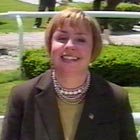 The face that launched a thousand Murraygrams, and cost Town taxpayers hundreds of thousands of dollars for Town mailings (every one emblazoned with photos of the Town Supervisor), each little more than another piece of campaign literature, now has $85,000 MORE of your money to spend -- this time, on television spots.
Welcome to The Kate Murray Show. Yes, its a realllllly big shoe, ah, show, hosted by none other than Town of Hempstead Supervisor, Kate Murray, and sponsored by YOU, the Town of Hempstead taxpayer.
Newsday reports on this week's vote of the Town Board (5-1 in favor of spending your money to see more of Kate Murray's smiling face), with GOP Board members solidly behind Kate's bid to literally "face" the nation, and the lonely Democrat, Dorothy Goosby, the sole voice of dissent.
Frankly, we can't understand, for the life of us, why Dorothy is so upset. After all, what's another $85,000. Add it to the pot. Why, taxpayers in the Town of Hempstead would gladly pay twice that -- maybe four times -- just to see Kate's smiling face!
In fact, why not spend even MORE of the taxpayers' hard-earned money to plaster Kate Murray's face in every possible form of media? We are outraged that the Hempstead Town Board has only appropriated a paltry $135,000 for Kate's TV spots in 2007! How much exposure will that buy?
Its not enough that Town of Hempstead residents have Kate's face in their, ah, faces through the seemingly endless barrage of nonsensical mailings, costing the taxpayers nearly a half million dollars in 2005 (an election year for Ms. Murray) and almost that much in 2006 (thank heavens for that printing press in the basement of Town Hall).
Now, the Republican-dominated Town Board wants to throw an additional 85,000 tax dollars away so that Supervisor Murray can flash her smile into taxpayers' living rooms via the boob tube. [Try You-Tube, Kate. It costs us nothing!]
Were this expenditure about promoting the Town of Hempstead -- its beaches, its parks, its communities, its people -- that would be money well spent, indeed.
Unfortunately, this is merely the latest assault upon the taxpayer in the name of shameless self-promotion, a smiling Kate Murray on every TV screen, and a Murraygram (count the photos of Kate) in every mailbox.
One of this year's spots -- featuring Kate Murray, of course -- shows the Supervisor at Elmont's Belmont Racetrack (a State facility). Of course Kate's at the racetrack, silly. After all, she's off and running -- again!
When will this tiresome and costly charade come to an end? No time soon, we're afraid. And with Nassau County GOP Chair Joe Mondello ascending to the throne as NY State Republican Chair, be prepared for more spending, and a whole lot more of Kate.
- - -
Commercials featuring Supervisor get rapped
BY EMI ENDO
Newsday Staff Writer
Hempstead Supervisor Kate Murray should share the spotlight in the town's TV commercials, says the town board's only Democrat.
Councilwoman Dorothy Goosby voted this week against spending $85,000 on airtime for town advertisements next year. She said they serve only to promote Murray, a Republican up for re-election in 2007, who narrates and appears in the commercials.
"I'm very upset by it," Goosby said. "It's not necessary." Goosby complained at a town board meeting Tuesday evening that the supervisor was excluding members of the 5-1 Republican board from also appearing in the ads.
Murray said the spots promoted townwide tourism, affordable housing and sanitation programs and that she was elected to represent all the residents. "I am the chief spokesperson," she said, adding that the other town board members would agree with her.
Goosby shot back, "They'll agree with you because you're all the same party."
Murray Thursday called the commercials "governmental in nature" and said the town also runs ads in years when she's not running for office. She said local television was an effective way to reach the town's constituents.
"You're paying for your programs," she said of the taxpayers. "You should know what's out there for you."
In one of the tourism ads running this year, Murray appears at the racetrack at Belmont Park, the Long Island Rough Riders soccer field and the town's Rock Hall Museum in Lawrence. "Call Hempstead Town's tourism office ... to plan your hometown vacation," she says.
For 2007, the town board approved a total of $85,000 for 30-second ads for tourism, affordable housing, and hazardous waste and recycling programs. The town will pay for 1,190 spots on Cablevision, town spokesman Mike Deery said.
The 2007 budget also includes $50,000 for 704 airings of other public service announcements, Deery said. The town's office of communications and public affairs directs all of the commercials but must pay outside production and editing costs. The town spent $142,000 this year on commercials, Deery said.
Goosby said the town hardly needs to publicize its affordable housing program because of overwhelming demand. The waiting list is so long that it could take as long as 10 years for an apartment to open up, according to the town's Web site.
In response, Murray said she was proud to tout the program "even though we may have a big crowd on the list.
"Republican Councilman Anthony Santino said in his 20 years of working for the town, the supervisor always has served as the chief elected official and spokesperson.
But Jeff Gold, deputy chairman of the Hempstead Democrats, said the town could provide information about its programs "without promoting a candidate for office."
Copyright 2006 Newsday Inc.
- - -
Click HERE to post a comment on this story on Newsday.com.
Ideas for a Better New York
Spitzer Transition Team Seeks Input Into New York's Future
What are the issues that are important to you, locally and state-wide, and how can State government best deal with matters that impact upon both wallet and quality of life?
Governor-elect Eliot Spitzer's transition team is asking New Yorkers to submit their own ideas, on issues ranging from the economy to the environment. In other words, you can now put your mouth where your tax money is, and, with any luck, make both work harder for you and our collective community.
To post an idea, simply visit the submit your ideas page on the Spitzer transition team's website.
This is your opportunity to be a part of New York's transition, from twelve years of malaise and borrow and spend, to a leaner, more proactive State government.
As for our "idea," well, its quite simple, really: Eliminate. Consolidate. Pay-As-You-Go. The fastest way to wipe out the State's burgeoning debt and to lower property taxes is to eliminate unnecessary and wasteful government entities (at least 100 public authorities and so-called "special districts" immediately come to mind); consolidate, from agencies that provide overlapping services to school districts that leave too many of our children behind; and pay-as-you-go (also known as "spend-only-what-you-have) as the successor to the old (and costly) "borrow and spend."
Cutting costs and saving tax dollars does not have to be painful. If we cut the pork, trim the fat, and drain off the grease that's been dripping over the palms of way too many special interests, there will be plenty of money to fund worthwhile and beneficial social, economic and environmental initiatives, while lowering property taxes and reducing the State's debt.
Why, just show us the latest list of New York's public benefit corporations, and we'll find you a few billion dollars right off the top!
What are the issues that are important to you, locally and state-wide, and how can State government best deal with matters that impact upon both wallet and quality of life?
Governor-elect Eliot Spitzer's transition team is asking New Yorkers to submit their own ideas, on issues ranging from the economy to the environment. In other words, you can now put your mouth where your tax money is, and, with any luck, make both work harder for you and our collective community.
To post an idea, simply visit the submit your ideas page on the Spitzer transition team's website.
This is your opportunity to be a part of New York's transition, from twelve years of malaise and borrow and spend, to a leaner, more proactive State government.
As for our "idea," well, its quite simple, really: Eliminate. Consolidate. Pay-As-You-Go. The fastest way to wipe out the State's burgeoning debt and to lower property taxes is to eliminate unnecessary and wasteful government entities (at least 100 public authorities and so-called "special districts" immediately come to mind); consolidate, from agencies that provide overlapping services to school districts that leave too many of our children behind; and pay-as-you-go (also known as "spend-only-what-you-have) as the successor to the old (and costly) "borrow and spend."
Cutting costs and saving tax dollars does not have to be painful. If we cut the pork, trim the fat, and drain off the grease that's been dripping over the palms of way too many special interests, there will be plenty of money to fund worthwhile and beneficial social, economic and environmental initiatives, while lowering property taxes and reducing the State's debt.
Why, just show us the latest list of New York's public benefit corporations, and we'll find you a few billion dollars right off the top!
Thursday, November 30, 2006
You Can Never Have Too Much Government
"The More The Merrier," Say New Yorkers
A recent report issued by NYS Comptroller Alan Hevesi confirms what many off us have been complaining about for a long, long time: We have way too many layers of government.
State, county, town, village, city -- and hundreds of departments and agencies under them -- all with their own "wish list" for the holidays, each digging into our all but empty pockets.
Fiefdoms that worked so well -- at least in terms of control of both party and masses -- in the 1800s and 1900s, today fail us in terms of efficiency and cost effectiveness.
There are 4200 local governments, give or take a few, in New York State, and that doesn't include Special Districts (i.e., Water, Fire, Sanitary), public authorities (nearly 700 of them, at last count), or the plethora of taxing districts that come squarely under the influence of other local governments, such as Sewer Districts, Lighting Disticts, Refuse Disposal Districts, and the list goes on, and on, and on.
Could we do more -- or at least as much -- with less? No doubt. Does New York really need, and do New Yorkers benefit from, 932 townships, 554 villages, and some 700 seperate School Districts? We think not!
Hopefully, when Governor-elect Spitzer takes office on January 1st, one of the issues he will begin to examine is whether all of this government over the people, by too many people, at great cost to the people, is in the best interest of the people. Concluding that it is not -- no other conclusion being possible -- we trust our new Governor will heed our advice and look, wherever and everywhere, to consolidate government, where it is useful and necessary, and eliminate that which is wasteful and/or has outlived its usefulness.
"Day One, Everything changes." One of those things, if we are to thrive as viable state attractive to both economic and personal growth, must be the very system by which we are governed.
- - -
18th Century System Does Not Reflect Today’s Changing Municipalities
New York State’s laws and historic designation of what constitutes a city, town or village have not changed despite dramatic shifts in the population and character of today’s local governments, according to a report issued today by New York State Comptroller Alan G. Hevesi. As a result, New York’s basic structure of local governments does not match the current needs or circumstances of today’s municipalities.
“Significant changes have occurred since the designations of cities, towns and villages were made, meaning that many local governments are facing 21st Century circumstances while operating under 18th Century rules,” Hevesi said. “State leaders need to examine these issues to fairly address the changing needs of New York’s municipalities.”
The report analyzes the history of municipal structures in New York State, the implications of how these designations affect municipalities today, and illustrates what a modern classification system might look like. The findings of the report were shared with local government experts who provided valuable input to the report.
Local Government Changes
Since 1950, cities in New York State have lost 24 percent of their population while the populations of towns increased by 121 percent.
There are now more big towns in New York than there are big cities. For example, only 12 cities today have a population greater than 50,000, while 21 towns exceed this level.
Ten towns have populations of more than 100,000 people, with four towns larger than Buffalo. While 35 out of 62 cities have populations under 25,000, there are 60 towns and six villages with larger populations.
“We’re so used to our current structures of cities, towns and villages in New York State that we rarely pause to think deliberately about why we're structured the way we are and what difference it makes. This thought-provoking analysis shows us that our government choices are highly significant and very much in need of a fresh look,” Kathryn A. Foster, director, Institute for Local Governance and Regional Growth at the University at Buffalo, said. “It’s time to reopen the public dialogue on fundamental governance reform.”
“This report is an extremely important contribution to the ongoing discussion among scholars and policy-makers on the structure, efficiency and effectiveness of local government in New York and the foundations of state/local relations in our state,” said Gerald Benjamin, dean of the College of Liberal Arts and Sciences at the State University of New Paltz. “The cluster analysis used in the research clearly demonstrates that the conventional categories we use in thinking about and legislating for local government in New York rely on distinctions without differences.
There is a basis here for very serious discourse about the need for alteration of the fundamentals of local governance in New York.”
“This analysis focuses attention on the basic structure of local government, including governance, regional planning, shared services, and a number of other issues of interest to the Government Law Center. For example, under the Shared Municipal Services Incentive (SMSI) program, we’re providing regional technical assistance related to consolidations, mergers, dissolutions, cooperation and shared services,” Patricia E. Salkin, associate dean and director of the Government Law Center of Albany Law School, said. “We look forward to continuing our collaboration with the State Comptroller’s office on issues in these areas.”
Why Does Classification Matter? The legal definition of a municipality has many implications regarding how a municipality can operate, provide services or receive state aid. For instance:
Revenue sharing and many other forms of local aid are differentiated based on municipal class. This is primarily beneficial to city governments, which often receive greater aid and are generally facing greater needs than most towns or villages.
While major urban towns such as Islip and Cheektowaga face issues similar to big cities, they are not allowed under law to diversify their revenue base in the way that cities can.
The most basic municipal services, such as sewer, water, sanitation and fire protection, in towns are often provided through special districts. These systems are generally built only for a specific area and can result in under utilized and expensive systems as towns become more urbanized.
An Illustrative Method for Grouping Municipalities While New York’s local governments are usually analyzed by specific municipal class, the report used a statistical research technique known as a cluster analysis to illustrate an alternative method to classify municipalities. A cluster analysis is a statistical technique that groups entities into clusters that have similar characteristics based on structural, demographic and financial attributes of these localities, such as population, land area, median family income, median house values, poverty rate, government expenditures, costs for public safety and transportation services, and property taxes, among other variables.
The analysis revealed that, while there are similarities among local governments within a class, there are more differences that are not taken into account in New York’s existing system. From the analysis, five major clusters or classifications emerged, which include:
Major Urban Centers: Six cities and 13 towns were classified as major urban centers. They had average populations of more than 200,000, covered nearly 70 square miles, had a relatively high level of poverty (11 percent), and higher than average tax rates. Examples of municipalities in this cluster include: Amherst, Brookhaven, Buffalo, Cheektowaga, Clarkstown, Hempstead, Ramapo and Rochester.
Smaller Urban Centers (Upstate and Downstate): Two clusters emerged in this category, which were separated along regional lines upstate and downstate. These groups include most of the state’s small cities and villages that average only three to five miles in size. While these municipalities are densely populated, the small urban centers downstate are more than twice as dense as those located upstate. Smaller urban centers upstate included 46 cities, 192 villages and two towns, while the smaller urban centers downstate included six cities, 87 villages and 14 towns. Examples of municipalities in this cluster include: Peekskill, Mamaronek, Larchmont, Tonawanda, Kingston, Oswego, Alfred, Fredonia and Saranac Lake.
Surburbs. This grouping, which includes three cities, 71 villages and 172 towns, has relatively low population density, newer housing and the lowest average property taxes. Examples of municipalities in this cluster include: Saratoga Springs, Geneva, Fishkill, Riverhead, Schodack, Orchard Park and Onondaga.
Rural. This is the largest cluster of municipalities, including 610 towns and only six villages, which average about 3,700 residents with less than 100 residents per square mile. They tend to coverage a large geographic area (average 51 square miles) and have fairly low tax rates.
For a breakdown of each cluster by individual municipality, see pages 7-14 of the report.
“Starting from scratch, no one would design the system that has evolved in New York today,” Mark Pattison, deputy comptroller for local government services and economic development for the State Comptroller’s office. “Our office will continue to focus on issues such as this to generate needed discussion and work towards critical changes in our governmental system.”
Facts About New York’s Local Governments
Currently there are more than 4,200 local governments, including 932 towns, 554 villages, 62 cities, 57 counties outside of New York City and 700 school districts. The vast majority of cities, towns and villages were formed during the 1800s and there have been almost no changes since the 1920s. For instance, only three cities have been created since 1920. The total number of towns has not changed since 1900. Since 1920, 122 villages were created and 37 were dissolved.
Click here for a copy of the Comptroller's report
A recent report issued by NYS Comptroller Alan Hevesi confirms what many off us have been complaining about for a long, long time: We have way too many layers of government.
State, county, town, village, city -- and hundreds of departments and agencies under them -- all with their own "wish list" for the holidays, each digging into our all but empty pockets.
Fiefdoms that worked so well -- at least in terms of control of both party and masses -- in the 1800s and 1900s, today fail us in terms of efficiency and cost effectiveness.
There are 4200 local governments, give or take a few, in New York State, and that doesn't include Special Districts (i.e., Water, Fire, Sanitary), public authorities (nearly 700 of them, at last count), or the plethora of taxing districts that come squarely under the influence of other local governments, such as Sewer Districts, Lighting Disticts, Refuse Disposal Districts, and the list goes on, and on, and on.
Could we do more -- or at least as much -- with less? No doubt. Does New York really need, and do New Yorkers benefit from, 932 townships, 554 villages, and some 700 seperate School Districts? We think not!
Hopefully, when Governor-elect Spitzer takes office on January 1st, one of the issues he will begin to examine is whether all of this government over the people, by too many people, at great cost to the people, is in the best interest of the people. Concluding that it is not -- no other conclusion being possible -- we trust our new Governor will heed our advice and look, wherever and everywhere, to consolidate government, where it is useful and necessary, and eliminate that which is wasteful and/or has outlived its usefulness.
"Day One, Everything changes." One of those things, if we are to thrive as viable state attractive to both economic and personal growth, must be the very system by which we are governed.
- - -
18th Century System Does Not Reflect Today’s Changing Municipalities
New York State’s laws and historic designation of what constitutes a city, town or village have not changed despite dramatic shifts in the population and character of today’s local governments, according to a report issued today by New York State Comptroller Alan G. Hevesi. As a result, New York’s basic structure of local governments does not match the current needs or circumstances of today’s municipalities.
“Significant changes have occurred since the designations of cities, towns and villages were made, meaning that many local governments are facing 21st Century circumstances while operating under 18th Century rules,” Hevesi said. “State leaders need to examine these issues to fairly address the changing needs of New York’s municipalities.”
The report analyzes the history of municipal structures in New York State, the implications of how these designations affect municipalities today, and illustrates what a modern classification system might look like. The findings of the report were shared with local government experts who provided valuable input to the report.
Local Government Changes
Since 1950, cities in New York State have lost 24 percent of their population while the populations of towns increased by 121 percent.
There are now more big towns in New York than there are big cities. For example, only 12 cities today have a population greater than 50,000, while 21 towns exceed this level.
Ten towns have populations of more than 100,000 people, with four towns larger than Buffalo. While 35 out of 62 cities have populations under 25,000, there are 60 towns and six villages with larger populations.
“We’re so used to our current structures of cities, towns and villages in New York State that we rarely pause to think deliberately about why we're structured the way we are and what difference it makes. This thought-provoking analysis shows us that our government choices are highly significant and very much in need of a fresh look,” Kathryn A. Foster, director, Institute for Local Governance and Regional Growth at the University at Buffalo, said. “It’s time to reopen the public dialogue on fundamental governance reform.”
“This report is an extremely important contribution to the ongoing discussion among scholars and policy-makers on the structure, efficiency and effectiveness of local government in New York and the foundations of state/local relations in our state,” said Gerald Benjamin, dean of the College of Liberal Arts and Sciences at the State University of New Paltz. “The cluster analysis used in the research clearly demonstrates that the conventional categories we use in thinking about and legislating for local government in New York rely on distinctions without differences.
There is a basis here for very serious discourse about the need for alteration of the fundamentals of local governance in New York.”
“This analysis focuses attention on the basic structure of local government, including governance, regional planning, shared services, and a number of other issues of interest to the Government Law Center. For example, under the Shared Municipal Services Incentive (SMSI) program, we’re providing regional technical assistance related to consolidations, mergers, dissolutions, cooperation and shared services,” Patricia E. Salkin, associate dean and director of the Government Law Center of Albany Law School, said. “We look forward to continuing our collaboration with the State Comptroller’s office on issues in these areas.”
Why Does Classification Matter? The legal definition of a municipality has many implications regarding how a municipality can operate, provide services or receive state aid. For instance:
Revenue sharing and many other forms of local aid are differentiated based on municipal class. This is primarily beneficial to city governments, which often receive greater aid and are generally facing greater needs than most towns or villages.
While major urban towns such as Islip and Cheektowaga face issues similar to big cities, they are not allowed under law to diversify their revenue base in the way that cities can.
The most basic municipal services, such as sewer, water, sanitation and fire protection, in towns are often provided through special districts. These systems are generally built only for a specific area and can result in under utilized and expensive systems as towns become more urbanized.
An Illustrative Method for Grouping Municipalities While New York’s local governments are usually analyzed by specific municipal class, the report used a statistical research technique known as a cluster analysis to illustrate an alternative method to classify municipalities. A cluster analysis is a statistical technique that groups entities into clusters that have similar characteristics based on structural, demographic and financial attributes of these localities, such as population, land area, median family income, median house values, poverty rate, government expenditures, costs for public safety and transportation services, and property taxes, among other variables.
The analysis revealed that, while there are similarities among local governments within a class, there are more differences that are not taken into account in New York’s existing system. From the analysis, five major clusters or classifications emerged, which include:
Major Urban Centers: Six cities and 13 towns were classified as major urban centers. They had average populations of more than 200,000, covered nearly 70 square miles, had a relatively high level of poverty (11 percent), and higher than average tax rates. Examples of municipalities in this cluster include: Amherst, Brookhaven, Buffalo, Cheektowaga, Clarkstown, Hempstead, Ramapo and Rochester.
Smaller Urban Centers (Upstate and Downstate): Two clusters emerged in this category, which were separated along regional lines upstate and downstate. These groups include most of the state’s small cities and villages that average only three to five miles in size. While these municipalities are densely populated, the small urban centers downstate are more than twice as dense as those located upstate. Smaller urban centers upstate included 46 cities, 192 villages and two towns, while the smaller urban centers downstate included six cities, 87 villages and 14 towns. Examples of municipalities in this cluster include: Peekskill, Mamaronek, Larchmont, Tonawanda, Kingston, Oswego, Alfred, Fredonia and Saranac Lake.
Surburbs. This grouping, which includes three cities, 71 villages and 172 towns, has relatively low population density, newer housing and the lowest average property taxes. Examples of municipalities in this cluster include: Saratoga Springs, Geneva, Fishkill, Riverhead, Schodack, Orchard Park and Onondaga.
Rural. This is the largest cluster of municipalities, including 610 towns and only six villages, which average about 3,700 residents with less than 100 residents per square mile. They tend to coverage a large geographic area (average 51 square miles) and have fairly low tax rates.
For a breakdown of each cluster by individual municipality, see pages 7-14 of the report.
“Starting from scratch, no one would design the system that has evolved in New York today,” Mark Pattison, deputy comptroller for local government services and economic development for the State Comptroller’s office. “Our office will continue to focus on issues such as this to generate needed discussion and work towards critical changes in our governmental system.”
Facts About New York’s Local Governments
Currently there are more than 4,200 local governments, including 932 towns, 554 villages, 62 cities, 57 counties outside of New York City and 700 school districts. The vast majority of cities, towns and villages were formed during the 1800s and there have been almost no changes since the 1920s. For instance, only three cities have been created since 1920. The total number of towns has not changed since 1900. Since 1920, 122 villages were created and 37 were dissolved.
Click here for a copy of the Comptroller's report
Wednesday, November 29, 2006
So THAT'S Where Our Tax Dollars Went!
Info On Member Item Pork Trickles Out Of Albany
The New York Times and the Associated Press both had stories this week about the fabled, and now infamous secret spending of our State Legislators, reporting publicly, for the first time, on how much of your tax dollars went where and to whom as "member item" grants.
The Assembly, controlled by the Democrats, was heavy on the pork, and even Sheldon Silver (who keeps Kosher, at least back on the Lower East Side), was seen bringing home the bacon.
Over in the Senate chambers, ruled by the Republicans, you can be sure that Joe Bruno & Company will be seen as having wrestled down a few of those pigs ("pulled pork, anyone?") when the Senate's member item grant data is released sometime in December.
The problem is not one of party, but rather, of a system that operates out of the public eye and without oversight, self-imposed or otherwise.
Clearly, the leadership of both houses are like kids in a candy store, grabbing handfuls of jaw breakers and what used to be penny candy but now, with interest, cost us, the taxpayer, $1.99.
Mind you, much of this "pork" is good -- mighty tasty, even. Nothing wrong, in the least, in funding museums, civic projects, and initiatives that benefit the entire community.
In fact, not one of the items listed in the articles that follow -- save, perhaps, $2000 for a Doll and Toy Museum and $1000 for a monument to sand workers -- strikes us as imprudent.
It is the "behind closed doors" process, and a total lack of accountability that concern us, things we hope will go by the wayside as member items come out of the closet and into public view.
Hmmm. $386,000 to the Chinese-American Planning Council? That's an awful lot of spare ribs!
We wonder if there's any money in the member item pot for community-minded blogs?
- - -
Assembly lists its pork projects
By MICHAEL GORMLEY
Associated Press Writer
ALBANY, N.Y. (AP) -- New Yorkers just paid for an exercise program for senior citizens in Tuckahoe, endowed a chair in labor studies in New York City, and funded teleconference visits with prisoners near Rochester.
It's all part of the pork-barrel spending over the last four years released late Monday by the Assembly. [Click HERE to see Assembly Reports.]
The projects are for social services, prison programs, senior citizens centers, arts programs and more all directed to local groups in lawmakers' home districts. But they add up to more than $200 million a year in spending, more going to majority party lawmakers in the Senate and Assembly.
Good-government groups have said the spending, which they call "pork," is often used to buy votes and to perpetuate the power of incumbents in Albany where the vast majority of lawmakers win re-election.
But now, for the first time, New Yorkers can see which lawmakers bestowed the taxpayers' largesse on which local projects.
A week ago, the Republican-led Senate posted the names of lawmakers and the pork barrel projects they sponsored the past two fiscal years.
A state judge last month ordered leaders of the state Legislature to disclose the names of lawmakers who decide how $170 million in taxpayer money is spent on pet projects in their home districts.
Details of the grants - which include money for museums, charities, schools and other causes - were posted on the Senate's web site Wednesday under "Senate Reports." The list includes thousands of grants along with the lawmaker who requested the funding in fiscal years 2003-2004 and 2004-2005. Information on more years will be posted later, according to Senate Majority Leader Joseph Bruno's office.
The Assembly's thousands of projects include:
-$1.62 million for bilingual economic development and outreach in New York City.
-$800,000 for homeless outreach in New York City.
-$309,000 to the State University of New York at Buffalo for construction to comply with "gender equity requirements" in sports programs.
-$100,000 to establish the Betty Shabazz Chair at Medgar Evers College of the City University of New York to be "a platform for addressing adversity and empowering victims of violence."
-$500,000 to enhance worker education program and fund faculty in labor studies at CUNY.
-$5,000 for Bobbi and the Strays, a pet adoption service in Ozone Park.
-$15,000 for a sewer project at the Yates County Fairgrounds.
-$229,000 for academics and career counseling for prison inmates.
-$131,000 for a parenting and visitation program for women inmates at Albion prison and to support teleconference visits for prisoners' families.
-$25,000 for the Sunnyside Chamber of Commerce in Queens.
-$35,000 to revitalize the Norwood Shopping District in the Bronx.
-Hundreds of thousands of dollars in individual grants to aid several local programs to provide alternatives to prison for drug offenders.
-$1,000 to the Tuckahoe Senior Citizens for a weekly exercise program.
- - -
Assembly Lists Recipients of Funds for Pet Projects
By DANNY HAKIM and MARGOT WILLIAMS
ALBANY, Nov. 27 — The New York State Assembly made public its full list of pet legislative projects late Monday afternoon, giving taxpayers the clearest view yet of how lawmakers have spent $85 million a year on thousands of local initiatives that critics have derided as pork-barrel spending.
The Assembly, which has long resisted releasing details about such spending, disclosed the list under order from a State Supreme Court judge who ruled last month in a lawsuit brought by The Times Union of Albany.
The release of the material did not end the legal battle over the information. A lawyer for the Hearst Corporation, the publisher of The Times Union, said Monday night that the format was so cumbersome and unmanageable that the company would return to court if the Assembly did not provide the information in a way that would be easier to analyze.
“It’s not usable, readable information,” said Eve Burton, a lawyer for Hearst. “It’s not data the way the court ordered it, so that consumers can use it. If they do not comply immediately with usable data, we’re going back to the judge to seek relief.”
“There is a deliberate attempt not to provide the public with the information,” she added.
The computer files made available by the Assembly included thousands of pages listing various projects, but the files were configured in a way that prevents them from being searchable without considerable technical processing.
Charles Carrier, a spokesman for the Democrats who control the Assembly, said he was not aware of any problems.
Each year, the Legislature sets aside $200 million for such projects — $85 million for the Assembly, $85 million for the Senate and $30 million for the governor. The projects, known as member items, have been criticized by budget watchdogs because there is no public debate on how useful they are, there is little accounting for how the money is spent, and the system allows
the leaders to keep members in the dark about who they are favoring.
Member items are also a basic tool used by the legislative leaders to enforce loyalty in their parties and to protect vulnerable members. Defiant lawmakers are routinely given smaller amounts, while endangered incumbents often get larger ones. Watchdog groups say the leaders’ tightly controlled allocation of the $200 million stifles democracy.
Assembly Speaker Sheldon Silver, a Democrat from Manhattan, has been extremely reluctant to reveal how his chamber spends money for local initiatives, and part of the reason was clear enough after the Assembly’s list was released. Mr. Silver, who controls the chamber’s purse strings, doled out far more money for such projects than any of his Assembly colleagues: More than $7 million in the current fiscal year, of the more than $50 million that the Assembly has already earmarked, was for Mr. Silver alone.
In the current fiscal year, he put money into Jewish and Chinese groups that are key constituents in his Lower East Side district, including three items for a total of nearly half a million dollars to the United Jewish Council of the East Side, $100,000 to the Museum of Jewish Heritage and three items totaling $386,000 to the Chinese-American Planning Council.
“These are important organizations that are involved in civic and community and cultural work,” Mr. Carrier said.
Senate Majority Leader Joseph L. Bruno, a Republican, has also been reluctant to release a central list of the projects his members’ finance, but his staff has said he will not do so until next month, in a response to the judge’s ruling.
Over all, Assembly-financed projects for the current fiscal year ranged from millions of dollars in legal aid to the poor to an array of oddities, with the majority Democrats claiming most of the funds. Assemblyman Darrel J. Aubertine, a Democrat from northern New York, gave $10,000 to replace aging wire mesh on a mountain lion’s cage at a state zoo in Watertown.
Assemblywoman Joan L. Millman, a Democrat from Brooklyn, provided $2,000 for the Doll and Toy Museum of New York City, located in Brooklyn. Assemblyman Tom Kirwan, a Republican from Newburgh, gave $2,500 to repair a church boiler.
On Long Island, Assemblyman Thomas P. DiNapoli, a Democrat, provided $1,000 for a monument to the sand miners local workers who unearthed the sand used in New York City sidewalks.
Most of the grants were to well-known institutions and popular causes — cancer and AIDS charities, Little Leagues, town halls and fire departments — though the amounts of money each received often seemed to be proportional to the clout of their sponsoring legislators, rather than need.
Mr. Carrier said two-thirds of the Assembly majority’s member items were used to offset cuts to programs made by Gov. George E. Pataki in his budget proposal.
The move on Monday by the Assembly came after legislative leaders have fought for years to keep such spending secret. Legislators individually publicize many of the projects because they want credit for them back home, and there are ways to gain access to some of the information. But lacking central lists of all the thousands of projects, it has been difficult to track how public money is used for local initiatives.
In June, the Hearst Corporation sued the leaders of the majority parties in the Senate and Assembly after they refused to turn over records of their member items, despite requests filed under the state’s Freedom of Information Act. By contrast, the minority leaders in both chambers, and the staff of Governor Pataki, complied with similar requests.
As recently as the 1990s, member items were delineated in the budget itself, though without the names of the sponsoring legislators. That ended after Mr. Silver accused Mr. Pataki of singling out Democratic items for veto. Legislative leaders have been extremely reluctant to make them fully public, in part because it would mean that their members could compare and contrast how much each one of them gets.
In October, Justice Robert A. Sackett of State Supreme Court ruled that the Legislature must reveal how the money is spent. In his decision, Justice Sackett said the Legislature had “failed to articulate a rational basis for redacting the names,” adding, “the public has a right to know.”
The New York Times and the Associated Press both had stories this week about the fabled, and now infamous secret spending of our State Legislators, reporting publicly, for the first time, on how much of your tax dollars went where and to whom as "member item" grants.
The Assembly, controlled by the Democrats, was heavy on the pork, and even Sheldon Silver (who keeps Kosher, at least back on the Lower East Side), was seen bringing home the bacon.
Over in the Senate chambers, ruled by the Republicans, you can be sure that Joe Bruno & Company will be seen as having wrestled down a few of those pigs ("pulled pork, anyone?") when the Senate's member item grant data is released sometime in December.
The problem is not one of party, but rather, of a system that operates out of the public eye and without oversight, self-imposed or otherwise.
Clearly, the leadership of both houses are like kids in a candy store, grabbing handfuls of jaw breakers and what used to be penny candy but now, with interest, cost us, the taxpayer, $1.99.
Mind you, much of this "pork" is good -- mighty tasty, even. Nothing wrong, in the least, in funding museums, civic projects, and initiatives that benefit the entire community.
In fact, not one of the items listed in the articles that follow -- save, perhaps, $2000 for a Doll and Toy Museum and $1000 for a monument to sand workers -- strikes us as imprudent.
It is the "behind closed doors" process, and a total lack of accountability that concern us, things we hope will go by the wayside as member items come out of the closet and into public view.
Hmmm. $386,000 to the Chinese-American Planning Council? That's an awful lot of spare ribs!
We wonder if there's any money in the member item pot for community-minded blogs?
- - -
Assembly lists its pork projects
By MICHAEL GORMLEY
Associated Press Writer
ALBANY, N.Y. (AP) -- New Yorkers just paid for an exercise program for senior citizens in Tuckahoe, endowed a chair in labor studies in New York City, and funded teleconference visits with prisoners near Rochester.
It's all part of the pork-barrel spending over the last four years released late Monday by the Assembly. [Click HERE to see Assembly Reports.]
The projects are for social services, prison programs, senior citizens centers, arts programs and more all directed to local groups in lawmakers' home districts. But they add up to more than $200 million a year in spending, more going to majority party lawmakers in the Senate and Assembly.
Good-government groups have said the spending, which they call "pork," is often used to buy votes and to perpetuate the power of incumbents in Albany where the vast majority of lawmakers win re-election.
But now, for the first time, New Yorkers can see which lawmakers bestowed the taxpayers' largesse on which local projects.
A week ago, the Republican-led Senate posted the names of lawmakers and the pork barrel projects they sponsored the past two fiscal years.
A state judge last month ordered leaders of the state Legislature to disclose the names of lawmakers who decide how $170 million in taxpayer money is spent on pet projects in their home districts.
Details of the grants - which include money for museums, charities, schools and other causes - were posted on the Senate's web site Wednesday under "Senate Reports." The list includes thousands of grants along with the lawmaker who requested the funding in fiscal years 2003-2004 and 2004-2005. Information on more years will be posted later, according to Senate Majority Leader Joseph Bruno's office.
The Assembly's thousands of projects include:
-$1.62 million for bilingual economic development and outreach in New York City.
-$800,000 for homeless outreach in New York City.
-$309,000 to the State University of New York at Buffalo for construction to comply with "gender equity requirements" in sports programs.
-$100,000 to establish the Betty Shabazz Chair at Medgar Evers College of the City University of New York to be "a platform for addressing adversity and empowering victims of violence."
-$500,000 to enhance worker education program and fund faculty in labor studies at CUNY.
-$5,000 for Bobbi and the Strays, a pet adoption service in Ozone Park.
-$15,000 for a sewer project at the Yates County Fairgrounds.
-$229,000 for academics and career counseling for prison inmates.
-$131,000 for a parenting and visitation program for women inmates at Albion prison and to support teleconference visits for prisoners' families.
-$25,000 for the Sunnyside Chamber of Commerce in Queens.
-$35,000 to revitalize the Norwood Shopping District in the Bronx.
-Hundreds of thousands of dollars in individual grants to aid several local programs to provide alternatives to prison for drug offenders.
-$1,000 to the Tuckahoe Senior Citizens for a weekly exercise program.
- - -
Assembly Lists Recipients of Funds for Pet Projects
By DANNY HAKIM and MARGOT WILLIAMS
ALBANY, Nov. 27 — The New York State Assembly made public its full list of pet legislative projects late Monday afternoon, giving taxpayers the clearest view yet of how lawmakers have spent $85 million a year on thousands of local initiatives that critics have derided as pork-barrel spending.
The Assembly, which has long resisted releasing details about such spending, disclosed the list under order from a State Supreme Court judge who ruled last month in a lawsuit brought by The Times Union of Albany.
The release of the material did not end the legal battle over the information. A lawyer for the Hearst Corporation, the publisher of The Times Union, said Monday night that the format was so cumbersome and unmanageable that the company would return to court if the Assembly did not provide the information in a way that would be easier to analyze.
“It’s not usable, readable information,” said Eve Burton, a lawyer for Hearst. “It’s not data the way the court ordered it, so that consumers can use it. If they do not comply immediately with usable data, we’re going back to the judge to seek relief.”
“There is a deliberate attempt not to provide the public with the information,” she added.
The computer files made available by the Assembly included thousands of pages listing various projects, but the files were configured in a way that prevents them from being searchable without considerable technical processing.
Charles Carrier, a spokesman for the Democrats who control the Assembly, said he was not aware of any problems.
Each year, the Legislature sets aside $200 million for such projects — $85 million for the Assembly, $85 million for the Senate and $30 million for the governor. The projects, known as member items, have been criticized by budget watchdogs because there is no public debate on how useful they are, there is little accounting for how the money is spent, and the system allows
the leaders to keep members in the dark about who they are favoring.
Member items are also a basic tool used by the legislative leaders to enforce loyalty in their parties and to protect vulnerable members. Defiant lawmakers are routinely given smaller amounts, while endangered incumbents often get larger ones. Watchdog groups say the leaders’ tightly controlled allocation of the $200 million stifles democracy.
Assembly Speaker Sheldon Silver, a Democrat from Manhattan, has been extremely reluctant to reveal how his chamber spends money for local initiatives, and part of the reason was clear enough after the Assembly’s list was released. Mr. Silver, who controls the chamber’s purse strings, doled out far more money for such projects than any of his Assembly colleagues: More than $7 million in the current fiscal year, of the more than $50 million that the Assembly has already earmarked, was for Mr. Silver alone.
In the current fiscal year, he put money into Jewish and Chinese groups that are key constituents in his Lower East Side district, including three items for a total of nearly half a million dollars to the United Jewish Council of the East Side, $100,000 to the Museum of Jewish Heritage and three items totaling $386,000 to the Chinese-American Planning Council.
“These are important organizations that are involved in civic and community and cultural work,” Mr. Carrier said.
Senate Majority Leader Joseph L. Bruno, a Republican, has also been reluctant to release a central list of the projects his members’ finance, but his staff has said he will not do so until next month, in a response to the judge’s ruling.
Over all, Assembly-financed projects for the current fiscal year ranged from millions of dollars in legal aid to the poor to an array of oddities, with the majority Democrats claiming most of the funds. Assemblyman Darrel J. Aubertine, a Democrat from northern New York, gave $10,000 to replace aging wire mesh on a mountain lion’s cage at a state zoo in Watertown.
Assemblywoman Joan L. Millman, a Democrat from Brooklyn, provided $2,000 for the Doll and Toy Museum of New York City, located in Brooklyn. Assemblyman Tom Kirwan, a Republican from Newburgh, gave $2,500 to repair a church boiler.
On Long Island, Assemblyman Thomas P. DiNapoli, a Democrat, provided $1,000 for a monument to the sand miners local workers who unearthed the sand used in New York City sidewalks.
Most of the grants were to well-known institutions and popular causes — cancer and AIDS charities, Little Leagues, town halls and fire departments — though the amounts of money each received often seemed to be proportional to the clout of their sponsoring legislators, rather than need.
Mr. Carrier said two-thirds of the Assembly majority’s member items were used to offset cuts to programs made by Gov. George E. Pataki in his budget proposal.
The move on Monday by the Assembly came after legislative leaders have fought for years to keep such spending secret. Legislators individually publicize many of the projects because they want credit for them back home, and there are ways to gain access to some of the information. But lacking central lists of all the thousands of projects, it has been difficult to track how public money is used for local initiatives.
In June, the Hearst Corporation sued the leaders of the majority parties in the Senate and Assembly after they refused to turn over records of their member items, despite requests filed under the state’s Freedom of Information Act. By contrast, the minority leaders in both chambers, and the staff of Governor Pataki, complied with similar requests.
As recently as the 1990s, member items were delineated in the budget itself, though without the names of the sponsoring legislators. That ended after Mr. Silver accused Mr. Pataki of singling out Democratic items for veto. Legislative leaders have been extremely reluctant to make them fully public, in part because it would mean that their members could compare and contrast how much each one of them gets.
In October, Justice Robert A. Sackett of State Supreme Court ruled that the Legislature must reveal how the money is spent. In his decision, Justice Sackett said the Legislature had “failed to articulate a rational basis for redacting the names,” adding, “the public has a right to know.”
Tuesday, November 28, 2006
Live From Stony Brook. . .
. . .Three Men In A Room (with refreshments)
The New York Public Interest Research Group Speaker Series
presents
The New York Public Interest Research Group Speaker Series
presents
THREE MEN IN A ROOM:
The Inside Story of Power and Betrayal
in an American Statehouse
With author and former New York State Senator
Dr. Seymour Lachman
The Inside Story of Power and Betrayal
in an American Statehouse
With author and former New York State Senator
Dr. Seymour Lachman
Wednesday, November 29, 2006
12:30 PM – 2:00 PM
Student Union Ballroom
12:30 PM – 2:00 PM
Student Union Ballroom
Book signing to follow
Light refreshments will be served
Light refreshments will be served
"Just three men hold virtually all the cards; the Governor, the Speaker, and the Majority Leader." --Dr. Seymour Lachman
- - -
Click HERE for directions to Stony Brook
Democracy Comes To Hewlett-Woodmere
But Not Now, December 5th!
Award-winning journalist Amy Goodman, host of the daily, grassroots, global, radio/TV news hour Democracy Now!, is on a national speaking tour to mark DN!'s 10th anniversary and launch her second book with journalist David Goodman, Static: Government Liars, Media Cheerleaders, and the People Who Fight Back.
WHEN: Tuesday, December 5th @ 8 p.m.
WHERE: Hewlett-Woodmere Public Library
located at 1125 Broadway
Hewlett, New York 11557
Click here for directions
DESCRIPTION: Amy Goodman will be speaking at an event sponsored by the Five Towns Forum
TICKETS: The event is free and open to the public
- - -
So, what's happening in your community? We rely on you to act as the eyes and ears of your hometown and to keep us in the loop as we keep everyone in the know. E-mail The Community Alliance at info@thecommunityalliance.org.
Award-winning journalist Amy Goodman, host of the daily, grassroots, global, radio/TV news hour Democracy Now!, is on a national speaking tour to mark DN!'s 10th anniversary and launch her second book with journalist David Goodman, Static: Government Liars, Media Cheerleaders, and the People Who Fight Back.
WHEN: Tuesday, December 5th @ 8 p.m.
WHERE: Hewlett-Woodmere Public Library
located at 1125 Broadway
Hewlett, New York 11557
Click here for directions
DESCRIPTION: Amy Goodman will be speaking at an event sponsored by the Five Towns Forum
TICKETS: The event is free and open to the public
- - -
So, what's happening in your community? We rely on you to act as the eyes and ears of your hometown and to keep us in the loop as we keep everyone in the know. E-mail The Community Alliance at info@thecommunityalliance.org.
Monday, November 27, 2006
Billions for New York's Public Authorities. . .
. . .Not One Cent for Accountability to the Taxpayers
In the waning days of the Pataki administration, New York State Comptroller Alan Hevesi reports on an authorization of some $11 billion in funding as approved by the Public Authorities Control Board [a misnomer, if there ever was one].
Yes, "Day One, Everything Changes..." Too bad Governor Spitzer won't have any money on hand to pay for it!
And you were worried about Hevesi's use of a State employee to drive his ailing wife to and from appointments with doctors. . .
Board Rushing to Authorize Extraordinary $11 Billion in Project Funding in Last Days of Pataki Administration
The Public Authorities Control Board, which has approved an average of less than half a billion dollars in projects per meeting for the last year, is rushing through projects totaling $11.4 billion in October and November, with billions more expected in December, New York State Comptroller Alan G. Hevesi said last week. On November 15, Hevesi sent a letter to the members of the PACB warning them about the extraordinary amount of authorizations on the agendas.
“New York State is already suffering under huge amounts of debt, and now in the last days of the current administration, there is a rush to push through billions of dollars of projects that will load the State with billions more in debt, in many cases without getting a proper review,” Hevesi said.
“It is wrong to limit the freedom of the new administration through rushed last minute decisions,” Hevesi said. “The State should take the proper amount of time to make certain that it is entering into sound fiscal commitments that have been thoroughly vetted and analyzed with the PACB as the last step in the process of reviewing a final and complete plan. Also, the Spitzer administration should be given the opportunity to include these projects in a comprehensive plan. This is especially important since Governor-elect Spitzer has said economic development is a priority and much of this financing is for that purpose.
“I’m not suggesting that any of these projects are not worthy or should be blocked. But when they are rushed through in a long list, it is impossible to know if they are as good as they can be,” Hevesi said. “Many of the projects being considered are complex financing agreements that would benefit from more, not less public debate. For example, in April 2005, my Office raised many questions about the Ridge Hill project in Yonkers. As a result, when it was eventually passed, it was revised to provide an annual revenue stream of $6.5 million for more than 70 years for the taxpayers and the people of Yonkers.”
Hevesi said the rush is particularly questionable since many of these projects may not start for years. Some of the projects slated to be approved by the PACB were included in the 2006-07 enacted budget, which added an enormous $16.4 billion to the State’s debt, including $11.8 billion for which the State is directly responsible. Total State-funded debt is projected to increase to nearly $65 billion by 2010-11, or a 33 percent rise over five years.
“The PACB was created to provide oversight over the financial transactions and issuance of debt by 11 public authorities, particularly debt for which the State would be responsible to repay. As such, its final approvals should be completed as close as possible to the time the debt will be issued and only after agencies have developed full financial and operational plans for the funds that they have shared with the Board,” Hevesi said. “By authorizing these projects so early in the process, the PACB is in many cases abdicating its responsibility.”
The PACB agenda for October included $4.7 billion in projects, of which $3.7 billion was State debt and the remainder was for a mix of grants, loans and private debt financings. All were approved. (The Moynihan Station project which was voted down is not included in the $4.7 billion.) For the November meeting, which was scheduled for last week but postponed, the agenda includes $6.7 billion, of which $3.9 billion is new State debt, $1.7 billion is refunding of State debt and most of the remainder is private debt. By comparison, PACB authorized an average of $469 million per meeting between September 2005 and September 2006, and had only two meetings where the agenda barely exceeded $1 billion.
Hevesi raised concern about the amount of debt being authorized at the end of an administration, particularly, he said, because many projects for which funding is being approved are not going to start in the near term and because market conditions are not favorable for all of the refundings being authorized. For example, the PACB has been asked to authorize the Dormitory Authority to issue more than $700 million to refund personal income tax bonds, but under current market conditions only about $65 million of bonds can be refunded and produce actual savings.
“Rushing these projects through before the clock strikes midnight will make it very difficult to put New York back on the right track,” Hevesi said. “The PACB plays a potentially important role in ensuring that the state’s debt is issued at the right time for the right purposes. Now is not the time to write blank checks to public authorities that the new administration will be unable to revise or cancel.”
Comptroller Hevesi’s comprehensive debt reform program, issued in February 2005, would limit the State’s issuance of debt. It includes reforms to the PACB that would require more transparency and accountability. For example, it would require PACB approval for all State public authorities, increasing the number of authorities being reviewed from 11 to 200. It would also require substantially more reporting on all debt deals approved.
- - -
Click here for a historical chart showing the authorizations on PACB agendas
Click here for a copy of the November 15, 2006 letter
In the waning days of the Pataki administration, New York State Comptroller Alan Hevesi reports on an authorization of some $11 billion in funding as approved by the Public Authorities Control Board [a misnomer, if there ever was one].
Yes, "Day One, Everything Changes..." Too bad Governor Spitzer won't have any money on hand to pay for it!
And you were worried about Hevesi's use of a State employee to drive his ailing wife to and from appointments with doctors. . .
Board Rushing to Authorize Extraordinary $11 Billion in Project Funding in Last Days of Pataki Administration
The Public Authorities Control Board, which has approved an average of less than half a billion dollars in projects per meeting for the last year, is rushing through projects totaling $11.4 billion in October and November, with billions more expected in December, New York State Comptroller Alan G. Hevesi said last week. On November 15, Hevesi sent a letter to the members of the PACB warning them about the extraordinary amount of authorizations on the agendas.
“New York State is already suffering under huge amounts of debt, and now in the last days of the current administration, there is a rush to push through billions of dollars of projects that will load the State with billions more in debt, in many cases without getting a proper review,” Hevesi said.
“It is wrong to limit the freedom of the new administration through rushed last minute decisions,” Hevesi said. “The State should take the proper amount of time to make certain that it is entering into sound fiscal commitments that have been thoroughly vetted and analyzed with the PACB as the last step in the process of reviewing a final and complete plan. Also, the Spitzer administration should be given the opportunity to include these projects in a comprehensive plan. This is especially important since Governor-elect Spitzer has said economic development is a priority and much of this financing is for that purpose.
“I’m not suggesting that any of these projects are not worthy or should be blocked. But when they are rushed through in a long list, it is impossible to know if they are as good as they can be,” Hevesi said. “Many of the projects being considered are complex financing agreements that would benefit from more, not less public debate. For example, in April 2005, my Office raised many questions about the Ridge Hill project in Yonkers. As a result, when it was eventually passed, it was revised to provide an annual revenue stream of $6.5 million for more than 70 years for the taxpayers and the people of Yonkers.”
Hevesi said the rush is particularly questionable since many of these projects may not start for years. Some of the projects slated to be approved by the PACB were included in the 2006-07 enacted budget, which added an enormous $16.4 billion to the State’s debt, including $11.8 billion for which the State is directly responsible. Total State-funded debt is projected to increase to nearly $65 billion by 2010-11, or a 33 percent rise over five years.
“The PACB was created to provide oversight over the financial transactions and issuance of debt by 11 public authorities, particularly debt for which the State would be responsible to repay. As such, its final approvals should be completed as close as possible to the time the debt will be issued and only after agencies have developed full financial and operational plans for the funds that they have shared with the Board,” Hevesi said. “By authorizing these projects so early in the process, the PACB is in many cases abdicating its responsibility.”
The PACB agenda for October included $4.7 billion in projects, of which $3.7 billion was State debt and the remainder was for a mix of grants, loans and private debt financings. All were approved. (The Moynihan Station project which was voted down is not included in the $4.7 billion.) For the November meeting, which was scheduled for last week but postponed, the agenda includes $6.7 billion, of which $3.9 billion is new State debt, $1.7 billion is refunding of State debt and most of the remainder is private debt. By comparison, PACB authorized an average of $469 million per meeting between September 2005 and September 2006, and had only two meetings where the agenda barely exceeded $1 billion.
Hevesi raised concern about the amount of debt being authorized at the end of an administration, particularly, he said, because many projects for which funding is being approved are not going to start in the near term and because market conditions are not favorable for all of the refundings being authorized. For example, the PACB has been asked to authorize the Dormitory Authority to issue more than $700 million to refund personal income tax bonds, but under current market conditions only about $65 million of bonds can be refunded and produce actual savings.
“Rushing these projects through before the clock strikes midnight will make it very difficult to put New York back on the right track,” Hevesi said. “The PACB plays a potentially important role in ensuring that the state’s debt is issued at the right time for the right purposes. Now is not the time to write blank checks to public authorities that the new administration will be unable to revise or cancel.”
Comptroller Hevesi’s comprehensive debt reform program, issued in February 2005, would limit the State’s issuance of debt. It includes reforms to the PACB that would require more transparency and accountability. For example, it would require PACB approval for all State public authorities, increasing the number of authorities being reviewed from 11 to 200. It would also require substantially more reporting on all debt deals approved.
- - -
Click here for a historical chart showing the authorizations on PACB agendas
Click here for a copy of the November 15, 2006 letter
Wednesday, November 22, 2006
If God Had Wanted Us To Pay Property Taxes. . .
. . .He Would Have Taxed The Church!
We can hear the banter at Hempstead Town Hall now... "Oh, there goes Tax Assessor, Harvey Levinson, again. Raising taxes. And now, he wants to tax the church..."
Actually, if you read through a press release recently issued by the office of the Nassau County Assessor, as republished below, the idea is to fix glaring inequities in the law that permit certain members of the clergy to pay less in property taxes on houses owned by them than others who own similarly valued houses.
Still, as long as we're talking about taxing the rich (and since we've already wrung every last dime out of the poor and middle class), why not tax ALL real property owned by religious institutions.
After all, who owns more real estate in New York than anybody else? Okay, other than the Arabs and the Japanese. Right. The Catholic church. And all of it, every God-blessed square foot, is exempt from the property tax. "Holy Sepluchar, Batman!"
By what divine right does the church think it is above paying property taxes? All right, the IRS says they don't have to pay income taxes on all the money they collect as tithe, in those gold-gilded plates they pass around, or as rent in the run-down hovels they own, but property taxes? For God's sake, man.
Come to think of it, isn't exempting religious institutions (collectively, the "church") just another way the government subsidizes parochial interests? A subsidy that mocks the seperation of church and state at its very core!
Most of us are now getting hit by that dreaded Alternative Minimum Tax. Why not an Altar Boy Minimum Tax for members of the clergy? In the Catholic church, they can call it "Pay-to-Play!"
Tax those houses owned by members of the cloth, why don't you? And not only clerics of the church, but those terror-crazed Imans, too. And don't forget the Jews. Heck, they already control Wall Street (Bloomberg), Albany (Spitzer, Silver), and Hollywood (Mel Gibson), so why not make some money off of it? Think about it -- in the Five Towns alone, where everyone is a rabbi (at least for tax purposes), and every third house is deemed a synagogue (and why not?) -- making "those people" pay property taxes on their houses would reap millions for the County, Town and school districts. [Not to mention all the cash that would be taken in by the Sanitary Districts, so they can add on those "extra trucks during Passover" to pick up all the leftover bread!]
Yeah. "Chosen People," my tuchas. You've been chosen, all right. Chosen to pay your full share of property taxes!
Now, let's get one thing straight. Religious institutions -- from church, to mosque, to synagogue -- are NOT not-for-profit. They're making a bundle (they don't call it the "arch" Diocese for nothing) -- not the least of which comes from real estate owned, but not appearing on the tax rolls.
When the church complains that it can't make ends meet, maybe we'll call in the UJA to raise some money. Until then, tax the church. If you own property -- be it residential, commercial, or held in the name of the Almighty (if "God shall provide," let Him pay my property tax bill) -- you pay property taxes on it. Period!
The time has come to stick it to the holier-than-thou crowd. Pay up or shut up. Charity, after all, truly begins at home, and the Tax Assessor is going to start with your home, Mr. Clergyman.
And whether you're a Bishop, Rabbi, Iman or Pastor, ordained after years of study or last week by mail order, you're gonna have to dig deep into your pockets to pay the tax man -- just like us ordinary, God-fearing homeowners who get stuck footing the bill for those who own millions (billions?) of dollars in real property but pay not one cent in property taxes.
"Look, Monsignor. You see where there was only one set of property tax bills in the mail? That's where the rest of us were carrying you..."
And while we're at it, let's tax Telicare, too. "Pay up, God Squad. And you too, Church Lady. No more freeloading at the taxpayers' expense. If we have to endure this slop on cable, you have to help support our infrastructure, our public schools, and those garbage trucks that pick up the trash outside the rectory."
Maybe Albany will take up Harvey's call to equalize property taxes among the clergy. [Will those who live in glass houses have to pay more?] But if you think our Legislature will ever amend the law to lift the property tax exemption on real estate owned, say, by the Diocese of Rockville Centre, well, then, to paraphrase Billy Graham as he embarked on his last crusade, "You haven't got a prayer..."
- - -
ASSESSOR LEVINSON ASKS STATE LAWMAKERS TO FIX PROBLEMS WITH CLERGY EXEMPTION LAW
A recent analysis conducted by Assessor Harvey Levinson of the Clergy Property Tax Exemption offered in Nassau County, revealed that 267 members of the clergy are not paying any school property taxes on homes valued at $600,000 dollars or less, while 83 members of the clergy who own homes valued over $600,000 dollars are paying school property taxes that vary from .11 cents to over $29,000.
As the state’s clergy exemption law was written, real property owned by members of the clergy is exempt from school property taxes to the extent of $1,500 dollars in assessed value. The problem, according to Assessor Levinson, was created when the previous administration was mandated by the New York State Supreme Court to lower the level of assessment (the percentage of the full market value of a home that is used to calculate property taxes) to one quarter of one percent to comply with the provisions of the court settlement requiring the county to capture the full market value of all residential properties without violating Real Property Tax Law that caps assessment increases at 6% each year or 20% over five years.
Assessor Levinson explained that any qualifying home with an assessed value of $600,000 would be taxed at one quarter of one percent or $1,500. Once the $1,500 exemption was applied, the clergy members’ property tax obligation was reduced to zero.
“Clearly the intent of the legislation was not to grant a total exemption,” stated Assessor Levinson. “If you look elsewhere throughout the state, the various levels of assessment imposed by other assessing jurisdictions results in some amount of property taxes being paid by members of the clergy. That is why I am calling on state lawmakers to amend state law to allow a total clergy exemption of 20% of the assessed value – similar to the 10% Volunteer Firefighters Exemption. I also believe that the exemption should be income-based so that clergy members with high annual income levels (possibly above $100,000 dollars) receive less.”
In examining a number of towns and cities throughout the state, Assessor Levinson discovered clergy exemption amounts that varied from 31.25% of assessed value in the Town of Huntington; 2.09% in the Town of Islip; 0.25% in the City of Jamestown; and, 0.27% in the City of Syracuse. The level of assessment for these assessing jurisdictions where, respectively, .80%, 11.98%, 100%, and 93.50%.
“Another troubling fact is that the law allows husband and wife ministers who own the same property to double the amount of their exemption,” Assessor Levinson stated. “One notable husband and wife minister family who owns a home in Old Westbury valued at $2.2 million dollars is being granted a clergy exemption totaling $20,200.83 dollars for the 2006-2007 school tax year. Is this policy fair?
“That is why I am calling on state lawmakers to conduct a comprehensive review of this and other provisions of NYS Real Property Tax Law, so that fair and sensible standards that reflect the true intent of the law can be adopted in the next legislative session,” concluded Assessor Levinson. “There is no reason why a clergy member in one part of the state should be granted a greater property tax exemption than other parts of the state.”
- - -
A blessed Thanksgiving, one and all.
The Community Alliance blog returns, in full force, after the holiday weekend. Pass the turkey, please, and don't spare the trimmings...
We can hear the banter at Hempstead Town Hall now... "Oh, there goes Tax Assessor, Harvey Levinson, again. Raising taxes. And now, he wants to tax the church..."
Actually, if you read through a press release recently issued by the office of the Nassau County Assessor, as republished below, the idea is to fix glaring inequities in the law that permit certain members of the clergy to pay less in property taxes on houses owned by them than others who own similarly valued houses.
Still, as long as we're talking about taxing the rich (and since we've already wrung every last dime out of the poor and middle class), why not tax ALL real property owned by religious institutions.
After all, who owns more real estate in New York than anybody else? Okay, other than the Arabs and the Japanese. Right. The Catholic church. And all of it, every God-blessed square foot, is exempt from the property tax. "Holy Sepluchar, Batman!"
By what divine right does the church think it is above paying property taxes? All right, the IRS says they don't have to pay income taxes on all the money they collect as tithe, in those gold-gilded plates they pass around, or as rent in the run-down hovels they own, but property taxes? For God's sake, man.
Come to think of it, isn't exempting religious institutions (collectively, the "church") just another way the government subsidizes parochial interests? A subsidy that mocks the seperation of church and state at its very core!
Most of us are now getting hit by that dreaded Alternative Minimum Tax. Why not an Altar Boy Minimum Tax for members of the clergy? In the Catholic church, they can call it "Pay-to-Play!"
Tax those houses owned by members of the cloth, why don't you? And not only clerics of the church, but those terror-crazed Imans, too. And don't forget the Jews. Heck, they already control Wall Street (Bloomberg), Albany (Spitzer, Silver), and Hollywood (Mel Gibson), so why not make some money off of it? Think about it -- in the Five Towns alone, where everyone is a rabbi (at least for tax purposes), and every third house is deemed a synagogue (and why not?) -- making "those people" pay property taxes on their houses would reap millions for the County, Town and school districts. [Not to mention all the cash that would be taken in by the Sanitary Districts, so they can add on those "extra trucks during Passover" to pick up all the leftover bread!]
Yeah. "Chosen People," my tuchas. You've been chosen, all right. Chosen to pay your full share of property taxes!
Now, let's get one thing straight. Religious institutions -- from church, to mosque, to synagogue -- are NOT not-for-profit. They're making a bundle (they don't call it the "arch" Diocese for nothing) -- not the least of which comes from real estate owned, but not appearing on the tax rolls.
When the church complains that it can't make ends meet, maybe we'll call in the UJA to raise some money. Until then, tax the church. If you own property -- be it residential, commercial, or held in the name of the Almighty (if "God shall provide," let Him pay my property tax bill) -- you pay property taxes on it. Period!
The time has come to stick it to the holier-than-thou crowd. Pay up or shut up. Charity, after all, truly begins at home, and the Tax Assessor is going to start with your home, Mr. Clergyman.
And whether you're a Bishop, Rabbi, Iman or Pastor, ordained after years of study or last week by mail order, you're gonna have to dig deep into your pockets to pay the tax man -- just like us ordinary, God-fearing homeowners who get stuck footing the bill for those who own millions (billions?) of dollars in real property but pay not one cent in property taxes.
"Look, Monsignor. You see where there was only one set of property tax bills in the mail? That's where the rest of us were carrying you..."
And while we're at it, let's tax Telicare, too. "Pay up, God Squad. And you too, Church Lady. No more freeloading at the taxpayers' expense. If we have to endure this slop on cable, you have to help support our infrastructure, our public schools, and those garbage trucks that pick up the trash outside the rectory."
Maybe Albany will take up Harvey's call to equalize property taxes among the clergy. [Will those who live in glass houses have to pay more?] But if you think our Legislature will ever amend the law to lift the property tax exemption on real estate owned, say, by the Diocese of Rockville Centre, well, then, to paraphrase Billy Graham as he embarked on his last crusade, "You haven't got a prayer..."
- - -
ASSESSOR LEVINSON ASKS STATE LAWMAKERS TO FIX PROBLEMS WITH CLERGY EXEMPTION LAW
A recent analysis conducted by Assessor Harvey Levinson of the Clergy Property Tax Exemption offered in Nassau County, revealed that 267 members of the clergy are not paying any school property taxes on homes valued at $600,000 dollars or less, while 83 members of the clergy who own homes valued over $600,000 dollars are paying school property taxes that vary from .11 cents to over $29,000.
As the state’s clergy exemption law was written, real property owned by members of the clergy is exempt from school property taxes to the extent of $1,500 dollars in assessed value. The problem, according to Assessor Levinson, was created when the previous administration was mandated by the New York State Supreme Court to lower the level of assessment (the percentage of the full market value of a home that is used to calculate property taxes) to one quarter of one percent to comply with the provisions of the court settlement requiring the county to capture the full market value of all residential properties without violating Real Property Tax Law that caps assessment increases at 6% each year or 20% over five years.
Assessor Levinson explained that any qualifying home with an assessed value of $600,000 would be taxed at one quarter of one percent or $1,500. Once the $1,500 exemption was applied, the clergy members’ property tax obligation was reduced to zero.
“Clearly the intent of the legislation was not to grant a total exemption,” stated Assessor Levinson. “If you look elsewhere throughout the state, the various levels of assessment imposed by other assessing jurisdictions results in some amount of property taxes being paid by members of the clergy. That is why I am calling on state lawmakers to amend state law to allow a total clergy exemption of 20% of the assessed value – similar to the 10% Volunteer Firefighters Exemption. I also believe that the exemption should be income-based so that clergy members with high annual income levels (possibly above $100,000 dollars) receive less.”
In examining a number of towns and cities throughout the state, Assessor Levinson discovered clergy exemption amounts that varied from 31.25% of assessed value in the Town of Huntington; 2.09% in the Town of Islip; 0.25% in the City of Jamestown; and, 0.27% in the City of Syracuse. The level of assessment for these assessing jurisdictions where, respectively, .80%, 11.98%, 100%, and 93.50%.
“Another troubling fact is that the law allows husband and wife ministers who own the same property to double the amount of their exemption,” Assessor Levinson stated. “One notable husband and wife minister family who owns a home in Old Westbury valued at $2.2 million dollars is being granted a clergy exemption totaling $20,200.83 dollars for the 2006-2007 school tax year. Is this policy fair?
“That is why I am calling on state lawmakers to conduct a comprehensive review of this and other provisions of NYS Real Property Tax Law, so that fair and sensible standards that reflect the true intent of the law can be adopted in the next legislative session,” concluded Assessor Levinson. “There is no reason why a clergy member in one part of the state should be granted a greater property tax exemption than other parts of the state.”
- - -
A blessed Thanksgiving, one and all.
The Community Alliance blog returns, in full force, after the holiday weekend. Pass the turkey, please, and don't spare the trimmings...
Tuesday, November 21, 2006
Does Your State Legislator Make The Grade?
Public Policy Group Beats Drum Loudly Up In Albany
We often wonder (or at least we should), "How did my State Legislator vote on this issue or that?"
Well, someone has been tracking the votes in the Assembly and the Senate on key issues ranging from Auto Insurance fraud reform to Health Insurance reform.
The survey, conducted by Drum Major Institute for Public Policy, a non-partisan, non-profit think tank "providing ideas that fuel the progressive movement" (right away, you're thinking "liberal"), attempted to focus on so-called "middle class" issues -- and, yes, the slant is decidedly, well, "progressive."
Concerned with matters that rum the gamut -- from affordable housing to affording college -- DMI stands on the forefront of holding public policy makers -- including the folks in Albany -- accountable to the people who pay the bills (that would be us, in case you haven't noticed).
Check out DMI's reports, including those on your legislators' votes in the Assembly and the Senate.
DMI is taking a forward look at pending issues, and keeping a keen eye on the men and women who, as our elected representatives, shape our future.
Whatever your point of view, whether leaning left, right, or headed straight down the middle, the time has come to open our minds and set our course to new ideas and renewed ideals, up in Albany, and here at home on our Long Island.
We often wonder (or at least we should), "How did my State Legislator vote on this issue or that?"
Well, someone has been tracking the votes in the Assembly and the Senate on key issues ranging from Auto Insurance fraud reform to Health Insurance reform.
The survey, conducted by Drum Major Institute for Public Policy, a non-partisan, non-profit think tank "providing ideas that fuel the progressive movement" (right away, you're thinking "liberal"), attempted to focus on so-called "middle class" issues -- and, yes, the slant is decidedly, well, "progressive."
Concerned with matters that rum the gamut -- from affordable housing to affording college -- DMI stands on the forefront of holding public policy makers -- including the folks in Albany -- accountable to the people who pay the bills (that would be us, in case you haven't noticed).
Check out DMI's reports, including those on your legislators' votes in the Assembly and the Senate.
DMI is taking a forward look at pending issues, and keeping a keen eye on the men and women who, as our elected representatives, shape our future.
Whatever your point of view, whether leaning left, right, or headed straight down the middle, the time has come to open our minds and set our course to new ideas and renewed ideals, up in Albany, and here at home on our Long Island.
Monday, November 20, 2006
State Senate Post Mortem . . .
. . . Or, Breathing New Life Into The Same Old Issues
The election may be over, but the problems remain the same. Property taxes, school funding, and that legislative "fix" they call borrow and spend still vex New Yorkers.
While everything may change at the Governor's mansion come Day One, in the State Legislature, everything remains pretty much the same as it has been for the past decade or more.
Thankfully, while the campaigning may have come to an end, the voices for change have not been silenced. Far from it, in fact.
Today, Odelia Goldberg, Democratic candidate for Senate in New York's 9th Senatorial District [the seat kept warm for going on 23 years now by the Senate's Deputy Majority Leader, Dean Skelos] opines on what many of us knew, but voters, for whatever reason, may have missed.
We invite, of course, Senator Skelos to respond in kind (or not so kind), and to "deliver" discourse of his own. Equal time in the name of community good is made available to all!
- - -
And I Thought Pork* Wasn't Kosher
Odelia Goldberg, Candidate for the NYS Senate
 Running on a platform of bringing home the bacon (also not Kosher last I checked), Senator Dean Skelos won his seat back this election cycle. To say that I learned a lot and met some amazing people is an understatement. But these were not the reasons I ran. I put together a fierce and effective campaign in order to bring out the problems facing our community: Sky-high property taxes, hostile business climate, failing schools, out-of-control health costs, $13 billion two-year deficit (with approved future spending hikes), and corrupt atmosphere in Albany, to name a few.
I'm thrilled to say that my efforts did not go unnoticed. In early September, the Senate Majority agreed to provide an itemized list of their Member Items (aka pork). Most will be shocked to find out that for 2006 only $1.1M made its way to my district, all of Southwest Nassau. Lawrence and Inwood received NOTHING. Hewlett got about $100,000 and Woodmere $12,000. Where did the rest of the money go? Not to our communities. I can only guess that Skelos gave it to other Senators in an effort to gain popularity among his peers in the Senate Majority.
However, my opponent ran his campaign on one message -- I deliver. At no point in his multiple flyers did he say how he would address any of our issues. At no point was there even an indication that we have any problems. We were inundated with what was given to us, sometimes as old as ten years ago. I wonder what Skelos' message will be when the Senate is Democrat controlled (only 3 seats away) and Skelos gets little or nothing to give out.
Truth be told, I'm still waiting to see what it is we're getting, although I hear a lot about it (mostly in taxpayer-funded flyers and newsletters). I have a hunch as to what we're getting from our Senator, although not pork per se, it definitely isn't Kosher.
*Pork, also called member items (MOU) or community funds, is taxpayer money given to elected officials to fund pet-projects; thinly disguised campaign pieces.
- - -
Sound a bit like sour grapes? More like bitter herbs! Still, the dialogue needs to begin somewhere. And no better place than right here, on The Community Alliance blog.
Candidates, past and future, as well as elected officials, serving or having served, are welcome to post thoughts, comments and Guest Blogs on The Community Alliance blog. In fact, everyone is encouraged to do so.
Hey, its your community. Make the most of it!
The election may be over, but the problems remain the same. Property taxes, school funding, and that legislative "fix" they call borrow and spend still vex New Yorkers.
While everything may change at the Governor's mansion come Day One, in the State Legislature, everything remains pretty much the same as it has been for the past decade or more.
Thankfully, while the campaigning may have come to an end, the voices for change have not been silenced. Far from it, in fact.
Today, Odelia Goldberg, Democratic candidate for Senate in New York's 9th Senatorial District [the seat kept warm for going on 23 years now by the Senate's Deputy Majority Leader, Dean Skelos] opines on what many of us knew, but voters, for whatever reason, may have missed.
We invite, of course, Senator Skelos to respond in kind (or not so kind), and to "deliver" discourse of his own. Equal time in the name of community good is made available to all!
- - -
And I Thought Pork* Wasn't Kosher
Odelia Goldberg, Candidate for the NYS Senate
 Running on a platform of bringing home the bacon (also not Kosher last I checked), Senator Dean Skelos won his seat back this election cycle. To say that I learned a lot and met some amazing people is an understatement. But these were not the reasons I ran. I put together a fierce and effective campaign in order to bring out the problems facing our community: Sky-high property taxes, hostile business climate, failing schools, out-of-control health costs, $13 billion two-year deficit (with approved future spending hikes), and corrupt atmosphere in Albany, to name a few.
I'm thrilled to say that my efforts did not go unnoticed. In early September, the Senate Majority agreed to provide an itemized list of their Member Items (aka pork). Most will be shocked to find out that for 2006 only $1.1M made its way to my district, all of Southwest Nassau. Lawrence and Inwood received NOTHING. Hewlett got about $100,000 and Woodmere $12,000. Where did the rest of the money go? Not to our communities. I can only guess that Skelos gave it to other Senators in an effort to gain popularity among his peers in the Senate Majority.
However, my opponent ran his campaign on one message -- I deliver. At no point in his multiple flyers did he say how he would address any of our issues. At no point was there even an indication that we have any problems. We were inundated with what was given to us, sometimes as old as ten years ago. I wonder what Skelos' message will be when the Senate is Democrat controlled (only 3 seats away) and Skelos gets little or nothing to give out.
Truth be told, I'm still waiting to see what it is we're getting, although I hear a lot about it (mostly in taxpayer-funded flyers and newsletters). I have a hunch as to what we're getting from our Senator, although not pork per se, it definitely isn't Kosher.
*Pork, also called member items (MOU) or community funds, is taxpayer money given to elected officials to fund pet-projects; thinly disguised campaign pieces.
- - -
Sound a bit like sour grapes? More like bitter herbs! Still, the dialogue needs to begin somewhere. And no better place than right here, on The Community Alliance blog.
Candidates, past and future, as well as elected officials, serving or having served, are welcome to post thoughts, comments and Guest Blogs on The Community Alliance blog. In fact, everyone is encouraged to do so.
Hey, its your community. Make the most of it!
Friday, November 17, 2006
NY Dems: Hold On To Your Lawn Signs. . .
. . . Here Comes Joe Mondello
When this blogger first got word that Nassau County Republican Committee Chair, Joseph Mondello (not only his picture is fuzzy), had his eye on the State's top GOP post (which, come January, will no longer be Governor), I both laughed and gasped at the same time. [Try doing that while standing on your head and drinking a Yoohoo...]
Joe Mondello, lynchpin of the Nassau County GOP machine; king over the fiefdoms at the County (and town) special districts; orchestrator of the near fatal dissent of America's wealthiest county into the financial abyss; the man who brought you Tom Gulotta, Kate Murray, and the two Peters (King and Schmitt).
Yes, that Joe Mondello. Losing it all but for his Svengali-like stranglehold over Town of Hempstead voters (who must all have brothers, sisters, mothers, fathers, and fifth cousins three times removed somewhere on the Town payroll), and those entrenched State Senate seats that never seem to shift, come high tide or high taxes, Mondello would now do for the State of New York what he has done for Nassau County.
Hold on to your hats, New Yorkers. Better still, hold on to your lawn signs. Once Mondello takes the top GOP spot, as it appears he will (desperate times call for even more desperate measures), no Democrat is safe from having her lawn sign stolen or defaced, and no taxpayer's wallet secure from the smoke and mirrors politics that good old Joe is famous for here on Long Island -- the kind that willingly borrows, carelessly spends, and never raises taxes to cover the bet.
Say it isn't so, Joe! With all you'll have to do as State Chair, surely you'll have to give up the post as Chair of the Nassau County Republican Committee. Even your fellow GOPers say that holding both jobs would be imprudent (as enticing as drawing upon the patronage of both tills may seem to be).
So, as you slough off to give the rest of the State a taste of Nassau GOPolitics, who will take the helm in Westbury?
Maybe you can call on Hempstead Town Attorney, Joe Ra. After all, what's another hat on the head? Town Attorney; Counsel to Sanitary District 6; GOP Committeeman. Surely, one more job would look grand on the resume.
Perhaps Al D'Amato will make a comeback. A second wind for that seat on the isle. The mansion in Lido Beach is all but complete, save a variance or two from the Town Zoning Board ( and surely, Katuria has taken care of that).
Of course, if and when Joe reluctantly yields his Nassau County GOP post, it will likely go to his second in command, Party spokesman and Town of Hempstead Councilman, Anthony Santino.
Reached at Ruth Chris' Steakhouse, where he was dining with Commissioners from the Town's Sanitary District 1, Santino told The Community Alliance, "Nassau County Republicans would gladly pay twice their annual tithe to the Party just to have me as Chair. As for homeowners, why, they enjoy paying more, getting less, and being taken up, down and sideways by a system of government that should have died out with the Neanderthals... Hey, pass the steak sauce, will ya?"
Santino as heir apparent? But of course.
Who, then (dare we ask) will become Town of Hempstead Supervisor, this when Kate Murray steps down (shortly before election so that the Republican-controlled Town Board can appoint her successor) for a judgeship or a run for Attorney General? [Given her proclivity to use the mails, Postmaster General might be a better fit for Kate!]
Pass another hat to Joe Ra. Our hunch is that the nod would go to Mark Bonilla, the Hempstead Town Clerk. Never discount the Hispanic vote, and the GOP will need it, desperately, if the Party hopes to continue its winning ways on Long Island.
Kidding aside (can anybody take any of these goings-on seriously?), when it comes to organization and control -- make that absolute, Totalitarian control -- no one does it better than Joe Mondello. Give the man credit for that much. All of the ducks lined up in a row, ready to march into Hell (or up to Albany, whichever is doling out more money at the moment) upon a second's notice.
The State GOP is a mess. A party in utter disarray. Someone called it chaos (where is Maxwell Smart when you need him?) For all of his flaws and shortcomings, as exposed to the electorate, on this blog and elsewhere, Joe Mondello is the best person -- perhaps the only person -- who could turn New York's Republican Party around.
And who knows? Come 2010, long after Nassau County residents had either forgotten the fiscal foibles of the Republican monolith or moved to the Carolinas, and Uncle Joe has sloganized us with "the new New York," we could well be looking at lawn signs that read, Tom Gulotta For Governor.
Guard "Row A" with your lives, New York Democrats, and cue the balloons.
When this blogger first got word that Nassau County Republican Committee Chair, Joseph Mondello (not only his picture is fuzzy), had his eye on the State's top GOP post (which, come January, will no longer be Governor), I both laughed and gasped at the same time. [Try doing that while standing on your head and drinking a Yoohoo...]
Joe Mondello, lynchpin of the Nassau County GOP machine; king over the fiefdoms at the County (and town) special districts; orchestrator of the near fatal dissent of America's wealthiest county into the financial abyss; the man who brought you Tom Gulotta, Kate Murray, and the two Peters (King and Schmitt).
Yes, that Joe Mondello. Losing it all but for his Svengali-like stranglehold over Town of Hempstead voters (who must all have brothers, sisters, mothers, fathers, and fifth cousins three times removed somewhere on the Town payroll), and those entrenched State Senate seats that never seem to shift, come high tide or high taxes, Mondello would now do for the State of New York what he has done for Nassau County.
Hold on to your hats, New Yorkers. Better still, hold on to your lawn signs. Once Mondello takes the top GOP spot, as it appears he will (desperate times call for even more desperate measures), no Democrat is safe from having her lawn sign stolen or defaced, and no taxpayer's wallet secure from the smoke and mirrors politics that good old Joe is famous for here on Long Island -- the kind that willingly borrows, carelessly spends, and never raises taxes to cover the bet.
Say it isn't so, Joe! With all you'll have to do as State Chair, surely you'll have to give up the post as Chair of the Nassau County Republican Committee. Even your fellow GOPers say that holding both jobs would be imprudent (as enticing as drawing upon the patronage of both tills may seem to be).
So, as you slough off to give the rest of the State a taste of Nassau GOPolitics, who will take the helm in Westbury?
Maybe you can call on Hempstead Town Attorney, Joe Ra. After all, what's another hat on the head? Town Attorney; Counsel to Sanitary District 6; GOP Committeeman. Surely, one more job would look grand on the resume.
Perhaps Al D'Amato will make a comeback. A second wind for that seat on the isle. The mansion in Lido Beach is all but complete, save a variance or two from the Town Zoning Board ( and surely, Katuria has taken care of that).
Of course, if and when Joe reluctantly yields his Nassau County GOP post, it will likely go to his second in command, Party spokesman and Town of Hempstead Councilman, Anthony Santino.
Reached at Ruth Chris' Steakhouse, where he was dining with Commissioners from the Town's Sanitary District 1, Santino told The Community Alliance, "Nassau County Republicans would gladly pay twice their annual tithe to the Party just to have me as Chair. As for homeowners, why, they enjoy paying more, getting less, and being taken up, down and sideways by a system of government that should have died out with the Neanderthals... Hey, pass the steak sauce, will ya?"
Santino as heir apparent? But of course.
Who, then (dare we ask) will become Town of Hempstead Supervisor, this when Kate Murray steps down (shortly before election so that the Republican-controlled Town Board can appoint her successor) for a judgeship or a run for Attorney General? [Given her proclivity to use the mails, Postmaster General might be a better fit for Kate!]
Pass another hat to Joe Ra. Our hunch is that the nod would go to Mark Bonilla, the Hempstead Town Clerk. Never discount the Hispanic vote, and the GOP will need it, desperately, if the Party hopes to continue its winning ways on Long Island.
Kidding aside (can anybody take any of these goings-on seriously?), when it comes to organization and control -- make that absolute, Totalitarian control -- no one does it better than Joe Mondello. Give the man credit for that much. All of the ducks lined up in a row, ready to march into Hell (or up to Albany, whichever is doling out more money at the moment) upon a second's notice.
The State GOP is a mess. A party in utter disarray. Someone called it chaos (where is Maxwell Smart when you need him?) For all of his flaws and shortcomings, as exposed to the electorate, on this blog and elsewhere, Joe Mondello is the best person -- perhaps the only person -- who could turn New York's Republican Party around.
And who knows? Come 2010, long after Nassau County residents had either forgotten the fiscal foibles of the Republican monolith or moved to the Carolinas, and Uncle Joe has sloganized us with "the new New York," we could well be looking at lawn signs that read, Tom Gulotta For Governor.
Guard "Row A" with your lives, New York Democrats, and cue the balloons.
Subscribe to:
Posts (Atom)