Tuesday, March 21, 2006

Charleston Two-Steps Into Tomorrow

Charleston, SC Takes Lead In Neighborhood Rehab And Revitalization

Take a trip to the Carolinas and you can't help but notice a few quality of life items worthy of note on this blog.

First off, no sooner does one leave Long Island do the roadways -- including the Interstates -- appear cleaner. Are we simply slobs here on the Island, or are municipalities more in tune with both task and tax dollar west of the Nassau County line?

Next, venture south of the Mason-Dixon line, and you'll find that the South did, contrary to popular belief, win the war. At least in terms of rebuilding and re-energizing communities -- whose relative age eclipses that of America's first suburb by some 200 years -- the reconstruction of southern towns and cities makes Nassau's plans to redesign the hub look like a kid with his first set of Lincoln Logs.

Take Charleston, South Carolina, for example. A historic town -- a city, actually, though it retains that "small-town" ambiance thanks to its architecture and walkability -- pre-dating the American revolution, with more than its share of blight and brownfields.

There are, perhaps, few places in America more charming and picturesque than Charleston, and few "downtowns" that have risen to the occasion in reinvigorating both town center and suburb.

In fact, Charleston has, in recent years, become known as Charrette Central, residents and city officials giving serious mind to multiple visioning processes, severl of which have taken the leap from drawing board to Main Street.

A virtual laundry list of projects are now under consideration, with a host already completed and fluorishing.
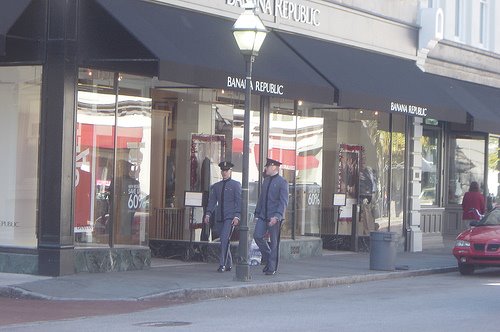
Downtown Charleston itself is undergoing a renaissance of sorts (and I tell you, it look's nothing like Nassau's hub, where residents will be breathing down one another's necks in overpriced 2' x 4' units crammed side-by-side on a former raceway, overlooking the County's tallest structure -- the Ref-Fuel resource recovery plant). Over 1600 residents -- from the youngest school children to the city's senior set -- are taking part in Charrettes, and actually seeing their vision of "downtown" take shape.

Revitilization and Development
Completed in 2000, The South Carolina Aquarium, showcases exhibits of South Carolina's waterways from the mountains to the sea and includes thousands of animals and plants. Also completed in 2000, and located adjacent to the South Carolina Aquarium, is the new IMAX Theatre.

The Ashley River Walkway - a combination bikeway and promenade - is in the planning stages and will wrap around the eastern side of the Peninsula. Ultimately, the Walkway would link the new City baseball stadium, just north of Brittlebank Park on the Ashley River, with the South Carolina Aquarium

A major catalyst in the City's revitalization was the completion of Charleston Place in 1986. This luxury hotel/retail complex draws a steady stream of customers to its shops as well as to neighboring stores and restaurants along King, Meeting and Market Streets. With the Hampton Inn redevelopment, the refurbishment of the stately Francis Marion Hotel and the conversion of the old Citadel into Embassy Suites, this area is experiencing a resounding boom. A well-appointed landmark, Marion Square Park is undergoing a redesign and will be entirely surrounded by development successes and two revered churches.

In 1991, Charleston opened the gates to its Visitor Reception and Transportation Center (VRTC) on Meeting Street. The VRTC represents a significant alliance of historic preservation and tourism management. It is housed in an 1856 railroad freight station. In the renovation of the structure, the City has salvaged the rustic feel of the old depot - original beams and pine floors still greet the Charleston visitor.

Several other developments enlivened the City and secured its position as a wonderful place to live. In 1990, the City completed the Waterfront Park - an eight-acre linear park and pier along the Charleston Harbor entry. The park masterfully combines spectacular fountains, spacious lawns, intimate garden "rooms", plenty of walking and jogging paths and a long wharf with picnic tables and wooden swings. Additional waters-edge projects afford greater public access to the water, including the Charleston Maritime Center, which will establish a permanent home for the shrimping industry and include a special events pier with public access to the water.

Another extraordinary economic opportunity avails itself as a nearby sixty-five acres, known as Union Pier, offers prime development sites for hotel, retail, office and residential, deep in the historic district. A full complement of boulevards, parks and vistas are planned to ensure an ambiance befitting the historic district.

Housing
Charleston's signature housing type is the "'single house" - a narrow house with gracious side piazzas. The single house is but one choice in an ample range of housing indigenous to Charleston. From marshfront condominiums to downtown studio and from four-bedroom homes to splendid mansions in the historic district, every domestic setting can be realized. Charleston's single family market is strong; since 1987, single family production has averaged 310 new homes annually, and multi-family construction averages at 30.4 units per year.
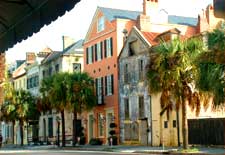
For years, Charleston has made national headlines for its innovative approaches to providing affordable housing. In addition to the award winning designs, the achievements include the incredible rebirth of the central city and a strong revitalization movement northward up the Peninsula and into the neck area. Through its Community Development Division, the City has provided over 2,000 housing units since 1990. The Charleston Housing Authority manages 10 public housing areas as well as 113 units which are scattered throughout the City. The task of providing affordable housing does not fall to City agencies alone. A variety of groups like Habitat for Humanity, Charleston Affordable Housing, Humanities Foundation, Charleston Crisis Ministries, many churches and dedicated individuals offer assistance in the quest to provide decent, attractive, affordable housing and to prevent homelessness. This production task force is leading the way by generating creative financing and design solutions.

Culture and the Arts
Throughout its history, Charleston has stood as a cultural capital of the South. The performing arts are well represented here with a symphony orchestra, community theater groups and several local ballet companies performing regularly. The Gibbes Museum of Art and numerous art galleries, along with the abundant examples of architectural excellence and craftsmanship, expose residents and tourists to the visual arts. The Charleston Museum, the oldest museum in North America, offers a captivating collection of artifacts depicting lowcountry life from the time of the first settlers through the twentieth century.

One thing that struck me about Charelston is the comprehensive nature of the city's revitalization plan. There actually is a Master Plan which incorporates what would otherwise appear to be the piecemeal rehabilitation of aging neighborhoods. More than mere pavers and street lamps, Charleston has thrown itself -- no, immersed itself -- in the rebirth of a nation's founding community as a 21st century leader in smart growth.
- - -
Yes, the south shall rise again. Indeed, it is, in Charleston, South Carolina. The question we have at The Community Alliance is, will Nassau County rise again -- or will we simply continue to sprawl from blight to brownfield, from spot attempts at revitalization to visions of light rail lines and towering lighthouses, from villages and hamlets caught hopelessly between nowhere and no place to that suburban utopia we can happily (and affordably) call "home?"

Write to us with your vision of the New Suburbia. info@thecommunityalliance.org

Monday, March 20, 2006

Suozzi's "New Suburbia" Gets A Forum

Suozzi Taps Wang-Reckson as $1.6 Billion Nassau Coliseum ‘New Suburbia’ Developer

Proposal Includes Renovated Coliseum, Extension of Islanders’ Lease, Minor League Baseball Stadium, Next-Generation Housing, and Transit Improvements

Mineola, NY- Nassau County Executive Thomas R. Suozzi announced that the proposal from the Lighthouse Development Group meets each of his seven core goals for the redevelopment of the Nassau Veterans Memorial Coliseum Site, and lays out a plan that is consistent with his vision for “New Suburbia.

Among the highlights of the Lighthouse Development Group’s $1.6 billion proposal are: a $200 million renovation of the Nassau Coliseum; a commitment from the Islanders NHL team to stay until 2025; a canal lined with retail shops and mixed-use residential-commercial development; the creation of a pedestrian-friendly ‘Nassau Centre;’ an investment in a transportation system; the construction of a minor-league baseball stadium and the development of next generation housing.

“After a thorough, competitive and open review process, my evaluation team has chosen the Lighthouse Group’s proposal,” Suozzi said. “Their plan stood up against top-notch competition, and emerged as the best of the best. It matches the vision I’ve been talking about for ‘New Suburbia.’ We can look forward to a new minor-league ballpark, a renovated Coliseum, new housing and office space that will create excitement at the geographic heart of Nassau County and create an engine for economic growth. And we accomplish this at no cost to the taxpayers, while significantly increasing the tax base.”

The project is expected to generate approximately $160 million in net new taxes through 2025.
In February, Suozzi’s evaluation committee – Deputy County Executive Helena Williams, Counsel to the County Executive William J. Cunningham, III and Executive Commissioner of Planning Patricia Bourne – winnowed four proposals down to two. The committee decided that the Lighthouse Development Group best addressed each of the County Executive’s seven core goals in transforming the site into an attractive, vibrant, lucrative and multiple-use center. The Lighthouse proposal met or exceeded Suozzi’s core goals for the Coliseum site, including:

Renovating or replacing the current Coliseum building into a world-class sports and entertainment facility, at no cost to the county.

About $200 million is earmarked for a dramatic overhaul of the Coliseum, including two new buildings to be incorporated into the Coliseum’s existing structure. The new buildings will house a basketball court, additional ice rinks, a fitness center, new locker rooms and other sports facilities. The Coliseum will also have expanded seating capacity with an additional 2,500 seats, including ice-level luxury boxes.

Minor League Baseball Stadium The group also proposes to build – at no cost to the county – a new minor-league baseball stadium at the nearby Mitchel Field Athletic Complex, and to bring a minor league baseball team affiliated with the Atlantic League to the county. The proposed stadium will be subject to its own request-for-proposal and approval process.
Construction of structured parking adjacent to the Coliseum to free up land – currently used as parking lots – for other development. Some $120 million will go toward the construction of Coliseum parking decks.

Extending the Islanders lease beyond its 2015 expiration, or making a deal with a comparable sports franchise.The Lighthouse Group will extend the Islanders’ commitment to play professional hockey in Nassau County until 2025.

Creating a mixed-use commercial-residential development. Townhouses, apartment buildings and office buildings will be constructed around a picturesque canal, to create a pedestrian-friendly suburban center.

Creating next-generation housing. The Lighthouse Group will commit 20% of any new residential units to next-generation housing.

Expanding the tax base for Nassau County, the Town of Hempstead and area school districts. New retail businesses and office space, as well as new residential units, will significantly expand the county’s tax base, kick starting new growth that Nassau needs to offset escalating property taxes.

Creating a public transportation system to connect the Coliseum site with the greater area known as the Nassau County Hub.The Lighthouse Group has committed to spend $55 million on transportation improvements in the ‘Nassau Centre’ area, including $25 million toward transforming the Centre into a pedestrian-oriented suburban center. The group will also fund a bus-trolley system serving the Coliseum and its immediate surroundings, as well as bus service to connect with the LIRR.

The county’s request-for-proposals sought plans for the 77-acre Coliseum site, but the Lighthouse Group’s proposal includes plans for surrounding properties as well, resulting in a 150-acre vision. The Lighthouse Group owns properties adjacent to the 77-acre site, including the Marriott Hotel, Reckson Plaza and the Omni Office Complex. The proposal includes 6 million square feet of hotel, retail, office, residential and Coliseum space.

Additionally, an extra $5 million is included in the proposal for community facilities, including proposed sponsorship for a Long Island Sports Hall of Fame.

The Lighthouse Group’s control of adjacent properties, plus its ability to guarantee that the Islanders would continue to occupy the newly renovated Coliseum were factors in their selection, Suozzi said. “This proposal makes the best possible use of the Coliseum site,” Suozzi said. “As the nation’s oldest suburb, the county really has no room left to grow. It is vital that we come up with new, creative ways to increase our tax base. This plan does that, while making the Coliseum site and the Nassau Centre an exciting place to live, work and play.”

County officials now will work to reach a Memorandum of Agreement (MOA) with the Lighthouse Group that would set out the major terms of the deal and establish a period for lease negotiations. Once a MOA is reached, it will be submitted for approval to the Nassau County Legislature. The plan also will need approval from the Town of Hempstead, which controls zoning issues at the site.The county is hopeful that construction could begin at the site within two years.
- - -
Hmmm. Required approvals from the Nassau County Legislature AND the Zoning Board of Appeals of the Town of Hempstead? Let the games begin!

With Peter Schmitt earlier saying that Suozzi's State of the County address left him "underwhelmed," you know that politics will take center stage in Mineola. Look for more trips to the penalty box at the County Seat than at the Coliseum.

And approval from the Zoning Board of the Town of Hempstead? The new-found amity between Tom Suozzi and Kate Murray aside, the clash between the Democrat controlled County and the redevelopment of the Hub.

Will the grandiose plans to re-energize the county's ailing and aged economy and infrastructure with mixed-use housing, retail and recreational space actually take flight at what was once Mitchel Field, or, like so many redevelopment plans of the past, simply fade from view, like Lindberg's Spirit of St. Louis as it ascended into the haze above the Hempstead Plains en route to Paris?

Will we tackle the problems of traffic, congestion, unbridled growth and overdevelopment along the Hempstead Turnpike corridor, or face the next generation of gridlock, increased pollution, density run amuck, and still further degradation of the water supply?

Let's not forget about NIMBY enthusiasts, who will be out in force declaring war against light rail, lighthouses, and any glimmer of light at the end of the proverbial tunnel. [Funny. Few NIMBYers were to be heard from during the "visioning" stage.]

And what of the taxpayer? Will this Nassau Centre really mean more money for our schools and less taken from the pockets of homeowners, or will we simply be creating more long-term debt and cost overruns -- along with anticipated projects that never get further than the drawing board -- feeding the already stretched taxpayer to the proverbial lions at a spanking new Coliseum.

We want nothing more than to see Tom Suozzi's vision of a New Suburbia move forward, and for that groundbreaking ceremony to be held within two years. Still, we must proceed with a cautious optimism in assessing the Wang proposal and in fine tuning it's details. Similarly, we must reconcile the projected expenditures with our ability to pick up the hefty tab -- both in today's dollar's, and tomorrow's.

We want to be absolutely certain that we can, 10 or even 20 years down the road, look back at the creation of this Nassau Centre and say, "The rebith of America's first suburb began here," and not, "It seemed like a good idea at the time!"

What do you think about the Wang/Reckson plan to redevelop Nassau's "Hub?" Inquiring minds want to know. E-mail The Community Alliance at info@thecommunityalliance.org. Guest blogs on this issue are welcome and invited!

Saturday, March 11, 2006

A Time Out At The Community Alliance Blogspot

Community May Never Rest, But The Publisher Takes A Well-Deserved Break

A brief late-Winter, pre-Spring hiatus to catch our breath and recharge our batteries.

THE COMMUNITY ALLIANCE BLOG
RETURNS MARCH 20th
"In the End, we will remember not the words of our enemies, but the silence of our friends."
- Martin Luther King, Jr.
Friends of community must not remain silent. Write. Comment. Guest Blog.

Friday, March 10, 2006

If You Want School Aid Equity, Write A Letter

School Boards, Suozzi To Guv And Legislature: "We Write To Make It Right!"

Suozzi, school officials complain about state aid inequity

MINEOLA, N.Y. Dozens of school board members joined Nassau County Executive Tom Suozzi today in urging the state Legislature to change the formulas for how state school aid is distributed.

Suozzi, who is seeking the Democratic nomination for governor as a reformer, says county taxpayers are getting a raw deal when it comes to school aid.

He says Nassau County has 7.45 percent of the students in the state, but it receives only 3.89 percent of total state aid for schools.

In a letters to Governor Pataki and state legislators, Suozzi and the school board members claim that Nassau County school districts should be receiving approximately 600 million dollars more.

He says the state school aid formula fails to take into account "regional cost factors" on Long Island and that people who bought their houses years ago and are "house rich" but "income poor" and cannot afford the school tax burden.

Copyright 2006 Associated Press.
- - -
Click HERE to see the News12 report. [Watch the video.]
- - -
The Long Island Association's Mitch Pally says that the State's purported $4 billion surplus should be earmarked for education, with half of that to go to Long Island's schools.

State Senator Dean Skelos, the Senate's Deputy Majority leader and head of the Long Island delegation, says Suozzi is simply making "political hay" in his run for the Democratic nomination for Governor.

"Political hay?" Maybe so. That's what politicians -- from Skelos to Suozzi -- do.

But hay is for horses, Dean. It is obvious to everyone that Long Island's school districts aren't getting anything close to their fair share of the State Aid pie. Go back to Albany, on behalf of Long Island's taxpayers, and tell your colleagues to "show Long Island the money!"

Meanwhile, kudos to Nassau County Executive Tom Suozzi. When was the last time that anyone got the leaders of 40 Nassau school districts together on the State Aid issue, at the same place, at the same time, and, literally, on the same page? BRAVO!
- - -
A copy of the Letter to the Legislature will be posted as soon as it is made available for publication. More to follow. . .

He's As Mad As Hell. . .

And He's Certainly Not Going To Take It Anymore!

Call for a little more outrage, and not only does that window open wide, but in flies Pat Nicolosi -- resident rant artist extraordinaire -- belting one out for everyone to hear.

The perfect segue to yesterday's Network piece, here is community as seen from Pat's Perch, in a corner of The Community Alliance we like to call, Nicolosi's Niche. . .

Glad to see everyone from County Executive to Town Supervisor working together, but before we celebrate, let's look at theory and reality.

In theory, the atomic bomb was developed to secure peace, in reality it escalated war. Albert Einstein stated had he known the outcome of his invention he would have never gone forward. Now that doesn't mean someone else wouldn't have invented the bomb, it means Einstein's theory for peace wasn't a reality.

Which brings me to the point of the Empire Zone. In theory, it will help bring business here, and a strong commercial base will help stabilize or reduce the tax burden. However, looking at Long Island and communities with a strong commercial base, that theory is far from reality.

Look at Oceanside, Farmingdale, Uniondale and other communities with strong commercial tax bases -- homeowners in those communities still complain about school tax increases every year.

The next part of the Empire Zone which no one seems to mention is, where will people live? Most business groups on Long Island are finding it hard to keep the young, educated work force for lack of affordable housing. Now, I am against just building for the sake of building, because unless we get control of property taxes, which is the driving force behind Long Island being unaffordable, building or using the term "affordable housing" is an oxymoron.

Let's look more critically at this new tool -- are seniors and the middle aged looking for jobs? Well maybe, but more universally, we are looking for tax breaks and consolidation of wasteful taxing districts.

Are the young looking for better, higher paying jobs -- the answer is yes. Here on Long Island, however, what might be considered a good paying job elsewhere, hardly pays the bills here.

Take a job, starting pay 50 thousand a year. Sounds great. On Long Island, for a young person starting out, it would be hard making ends meet. After state and federal taxes, that young person might be left with around 2 thousand clear a month. After rent about, 12 hundred, and car insurance and gas and food, and you can clearly see where this is heading. And let's not forget to mention college loans.

Politicians have a way of using euphemisms to make it sound like they are doing something when, instead of confronting the main issues head on, they skirt around them. They use phrases like Education President, War on Drugs, War on Poverty, School Accountability Bill, Nail and Mail and so on, and the question still remains, what has changed?

We are still complaining about taxes and we will be doing that long after the Empire Zone, or any other term, is enacted because unless they confront the issue head on nothing will change.

You want to reduce taxes, then you have to consolidate. You want to reduce or get rid of school property taxes, then you will have to change the way we fund education. You want to make Long Island affordable for everyone, then you will have to come up with a plan to rid us of the waste and realize there is no need to run Nassau County, the Town Of Hempstead, and all the other over 400 taxing districts like it's 1930 all over again.

Now we have another tool in our arsenal of tools. In theory it sounds great. In reality, we will still have the high taxes and illegal housing issues before us. What should have been an ongoing maintenance plan from the Town with our roads and continued enforcement now needs fancy terms and gimmicks.

So we will watch and pray and let the pieces fall where they may, but my guess is we will still be complaining about the taxes, the young will still be leaving, and the illegal housing problem will still be ongoing. Oh, and the term "affordable housing" will still be an oxymoron. The only words that will work for us are Change and Consolidation.

-Pat Nicolosi

The writer is President of the East Elmont Civic Club, and a frequent contributor to this blog. This missive originally appeared in the Elmont Herald, and has been modified, with the author's permission, to fit this blog.
- - -
Okay, it's your turn to rant, to rave, to call the play-by-play of community. E-mail us at info@thecommunityalliance.org. Are you "as mad as hell and not going to take this anymore?" Then open a window and shout. At the very least, post a comment. It does a community activist good!

Solutions To Long Island's Problems ~ Real Simple

Long Island Survivor: The Ultimate Reality Show

Last week, The Community Alliance received the following e-mail:

Real Simple is a weekly, “life strategy” series -- based on the popular magazine of the same name – that offers viewers simple, straightforward solutions to life’s everyday problems.

We are seeking Long Island area homeowners with disorganized home office desks, medicine cabinets, pantries, under sink cabinets – small but vital parts of your life that need Real Simple solutions – to appear in upcoming segments. We are planning to be in Rockville Centre at the end of the month.

Interested parties should send photos ASAP of their house exterior, organizational nightmare and family to
Katie_kramer@realsimpletv.com.

Yup, Real Simple. The answer to the prayers of the organizationally challenged. Straighten the office desk, clean out the medicine chest, clear the clutter from your closet, maybe even sell all that 1950s crap you have crammed into the attic. A half hour under the glaring lights of television -- with a bit of dramatic flair to keep you glued to the set -- and voila, your pantries and undersink cabinets look like they've been visited by Hazel and Mr. Clean. Real Simple.

If only our problems here on Long Island could be so readily and summarily resolved, all within the neat confines of a half-hour television show. Maybe we don't need the intervention of either executive or legislature. Hmm. Could be all we need is a catchy reality show.

Here are a few ideas sure to "clean up" the mess on our Long Island, if only we could sell them to the networks:

Extreme Makeover: Workforce Housing Edition ~ Ty Pennington and crew descend on Nassau County, magically turning brownfields into affordable housing for Long Island's seniors and Generation Next.

Deal or No Deal ~ Long Islanders get to choose a briefcase. One contains enough money to pay property taxes. The other enough to put food on the table. The banker offers to take your house, leaving you homeless. You decide. Howie Mandel Weitzman hosts.

Lost ~ A plane crash leaves George Pataki, Sheldon Silver, and Joe Bruno stranded on a deserted Long Island, with no hope of escape until they reach agreement on the State budget. Tom Suozzi parachutes in with the fix.

Life Swap ~ A family from Long Island's Gold Coast switches places with a family from the forgotten south shore. The ultimate in culture shock.

Punk'd ~ Ashton Kutcher pranks Long Islanders into believing that their property taxes have been frozen, their roads have been fixed, and that Special taxing Districts actually save them money. Kate Murray makes a cameo appearance. Smile!

The Biggest Loser ~ Long Islanders compete to see who can pay the most in school property taxes. With so many contenders for the title, the series is expected to drag on for decades.

Growing Up Gulotta ~ The former County Executive reprises his long-running role as Nassau's chief honcho. Joe Mondello gives a compelling performance as an over-the-hill Tom Gulotta.

Big Brother ~ Dick Cheney really is watching!

The Honeymooners ~ Roger Corbin plays Ralph to Peter Schmitt's Norton. "To the moon, Lisanne."

Amish In The City ~ The Amish secretly take up residence in the Five Towns. Who knew?

I Want To Be A Hilton ~ Charles Wang laments the loss of his coliseum cum lighthouse.

Lost In Space ~ A modern-day revival of the 60s series, sans robot. The Nassau County Legislature leads an ensemble cast through misadventures in the ozone layer.

Fear Factor ~ Just the thought of living on Long Island.

Surreal Life ~ Need we say more?

So there you have it. Long Island's many crises averted. Real Simple. That's a wrap, folks.

Consult your cable listings for local programing, and, by all means, do contact Katie Kramer of Real Simple at Katie_kramer@realsimpletv.com.

Learn how to build an environmentally-friendly home. Discover the only pots and pans you'll ever need. Get handy tips to organize your car. And for goodness sake, straighten out your desk, will ya? It's so messy, you can't even find that #&*$@! property tax bill!

Thursday, March 09, 2006

"I'm As Mad As Hell, and. . ."

". . .I'm just going to sit here and take it!"

I made a conscious decision last Sunday that I wasn't going to watch the 78th running of the Oscars, the prospect of seeing Jon Stewart fall flat on his face notwithstanding.

Instead, I made the trek over to the local Blockbuster and rented Network, the 1976 Paddy Chayefsky flick that had everyone "mad as hell" and opening windows.

The film won four Oscars, including a posthumous award to Peter Finch, the "mad as hell" Howard Beale who demanded of his television audience that they exhibit more outrage.

Finch never lived to see us get up, run to the windows, and scream at the top of our lungs, "I'm as mad as hell, and I'm not going to take this anymore." I wonder, will any of us live to see the day when Long Islanders are sufficiently pissed, driven to their windows, and moved to scream?

We groan and mumble about property taxes, then, year after year, we simply make out another check to the Receiver's office.

We lament the loss of suburbia -- the congested roadways, the big-box stores, the vacant "Main Streets," the basement apartments, among other untold indicia of a quality of life long foresaken if not forgotten-- and then, we quietly retreat into the shadows of complacency.

"Someone ought to..." "They had better..." "When will they..." This is as far as that primal scream has evolved -- a muted undercurrent of resignation.

Will we -- or anyone among us, for that matter -- ever have the guts or the backbone to stand up, to Washington, to Albany, to Mineola, to Town Hall, for goodness sake, and to shout for all the world to hear, "I'm as mad as hell, and I'm not going to take this anymore?"

With apologies to Mr. Chayefsky, let me take a stab at the Soliloquy:

We deal in illusions, man. None of it is true! But you people sit there day after day, night after night, all ages, colors, creeds - we're all you know. You're beginning to believe the illusions we're spinning here. You're beginning to think that the blog is reality and that your own lives are unreal. You do whatever the blog tells you. You dress like the blog, you eat like the blog, you raise your children like the blog. You even think like the blog. This is mass madness. You maniacs. In God's name, you people are the real thing. We are the illusion. So turn off your computer monitors. Turn them off now. Turn them off right now. Turn them off and leave them off. Turn them off right in the middle of this sentence I am blogging to you now. Turn them off!

See what I mean? You're still reading, aren't you? You just don't get it.

I've seen the wrath turn to apathy; the indignation melt away into a passive acceptance; the activism co-opted by the reactionaries. No, I'm not holding a gun to my head threatening to kill myself right here before you on this blog. On the other hand, I'm not holding my breath waiting for you to rush to the window.
- - -
I don't have to tell you things are bad. Everybody knows things are bad. It's a depression. Everybody's out of work or scared of losing their job. The dollar buys a nickel's worth, banks are going bust, shopkeepers keep a gun under the counter. Punks are running wild in the street and there's nobody anywhere who seems to know what to do, and there's no end to it. We know the air is unfit to breathe and our food is unfit to eat, and we sit watching our TV's while some local newscaster tells us that today we had fifteen homicides and sixty-three violent crimes, as if that's the way it's supposed to be. We know things are bad - worse than bad. They're crazy. It's like everything everywhere is going crazy, so we don't go out anymore. We sit in the house, and slowly the world we are living in is getting smaller, and all we say is, 'Please, at least leave us alone in our living rooms. Let me have my toaster and my TV and my steel-belted radials and I won't say anything. Just leave us alone.' Well, I'm not gonna leave you alone. I want you to get mad! I don't want you to protest. I don't want you to riot - I don't want you to write to your congressman because I wouldn't know what to tell you to write. I don't know what to do about the depression and the inflation and the Russians and the crime in the street. All I know is that first you've got to get mad. (shouting) You've got to say, 'I'm a human being, god-dammit! My life has value!' So I want you to get up now. I want all of you to get up out of your chairs. I want you to get up right now and go to the window. Open it, and stick your head out, and yell, 'I'm as mad as hell, and I'm not going to take this anymore!' I want you to get up right now, sit up, go to your windows, open them and stick your head out and yell - 'I'm as mad as hell and I'm not going to take this anymore!' Things have got to change. But first, you've gotta get mad!...You've got to say, 'I'm as mad as hell, and I'm not going to take this anymore!' Then we'll figure out what to do about the depression and the inflation and the oil crisis. But first get up out of your chairs, open the window, stick your head out, and yell, and say it: 'I'm as mad as hell, and I'm not going to take this anymore!'

Wednesday, March 08, 2006

A Revival At The River's Head

Reports Of Riverhead's Demise Have Been Greatly Exaggerated

With Riverhead's Empire Zone stimulating economic regeneration, developers chomping at the bit, and an influx of significant money from both public and private sources, downtown Riverhead seems poised on turning the corner from ghost town to hip town.

Virtually paralyzed by the big box stores springing up on the outskirts (Tanger outlets alone boasts 165 stores), a once thriving and now desolate "Main Street" (named, surprisingly enough, "Main Street") is about to come alive again, this according to plans envisioned both by Town officials, local residents and private developers.

"The area could be transformed into an entertainment and shopping destination within a few years if Town Council members approve any of three proposals bringing private investment to the town's renewal efforts," reports the New York Times. [SEE, A Plan To Revive Downtown Riverhead.]

One plan under consideration calls for replacing acres of parking lots on the riverfront with a finished esplanade, a plaza, green lawns, a man-made pond that would double as a winter ice rink, and 30,000 square feet of ground-floor restaurants and shops with 60 apartments above them.

On the north side of Main Street from the Suffolk Theatre east to East Avenue, the plan envisions a ground-floor specialty food market, a 14-screen multiplex movie theater on the second level and 100 apartments in the top two stories.

A second proposal extends beyond the revitalization district and focuses on the north side of Main Street, replacing most of the decaying riverfront on south Main Street with landscaping and parkland. Parking areas and some buildings north of Main Street would be replaced with about 500 townhouses and condominiums.

Still a third plan would feature a "festival marketplace" like New York City's South Street Seaport. It would have an ice-skating rink and amphitheater and an 8- to 11-screen multiplex on the riverfront, 336 residential apartments and 130,000 square feet of shops.

Newsday reports that the Town of Riverhead, which has had its ups and downs in terms of starting the ball rolling on downtown revitalization projects, "has a chance to set an example for other downtowns by negotiating a deal with a big-league private sector consortium." [SEE, Riverhead Revival.]

Indeed, if downtown Riverhead's renaissance does move forward, it will be that partnering of government, community, and the private sector that makes all the difference.

Of course, the rebirth of "Main Street" was preceded by years of gestation, with the "seed" originating in a visioning process begun in earnest in 2000 with the help of the Institute of Sustainable Development at Long Island University. [SEE Riverhead Vision 2020: An Evaluation of Community Action.]

It was not so much government officials or enterprising developers who got things started in Riverhead. It was grassroots, community-based organizing that rubbed two sticks together to kindle the flames of revitalization.

All over Long Island, from the shores of the Peconic to the vacant stores than line the "Main Streets" of Elmont, more and more people are sensing that cleaning our own house must begin at home. Local civic associations are begining to partner with community facilitators such as Sustainable Long Island and Vision Long Island, focusing on projects large and small, building, and rebuilding, community -- one block, one storefront, one person at a time.

Downtown Riverhead, with its dingy, age-worn and neglected Main Street is about to make a comeback. How are things looking on your hometown's "Main Street?"

So, what's the plan to revitalize your community's "downtown?" Not only do we want to know at The Community Alliance, we want to help turn today's community's vision into tomorrow's "Main Street" reality. E-mail us at info@thecommunityalliance.org.
- - -
Read Newsday's Editorial on Riverhead's Revival
SEE News12 Report

Tuesday, March 07, 2006

STAR Gazing In Albany

State Legislators Hitch Hopes For Property Tax Relief To Distant STAR

Funny thing about stars -- they appear at their brightest shortly before they implode. The light from a dying star, or a star that, in fact, had died out eons ago, can be seen in the dark night sky millions of years after the demise of that gaseous ball of fire.

So it is that, up in Albany, the perennial answer to our property tax woes -- or at least to the school portion of the property tax, which consumes 60% or more of our property tax dollars -- is to look to the stars, or at least to one STAR in particular, New York's School Tax Relief program.

The STAR program, held out by legislators and school administrators alike as a bellweather of taxpayer relief, is touted as an initiative through which "more than 3 million homeowners are saving over $2 billion each year."

Forgive us for asking, but, just how much did STAR actually save you last year?

STAR is intended to work as a homestead exemption, to be claimed by the homeowner, which, in theory, reduces the amount of school taxes the homeowner pays.

As a paper tiger, STAR does exactly what it sets out to do -- lower the amount of school property taxes a homeowner must pay. The dollar amount that your STAR exemption translates into appears on your tax bill, and you take solace that your school tax burden has been reduced accordingly. Or so your State Legislators would have you believe.

Let's take a closer look, through The Community Alliance's own version of the Hubble telescope, at the reality of STAR, and actually answer the question, "If STAR reduces my school property tax liability every year, how come my school property taxes never go down?"

The equation is simple, really. A (school budget) - B (State Aid) = C (taxpayer liability).

If a school district has a budget of, say, $1000, and State Aid is 10%, or 100, the taxpayer, through the property tax, must come up with the balance of $900. A ($1000) - B ($100) = C ($900). Are you still with us? Good!

Now, if STAR "reduces" the taxpayer liability by, say, $100, the taxpayers, in theory, will only have to pay $800. Doing the math [A - B = C], we find that there is a shortfall of $100.

The school district, of course, still needs the $1000 to meet budget demands. The State, which, in theory, is supposed to chip in the difference, is still contributing the same 10%, or $100. So who pays that $100 gap created by the STAR exemption? Surprise -- YOU DO!*

Through that little variable that doesn't fit neatly into the equation -- the tax rate -- the taxpayers cough up just as much (if not more, depending on just how much "cushion" the district builds into the tax rate hike) as the STAR exemtion has saved them. A little legislative slight of hand that puts money in one pocket while it picks from the other.

We're no math mavens, to be sure. So if you don't believe us, prove it to yourself. Take out your tax statements going back to 1997, the first year STAR appeared in the property tax sky. Note the amount of your STAR exemption. Jot down the tax rate. Then check out the bottom line for each successive year. Savings? Reduction? Lower school property tax? Not on the tax bills we've examined, for school districts from Elmont to Wantagh.

Even with the naked eye, the light from New York's STAR program fades with every school budget increase, with every hike in the tax rate. Yet, our legislators in Albany remain STAR struck, continually reinforcing the myth, as if by astrological force, that STAR is saving us money.

This year, in the wake of the property tax uproar that is sweeping the Island, State Legislators, in their infinitely myopic vision, have navigated the treacherous tax seas once again by following that STAR.

The State Senate, in a widely publicized proposal, suggests we adopt a plan that's been dubbed "Rebate-NY." According to the various press releases out of the Senate chambers (the language being the same, but for the Senator's name after the quotes), "in 2006, the rebate would equal 30% of the homeowner’s STAR savings for the 2005-06 school year, with the rebate rising to 50% in 2007 and 75% in 2008."

Under Rebate-NY, we are told that "Long Island homeowners would receive $532.8 million in direct rebate checks from New York State." Statewide, the figure for the projected rebate is $1.9 billion. [Yes, that's 1.9 BILLION DOLLARS!]

In addition to this generous rebate, the State Senate proposes to further "enhance" the STAR exemption "to account for increased property assessments, saving property taxpayers an additional $250 million."

One might ask, and justifiably so, "Where is this $1.9 billion coming from?" That one is easy. YOUR POCKETS! Not unlike that huge rebate check President Bush sent you some years back, taxpayers will, invariably, be picking up the tab through higher taxes. That's right, there are no free school lunches!

While New York State does enter this fiscal year with a $2.7 billion surplus, one need only look back to that Bush tax rebate, at a time when this country was coming off of a record surplus, to realize that a surplus squandered quickly turns into a mounting deficit. And short of turning to our children and grandchildren for support (assuming they, too, do not flee New York), who will pay for Rebate-NY and those enhanced STAR exemptions?

Aside from Rebate-NY (which will also give the indians back the $24 they paid for Manhattan island), there are other plans afloat in Albany that purport to offer a "fix" to the property tax crisis. All, in one way or another, have their prospects aligned to a STAR.

The newly-proposed STAR Excelsior Program, being considered by the Assembly, would provide $1.75 billion in additional tax relief by immediately indexing the Basic and Enhanced STAR exemptions to the current median housing value. As a result, homeowners would see their current STAR exemptions rise by 70 percent.

A great idea -- in theory. The reality, however, brings us no closer to tax relief than does making a wish upon the first star we see tonight. A - B must still equal C.

Of course, there are ways to adjust the numbers to make STAR work or, better still, to eventually take STAR out of the equation.

- Insist that school districts tighten their belts, reducing burgeoning administrative and non-academic costs through consolidation and elimination;

-Freeze school district tax rates at 2005-06 levels through 2010, with annual increases thereafter limited to cost of living adjustments;

- Fully fund State mandated education programs, now paid for through local tax dollars;

- Replace the regressive school property tax with a progressive income tax;

- Furnish State Aid to local school districts on a equitable basis, so that every student, and every community, is put on equal footing;

- Distribute commercial property taxes collected throughout the county equally to every school district in the county;

- Relieve counties and localities of paying the bill for State mandated programs, such as Medicaid.

While looking at ways to fund heretofore unfunded State mandates (such as Medicaid) is on the Legislature's radar screen -- a consideration we applaud -- beyond the "STAR Poor" initiative, there is little on the horizon in Albany that would make a serious dent in the school property tax.**

Legislators won't touch an income tax, even were it to save taxpayers thousands of dollars per year, any sooner than they could reach the stars in the heavens. And don't look for school districts to voluntarily consolidate, eliminate, or cut noses off their own faces any time soon.

We fear yet another State Legislative session -- in a year when every seat is at risk, no less -- will pass without any real property tax relief, and that homeowners will be left with little more than STARdust in their pockets.

Watch the night skies, fellow Long Islanders, for stars of the shooting, falling, and exemption variety, and keep an eye on your mailbox for that $532.8 million rebate check.

*Our own argument, that an increase in the STAR exemption will require a corresponding increase in the tax rate, does not always hold true, and, in some respects, is entirely specious -- in theory. After all, the premise of STAR is that what the homeowner saves through the exemption will be made up to the school district through a corresponding increase in State Aid. Of course, the school districts do not always realize an increase in aid from the State sufficient to cover the revenue gap, and, best of intentions and that rare surplus aside, there is usually not enough money flowing from the State Capitol to cover the gap.

In practice, the wealthier districts benefit, at the expense of the poorer districts (the reverse Robin Hood effect), and the tax burden, while technically spread across the tax base spectrum, falls most heavily on those with the least ability to bear it.

Then, too, consider the source of State Aid. Your tax dollars at work. What is not taken out of one pocket must be taken from another. At the end of the day, our school children are none the wiser, and John Q. Public, STAR exemption in hand and "enhanced," is none the richer for it.

**It should be noted that both Rebate-NY and the STAR Excelsior Program are Republican-generated initiatives, the former in the GOP-led Senate, the latter in the Democratic stronghold of the Assembly.

Given that the leadership of both chambers find themselves not only at odds, but all too often, unwilling to compromise, query as to whether either proposal -- or any reasonable facsimile thereof -- will ever emerge for the Governor's signature?

As for the Democrats in the State Legislature, our due diligence has failed to yield a single initiative designed to formally address the property tax crisis. [If the Democrats, as a whole, have a plan, they're keeping it awfully quiet!] Lots of grumpling and pointing across the aisle, but no real urgency to devise a plan to address New Yorker's primary concern -- property taxes.

Clearly, if we are going to get serious about fixing the property tax problem -- and we'd better -- we really do need to fix Albany, once and for all!
- - -
Click HERE to read The Regressive Effect of STAR
Click HERE for more on New York State Funding Equity
Click HERE to read Star-Crossed Property Tax Relief -- And How To Fix It
Click HERE to read Unintended Consequences of Property Tax Relief: New York's STAR Program
Click HERE for Walt Disney's When You Wish Upon A Star

Monday, March 06, 2006

Regaining That Lost Sense Of Community

Where Have All The "Main Streets" Gone?

Gone to strip malls every one? To some extent, yes. Malls, strip malls, and an almost total addiction to the automobile have contributed to the decline and, in some communities, the near demise of what was once "downtown."

From mega-mall to strip mall, the Mom and Pop store has been supplanted by the Big Box store, with "Main Street" left about as deserted as the streets of Hadleyville at high noon.

On Long Island, "if you can't drive there, you don't go there," subsumes any thought of "walking" -- to get a newspaper, to buy a quart of milk, to go to church or to school.

And when one hamlet streams indistinguishably into another -- an Elmont ebbs into a Franklin Square which flows into a West Hempstead -- there is not only a loss of that physical sense of community, but, more than this, that visceral or emotional/psychological sense of community so necessary in the life and livelihood of any town.

Suddenly, we are no longer Elmontonians or Lynbrookers, priding ourselves on the look, the feel, the essence of our own local fabric. We become part of a bland, homogenized gruel that looks only at the whole, without noticing, or even so much as acknowledging, the significance of its parts.

True, the "whole" -- as in "big picture" -- is crucial to a thriving community scene, as is the holistic approach to a body's well-being. Still, when the brain ignores the heart, community misses a beat, at best, and, over time, flat-lines into oblivion.

In Anything But Mexican, Rodolfo Acuna chronicles the history of the Chicano population in Los Angeles. While the accounts and struggles of Mexican-Americans in the city of angels may seem far removed from the efforts to rekindle the spirit of community in Valley Stream, the analogies, if just slightly beneath the surface, are most glaring.

Loss of identity. Loss of self. A feeling of having been disenfranchised, removed from control over our surroundings and without access to the powers that, for better or worse, can, and too often, in directions untoward, do exert control.

Without a sense of community, and a sense of their history as a community, people become vulnerable to the plans and whims of the dominant groups, which can not only displace them but control them in other ways as well. There is for example, very little preservation of anything in Los Angeles that has Native American or Mexican roots, with the history of these groups submerged by the presence of other folk. The resulting lack of local history and connectedness has the effect of alienating Chicanos and Native Americans, of discouraging development of a united community. When either group attempts to reconstruct history and regain lost space, the dominant society is offended and claims that the Mexican or Native American is encroaching on its past.

This erasure has devastating consequences: an ethnic group unable to define its past is unable to take pride in its accomplishments, learn from past mistakes or assess its current situation. History is more than just an esoteric search for facts; it involves a living community and its common memory. Anything But Mexican, 1996, pp. 19-20.

In a very real, and sometimes frightening way, most Long Islanders, residing in often ill-defined communities with makeshift and myriad boundaries, are without that same or shockingly similar sense of community. We are reduced to tending, if only by oversight, to unincorporated places, bounded by overlapping and incongruous school districts, fire districts, water districts, library districts, and so on down those artificial lines that divide and separate.

We are "encouraged" to participate -- from Town Board meetings to neighborhood forums -- yet fail to discern the connectivity between our own perception of involvement and the ceding of control to the "whim" of bureaucracy that results from our inattentiveness to civic duty.

Acuna was right. Our sense of place "involves a living community and its common memory." Without that sense of community, we become vulnerable, displaced, unable to preserve the past or to envision the future.

In A Sense of Where We Are, Adam Gordon, then a senior at Yale University's Branford College, wrote:

"Apathy is frozen violence," an Australian farmer told my father seven years ago during a conversation about American politics. The past year has taught me something about why Americans are so apathetic. It's because we've lost a sense of community. In order to reclaim that sense of community, we must all shake ourselves out of our apathy and work to shape the future of our communities and our world.

With property taxes through the roof, illegal basement apartments in every other house, school budgets in the stratosphere, and the plethora of ills that plague our communities, one would think there'd be sufficient cause to "shake ourselves out of our apathy." Apparently not.

"But somewhere beyond the mask of apathy is, indeed, frozen violence," said Gordon, in words well-worn beyond the wisdom of his young years. "We wish that we could be part of something bigger. We yearn for the communities that our grandparents grew up in, where everyone knew each other and looked out for each other... But we have frozen these feelings because we do not think that we have the ability to change such large forces."

Zygmunt Bauman, in Seeking Safety in an Insecure World, argued that we need to work to "gain control over the conditions under which we struggle with the challenges of life." For most of us "such control can be gained only collectively."

It is both fact and basic truth that such control is ours -- individually and collectively -- frozen right there alongside that pent up violence, awaiting its release in the hope that we, as community's guardians, might harness it.

We could go on, chapter and verse, on "how to" reclaim that lost sense of community. In coming blogspots, we no doubt will. As introduction to Chapter One, however, we will simply offer homage to Yale's Adam Gordon, citing the sentinal language of his closing paragraphs as prelude to community's resurgence:

...To make our communities places where people interact with, and care about, their neighbors. To make our communities places where church homecomings, community festivals and neighborhood hardware stores are familiar parts of the landscape.

The first step, however, is to unfreeze the anger that we have pretended does not exist in our apathy. All that apathy does is keep the status quo that our frozen violence is directed against going. So get involved, in your hometown, in New Haven, in whatever city you move to after graduation. That does not mean that you necessarily should go out and march on Washington tomorrow. Getting involved in a local sports league, religious institution or political organization is as important as fighting for social justice. The basic message is the same: We're reclaiming control over our communities. Our streets. Our cities. Our world.
- - -
Click HERE for an overview of Community Building: Strengthening The Sense Of Community
- - -
Is there a "sense of community" -- the "belonging" to "part of something" that empowers residents -- in your hometown? At The Community Alliance, we'd like to know. Post a comment to this blog, write a Guest Blog for publication, or simply e-mail us at info@thecommunityalliance.org with your thoughts and ideas.

Friday, March 03, 2006

Reclaiming Suburbia's Birthright

From Brownfields To Roosevelt Field To Greenfields

Richard E. Dansky, author of Suburban Sprawl, An Amazon Short, had this to say about suburban sprawl:

My wife and I bought our house in part because it was well away from strip malls, prefab house farms and the like. Unfortunately, the development in our neighborhood has been taking place at methamphetamine speed. I came back from an extended business trip and found that while I was gone, a lovely tract of forest had been chopped down, plowed up, and otherwise prepped for an incoming Food Lion. I saw that gash of raw, red clay just sitting there bleeding mud into the street – it was over a year before they actually started construction – and thought about the angry forest taking it back.

On our Long Island, the unbridled growth and development of the 50s, 60s and 70s, through that silently creeping sprawl, created the "brownfields" of today. Now, with most of Nassau County completely "built out," we begin to reclaim those "brownfields" -- the abandoned, the outmoded, the crumbling, the contaminated, and the archaic -- with the building of strip malls, drive-thru Dunkin-Donuts, and Food Lion equivalents.

In other words, we are reclaiming yesterday's strip malls, drive-thrus and super centers -- which have become today's "brownfields" -- with tomorrow's "brownfields."

The typical response to paving a parking lot, and putting up another parking lot -- even among civic leaders -- is, "Well, it will be better than what we have now." Unfortunately, "better" is not always "best" for communities in dire need of redesign and revitalization. "More of the same" is hardly the appropriate remedy for poor planning, absent visualization, and inadequate zoning.

It is, of course, easier and less of a brain-strain to build what we know -- that which has become familiar and comfortable, if not lacking in aesthetics as well as functionality.

Surely, we won't let "that vision thing" get in the way of tearing down that decaying commercial building and putting in its place a 30,000 square foot super center with a 500 car parking lot. Where opportunities abound to expand upon that sense of community and place, we contemplate instead tearing down the local movie theater, erecting in that space a Walgreens or a CVS. Never mind that there is a Walgreens and/or CVS but a stone's throw away -- the dynamics of "neighborhood" must yield to the dogma of senseless redevelopment every time, if for no other reason than to feed the landlord/developer, while starving out any remaining semblance of community.

The lessons of the past notwithstanding, we continue to build -- under the guise and misnomer of "smart growth" -- strip shopping malls and asphalt parking lots, necessitating car trips for the smallest of errands. What we should be building instead are sustainable meccas of mixed-use, rejuvenating -- and in many instances, creating for the first time -- habitats for living, working and shopping in walkable, convenient town centers.
- - -
Click HERE to read Brownfields and Sustainable Development
Click HERE for Brownfield Redevelopment, a Rhode Island case study
Click HERE to read a comprehensive report, inclusive of case studies, on Downtown Revitalization

What Was Tom Suozzi Thinking?

Suozzi Goes For Inexperience In Appointment Of County Parks Commish

In a move that has park advocates puzzled and community activists scratching their heads, Nassau County Executive Tom Suozzi has announced the appointment of Mineola resident, Jose Lopez, to replace Doreen Banks as Commissioner of Parks, Recreation and Museums. [SEE, Newsday, A New Parks Head Proposed.]

Lopez, who heads up the Physical Education Department at Great Neck South High School, concedes that he has absolutely no experience in the field.

"I have been a proponent of the parks and I actually use the facilities on a regular basis," Lopez told Newsday. "My main concern would be to increase revenue, participation and attendance at all the parks."

Suozzi could have at least tapped someone from the high school's Buildings & Grounds Department.

Hey, many of us at The Community Alliance are proponents of parks, too, and some of us actually use the facilities – including our local “passive” parks. Why, this blogger is even a card-carrying member of the Leisure Pass set (which, by the way, carries a photo of the cardholder, and not of the County Exec). And yet, not so much as a courtesy interview for the position of Parks Commish has been extended to anyone on our Board.

We like Tom Suozzi. We are impressed by his unfettered gumption and energized by his seemingly boundless enthusiasm. He did an amazing job as County Exec during his first term, and we think he'd be Long Island's best bet in the Governor's Mansion. [Who else but a Long Islander will give a damn about what's going down east of the New York City border?]

We don't begrudge Tom his power of appointment, nor would we suggest that, in the land of opportunity -- government or otherwise -- experience is everything. Sometimes those with the best ideas, along with the vision and moxie to implement them, come fresh out of the box.

This appointment, however, in a high profile post, in an era of hope that we might reclaim our ailing County parks, has us baffled. Next to the Town of Hempstead's appointment of Ray Lopez as Town Coordinator for the Empire Zone, the County Exec takes the cake in putting what appearances tell us is politics before parks.

We are pleased to see the ascension of Hispanic-Americans to positions of power in government (with the notable exception of Attorney General Alberto Gonzales), as we are delighted that the County Exec has selected a Nassau County resident to fill this critical and too long neglected bare spot in his cabinet.

That said, in minding our parks, experience -- be it in parks, advocacy, development or community building -- should be, if not a pre-requisite for appointment, then at least a major consideration.

We would like to think that the Nassau County Legislature, which will have the final up or down on the County Executive's nominee for Commissioner of Parks, will agree.

Meanwhile, Tom, as you woo them in Watertown, boast in Buffalo, and poll in Potsdam, as Newsday opined in a recent editorial, please, "Don't Forget About Us!"
- - -
Read Newsday's Editorial, Parks Need A Pro
Follow-up: PE Teacher OKd To Head Parks Department

Thursday, March 02, 2006

The Rise And Sprawl Of The Great American Suburb

First It Was "The Malling Of America" ~ Now It's Suburban Sprawl That's Gnawing Away At Utopia

From, Suburban Nation: The Rise of Sprawl and the Decline of the American Dream

What is sprawl, and why?

“The cities will be part of the country; I shall live 30 miles from my office in one direction, under a pine tree; my secretary will live 30 miles away from it too, in the other direction, under another pine tree. We shall both have our own car.

We shall use up tires, wear out road surfaces and gears, consume oil and gasoline. All of which will necessitate a great deal of work ... enough for all.”
—Le Corbusier, The Radiant City (1967)

Two Ways To Grow

Suburban Nation: The Rise of Sprawl and the Decline of the American Dream*, is a study of two different models of urban growth: the traditional neighborhood and suburban sprawl. They are polar opposites in appearance, function, and character: they look different, they act differently, and they affect us in different ways.

The traditional neighborhood was the fundamental form of European settlement on this continent through the Second World War, from St. Augustine to Seattle. It continues to be the dominant pattern of habitation outside the United States, as it has been throughout recorded history. The traditional neighborhood —represented by mixed-use, pedestrian-friendly communities of varied population, either standing free as villages or grouped into towns and cities— has proved to be a sustainable form of growth. It allowed us to settle the continent without bankrupting the country or destroying the countryside in the process.

Suburban sprawl, now the standard North American pattern of growth, ignores historical precedent and human experience. It is an invention, conceived by architects, engineers, and planners, and promoted by developers in the great sweeping aside of the old that occurred after the Second World War. Unlike the traditional neighborhood model, which evolved organically as a response to human needs, suburban sprawl is an idealized artificial system. It is not without a certain beauty: it is rational, consistent, and comprehensive. Its performance is largely predictable. It is an outgrowth of modern problem solving: a system for living. Unfortunately, this system is already showing itself to be unsustainable. Unlike the traditional neighborhood, sprawl is not healthy growth; it is essentially self-destructive. Even at relatively low population densities, sprawl tends not to pay for itself financially and consumes land at an alarming rate, while producing insurmountable traffic problems and exacerbating social inequity and isolation. These particular outcomes were not predicted. Neither was the toll that sprawl exacts from America's cities and towns, which continue to decant slowly into the countryside. As the ring of suburbia grows around most of our cities, so grows the void at the center. Even while the struggle to revitalize deteriorated downtown neighborhoods and business districts continues, the inner ring of suburbs is already at risk, losing residents and businesses to fresher locations on a new suburban edge.

The Five Components of Sprawl

If sprawl truly is destructive, why is it allowed to continue? The beginning of an answer lies in sprawl's seductive simplicity, the fact that it consists of very few homogeneous components - five in all - which can be arranged in almost any way. It is appropriate to review these parts individually, since they always occur independently. While one component may be adjacent to another, the dominant characteristic of sprawl is that each component is strictly segregated from the others.

Housing subdivisions, also called clusters and pods. These places consist only of residences. They are sometimes called villages, towns, and neighborhoods by their developers, which is misleading, since those terms denote places which are not exclusively residential and which provide an experiential richness not available in a housing tract. Subdivisions can be identified as such by their contrived names, which tend toward the romantic —Pheasant Mill Crossing—and often pay tribute to the natural or historic resource they have displaced.

Shopping centers, also called strip centers, shopping malls, and big-box retail. These are places exclusively for shopping. They come in every size, from the Quick Mart on the corner to the Mall of America, but they are all places to which one is unlikely to walk. The conventional shopping center can be easily distinguished from its traditional main-street counterpart by its lack of housing or offices, its single-story height, and its parking lot between the building and the roadway.

Office parks and business parks. These are places only for work. Derived from the modernist architectural vision of the building standing free in the park, the contemporary office park is usually made of boxes in parking lots. Still imagined as a pastoral workplace isolated in nature, it has kept its idealistic name and also its quality of isolation, but in practice it is more likely to be surrounded by highways than by countryside.

Civic institutions. The fourth component of suburbia is public buildings: the town halls, churches, schools, and other places where people gather for communication and culture. In traditional neighborhoods, these buildings often serve as neighborhood focal points, but in suburbia they take an altered form: large and infrequent, generally unadorned owing to limited funding, surrounded by parking, and located nowhere in particular. The school pictured here shows what a dramatic evolution this building type has undergone in the past thirty years. A comparison between the size of the parking lot and the size of the building is revealing: this is a school to which no child will ever walk. Because pedestrian access is usually nonexistent, and because the dispersion of surrounding homes often makes school buses impractical, schools in the new suburbs are designed based on the assumption of massive automotive transportation.

Roadways. The fifth component of sprawl consists of the miles of pavement that are necessary to connect the other four disassociated components. Since each piece of suburbia serves only one type of activity, and since daily life involves a wide variety of activities, the residents of suburbia spend an unprecedented amount of time and money moving from one place to the next. Since most of this motion takes place in singly occupied automobiles, even a sparsely populated area can generate the traffic of a much larger traditional town.

The traffic load caused by the many disassociated pieces of suburbia, where the amount of pavement (public infrastructure) per building (private structure) is extremely high, especially when compared to the efficiency of a section of an older city. The same economic relationship is at work underground, where low-density land-use patterns require greater lengths of pipe and conduit to distribute municipal services. This high ratio of public to private expenditure helps explain why suburban municipalities are finding that new growth fails to pay for itself at acceptable levels of taxation.

A Brief History of Sprawl

How did sprawl come about? Far from being an inevitable evolution or a historical accident, suburban sprawl is the direct result of a number of policies that conspired powerfully to encourage urban dispersal. The most significant of these were the Federal Housing Administration and Veterans Administration loan programs which, in the years following the Second World War, provided mortgages for over eleven million new homes. These mortgages, which typically cost less per month than paying rent, were directed at new single-family suburban construction. Intentionally or not, the FHA and VA programs discouraged the renovation of existing housing stock, while turning their back on the construction of row houses, mixed-use buildings, and other urban housing types. Simultaneously, a 41,000-mile interstate highway program, coupled with federal and local subsidies for road improvement and the neglect of mass transit, helped make automotive commuting affordable and convenient for the average citizen. Within the new economic framework, young families made the financially rational choice: Levittown. Housing gradually migrated from historic city neighborhoods to the periphery, landing increasingly farther away.

*About the authors: Andres Duany and Elizabeth Plater-Zyberk lead a firm that has designed more than 200 new neighborhood and community revitalization plans, most notably Seaside, Florida, and Kentlands, Maryland. They lecture and teach widely, including at the University of Miami, where Plater-Zyberk is now Dean of the School of Architecture. A former investment banker and art historian, Jeff Speck is director of town planning at Duany Plater-Zyberk & Co., where he is currently managing projects in Colorado, New Jersey, Ontario, Germany, and Belgium.
- - -
Click HERE for the Sprawl Watch Clearinghouse
Click HERE for the planner's guide to sprawl
Click HERE for the Sierra Club sprawl page

Wednesday, March 01, 2006

Hubbub Over Nassau Hub Reaches Crescendo

Nassau County Legislature Considers Plan For Nassau "Hub"

According to an online story in the Long Island Press, the plan for the much talked about Nassau Hub -- connecting mall to Mineola, campus to coliseum, and park to parking lot by means of a light rail line -- has found its way to the Nassau Legislature’s Planning, Development & Environment Committee. [SEE, Study of Nassau Hub Completed.]

The Hub project, an issue exhaustively studied by the Long Island Neighborhood Network and offered up repeatedly by the Suozzi administration, is designed to relieve congestion, reduce pollution, and connect central areas of the County now only accessible, if at all, by automobile.

County officials appear committed to the Hub, and New York's Senators Schumer and Clinton have already secured nearly $12 million in transportation appropriations.

While all agree that something must be down to alleviate congestion -- if not complete gridlock -- in an area already seriously overdeveloped, the plans (and there have been a good number of them) have been mired in a maze of dissent, with politics, NIMBYism, the myopic vision of planners and civic leaders, and the greed of developers stalling the process and clouding the issues. [SEE October, 1998 article in Garden City Life, The Hubbub About The Hub, which highlights but a few of the points of contention. Little has changed since then!]

Even Paul Vitello, long associated with Newsday and now with the New York Times, had someting to say about the "new suburbia" everyone's been talking about. [SEE, Trying to Redesign the Paved and Low-Rise Core of Nassau.]

From redeveloping the Coliseum to populating what was once Roosevelt Raceway -- and getting people from here to there and back again -- plans have become as complex and convoluted as the problems they have long sought to solve.

Whether the Nassau County Legislature can make any sense out of this mess, let alone reach a consensus about what needs to be done concerning Nassau's central core, remains to be seen. Given the Legislature's recent history of dysfunction, and their apparent inability to reach concensus on almost everything, we wouldn't be planning a trip to, through, or around Nassau's hub by light rail, bicycle, or foot path any time soon.

Rebuilding Downtown, 30 Years In The Making

City Of Yonkers Proceeds With A Long-Awaited Work In Progess

After more than a generation of debate, planning, and delay, the City of Yonkers hopes to bring life back to it's dormant downtown through a $3.1 billion redevelopment program. [SEE Amicone strikes $3.1 billion development deal for downtown Yonkers.]

The New York Times recently reported on the decades old plan to bring new life to Yonkers' declining downtown, an area suffering from the downturn witnessed by many cities and villages in the northeast, and now coming of age in Long Island, albeit on a far smaller scale. [SEE, Civic Fights Subside as Yonkers Hopes for $3.1 Billion Project.]

Step across Warburton Avenue, just three blocks to the east, and the pulse of a budding neighborhood suddenly flat-lines. There are boarded-up homes and empty storefronts, rotten wood and peeling paint. The shops in Getty Square, the heart of downtown, sell little beyond cheap furniture and dollar goods to the mostly poor, immigrant families who are their last loyal patrons.

Standing outside her home on nearby North Broadway, where the stoop wobbled under a visitor's feet, Graciela García, 29, said dejectedly, "I've given up hope that anyone can change the way things are around here."

"It's like we've been forgotten," Ms. García said, "like no one really cares."


Among planners, residents, and even displaced shop owners, there is concern amidst the eagerness to see the city's downtrodden downtown re-energized and revitalized. Indeed, many ask, can we have too much of a good thing?

Yes, remove the blighted warehouses and tear down the abandoned mills that block river views. But replace traditional "Main Street" with office/residential towers and a minor league ballpark sitting atop retail stores?

Okay, it could work. We are talking about a city, after all, and not a sleepy suburban hamlet aside a meandering creekbed. Still, both the economics -- and the aesthetics -- of scale must be closely observed here, lest the empty sidewalks and boarded up storefronts that flank Yonkers' Getty Square be transformed into empty sidewalks below cold-faced monoliths that not only block the river view, but sterilize what was once, some 30 years ago, a thriving downtown streetscape.

Downtowns are forever being rebuilt and reinvented -- shinning cities on the hill, by the bay, and overlooking the river. We must keep in mind, however, that physical redevelopment alone does not a community make. Revitalization is as much a state of mind as it is a state of being, and the dollars and cents poured in to downtown redevelopment must reflect, with clear foresight, that sense of place planners hope to recreate -- or create for the first time -- in redevelopment's wake.
- - -
Closer To Home: Long Beach, NY ~ The City By The Sea

The City of Long Beach, which had reached the depths of economic and social depression by the late 70s, has fought its way back to near-resort status.

The renaissance of Long Beach, as a viable and, yes, walkable suburban center, continues, with the City's "Master Plan" setting the stage for future redevelopment, and residents' involvement, so critical in assuring the vitality of both the physical and emotional sense of community, secured through an ongoing "visioning" process known as Charrettes.

For anyone who strolled the City's boardwalk in the 70s and 80s, Long Beach was a cold and desolate beachfront community, following the path of decline that stretched from Coney Island to the Rockaways. The transformation of Long Beach from a literal dumping ground to a premier choice of residence of the up and coming has been nothing short of remarkable.

A thriving "downtown" and a trendy "Main Street," panning out from City Hall, with vibrant shopping, dining and recreational venues -- as well as a transportation hub -- all within walking distance. [There is even a "Heritage Walk," a block-by-block, brick-by-brick tour of the story of Long Beach, past, present and future.]

Long Beach, Nassau County's own city by the sea, is doing fine and getting better, thank you. How's your town's physical and emotional sense of community?

Write us with your local views and perspectives at info@thecommunityalliance.org.